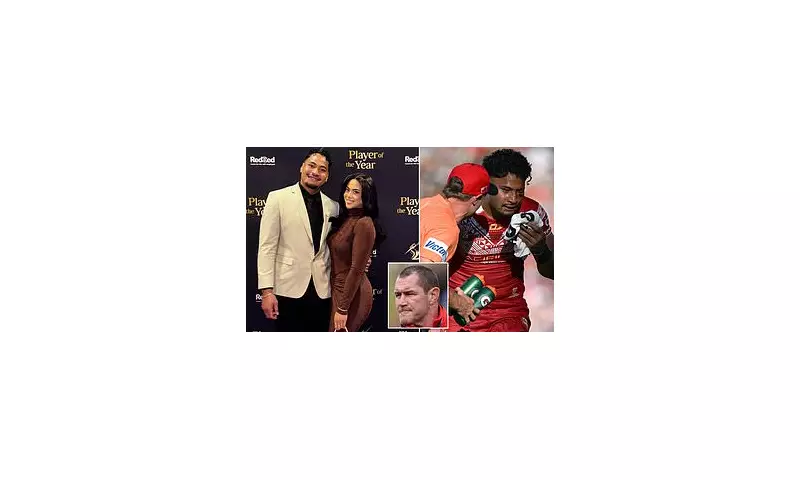
The National Rugby League (NRL) is poised to exonerate Tonga's head coach, Kristian Woolf, and his support staff following a formal investigation into the serious head injuries sustained by player Eliesa Katoa. The Melbourne Storm forward required emergency brain surgery after a Pacific Championships match last month.
The Incident and Investigation
The NRL launched its probe after Katoa suffered three separate head knocks during Tonga's 40-14 Pacific Cup defeat by New Zealand on November 2. The situation was compounded by the fact that the 25-year-old second-rower had initially collided with teammate Lehi Hopoate during the pre-match warm-up at Eden Park. Despite this, he was declared fit to play.
During the match itself, Katoa received a further head knock in the ninth minute. He passed a head injury assessment (HIA) and returned to the field, only to sustain a third, more serious collision in the 51st minute, which led to his permanent substitution. His condition deteriorated, necessitating emergency surgery to drain fluid from his brain.
Recovery and Delayed Findings
The release of the NRL's findings was reportedly delayed until officials were satisfied that Katoa was recovering. The Storm star spent over two weeks in an Auckland hospital before returning to Victoria for further tests in Melbourne. He has now been ruled out for the entire 2024 NRL season.
Taking to Instagram, Katoa provided a positive update on his health. "I'm back at home at the moment and I'm in a good place now," he wrote. "My recovery is going well and hopefully I can keep ticking all of the boxes that I need! And to the Storm fans, in God's timing, I'll be back soon." He also thanked his club and his partner for their unwavering support.
Coaching Staff Cleared of Wrongdoing
According to reports, the investigation's conclusions, expected to be published imminently, will clear Woolf and his team of any misconduct. The NRL is not expected to impose any sanctions on the Tongan coaching staff. The inquiry focused on the decision-making process that allowed Katoa to participate after the initial warm-up incident and the subsequent in-game head knocks.
This case has sparked significant debate within the sport regarding concussion protocols and player welfare, particularly in international fixtures. The NRL's impending report will be closely scrutinised for its implications on future head injury management policies.