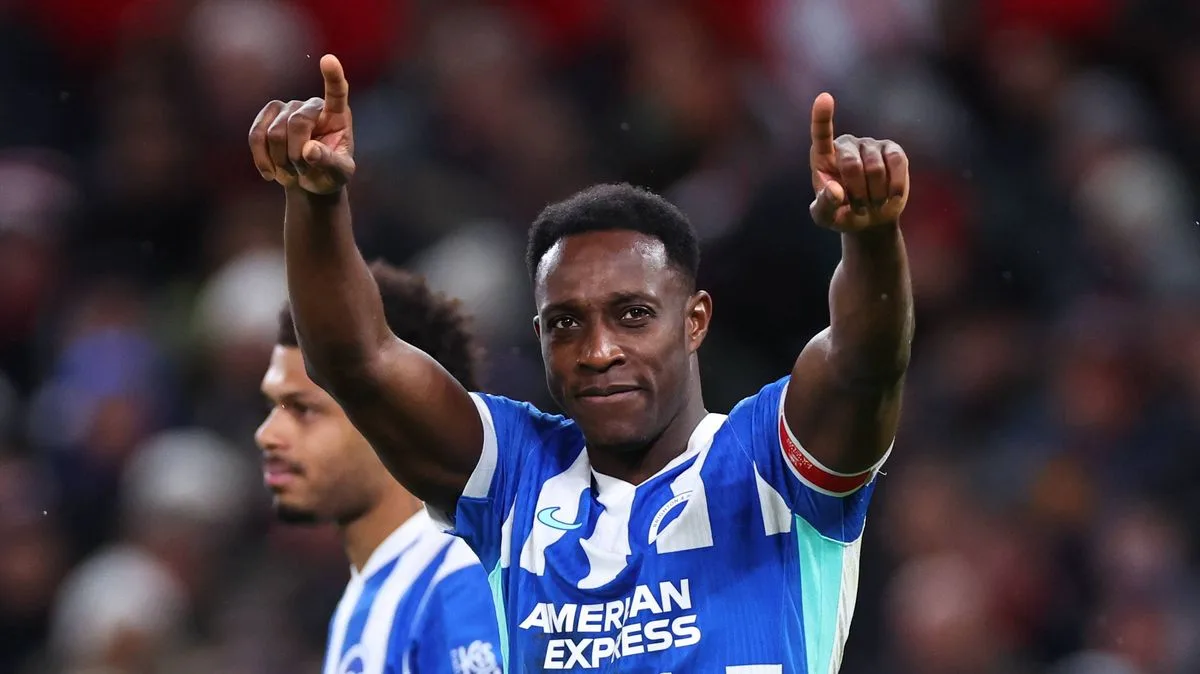
Manchester United's FA Cup dreams were shattered on Sunday by a familiar and painful source: their own former player, Danny Welbeck. The Brighton & Hove Albion striker's decisive goal at Old Trafford served as the latest stark reminder of a recurring theme at the club – the costly mistake of letting talent leave, only to watch them flourish.
The Haunting of Old Trafford
For the fifth time since joining Brighton, Danny Welbeck found the net against the Red Devils, this time to knock them out of the FA Cup. The 35-year-old, once trusted by Sir Alex Ferguson, was sold to Arsenal in 2014 and has since proven his enduring Premier League quality, becoming one of the competition's top English scorers.
This episode is not an isolated incident. It underscores a broader pattern of questionable retention policy at Manchester United over the past decade. While the club's recruitment of expensive, high-profile signings has often been criticised, its decisions to offload players – including academy graduates – have repeatedly backfired.
Players Who Thrived After the Exit
Welbeck is merely one name on a growing list of individuals who discovered greater success after departing Old Trafford. The question that continues to plague the club's supporters and analysts alike is a simple one: why were they sold in the first place?
We examine five significant sale blunders that have left Manchester United second-guessing their judgement.
1. Danny Welbeck
The veteran forward's contribution on Sunday was a textbook example of his effective, if not always glamorous, style. Capable as both a link-up player and a finisher, Welbeck was deemed surplus by managers following Ferguson. His consistent performances for Arsenal, Watford, and now Brighton highlight a player whose value was chronically underestimated at his boyhood club.
2. Scott McTominay
Perhaps one of the most ironic cases is that of Scott McTominay. After enjoying his most prolific season in front of goal for United under Erik ten Hag, scoring ten times, the Scottish midfielder was sold to Napoli for a modest £25 million. Within a year, he was a Serie A champion and a fan favourite in Naples, proving himself as one of the league's standout performers – a talent United failed to fully utilise.
3. Romelu Lukaku
The Belgian striker's numbers since leaving Manchester speak volumes. While his second stint at Chelsea was disappointing, Lukaku has been a title-winning force in Italy. He secured Scudettos with both Inter Milan and Napoli, scoring goals with relentless regularity and demonstrating the prolific edge United have often lacked.
4. Dean Henderson
A product of United's youth system, goalkeeper Dean Henderson's exit is largely attributed to a failure in succession planning. After impressive loan spells, notably at Sheffield United, he was repeatedly overlooked in favour of the ageing David de Gea. His patience snapped, and after public criticism of the club, he joined Crystal Palace. There, he won the FA Cup last year, saving a penalty in the final, while United continued to grapple with their goalkeeping situation.
5. Angel Di Maria
The Argentine winger's underwhelming single season at Old Trafford, following a mega-money move from Real Madrid, has been cited by pundits like Gary Neville as an early sign of the club becoming a "graveyard" for talent. Di Maria's subsequent success at Paris Saint-Germain, where he rediscovered his star quality, and his pivotal role in Argentina's 2022 World Cup triumph – scoring in the final – only magnified the mystery of why United could not harness his obvious ability.
A Culture of Misjudgement
The common thread linking these departures is a recurring misjudgement of player potential and fit. The club has frequently been seduced by external, fashionable signings while failing to properly develop or appreciate the assets already within its ranks. This has resulted in a double financial hit: paying over the odds for new players, while simultaneously strengthening rivals with capable departees.
The FA Cup exit to Brighton, sealed by Welbeck, is more than just a bad result. It is a symbolic moment that reignites the debate about United's strategic vision in the transfer market. As these former players continue to excel across England and Europe, the cost of these blunders is measured not just in lost transfer fees, but in lost points, lost trophies, and a damaged reputation for player development.