Liverpool's Pattern of Late Drama Under Arne Slot Proves Costly
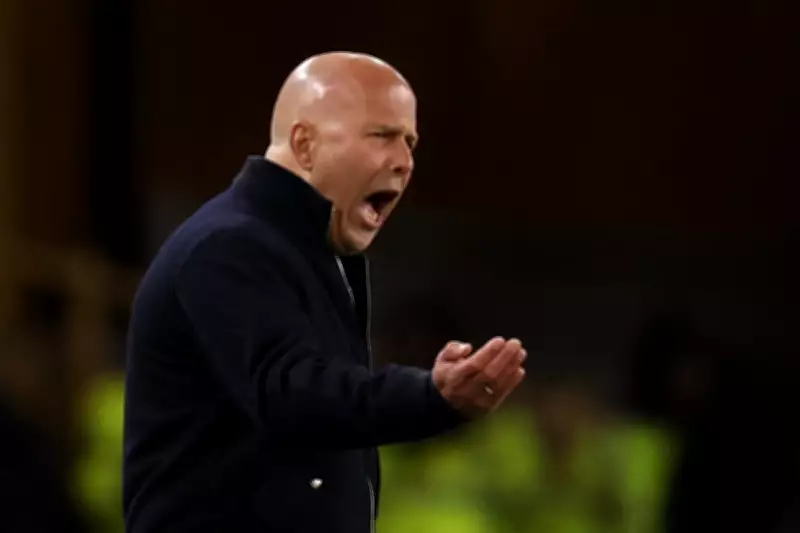
Liverpool are facing mounting criticism for their tendency to waste time early in matches under manager Arne Slot, only to become overly frantic in the closing stages. This pattern has resulted in too many dropped points, with the team looking "slow and predictable" from kick-off, according to senior figures.
Injury Time Woes Define Liverpool's Campaign
Injury time has become aptly named for Liverpool this season, bringing both pain and occasional delirium. The latest setback came at Molineux, where Andre's 94th-minute winner for Wolves married home delight with visitor disappointment. This scenario has become familiar: Liverpool's campaign began with late goals against Bournemouth, Newcastle, Burnley, and Atletico Madrid, but the warning was clear—live by the late goal, die by the late goal.
The Reds have now lost in injury time to Crystal Palace, Chelsea, Bournemouth, Manchester City, and Wolves, with further points slipping away at Leeds and Fulham. The common denominator is that goals have gone in against them through various means—set-pieces, deflections, wonder strikes, scrappy efforts, individual errors, and moments of inspiration.

Statistical Evidence of Backloaded Drama
The numbers reveal a stark imbalance in Liverpool's performances. Slot's team have scored just five goals in the opening 30 minutes of Premier League matches this season—by comparison, West Ham have 12. However, from the 76th minute onwards, there have been 31 goals in their games: 17 for and 14 against, the highest and second-highest figures respectively in the league.
This represents a dramatic shift from last season, when Liverpool scored 25 league goals in the first 30 minutes. Now, in a hypothetical league table for just the opening half-hour, they would be in the bottom three. The early sterility contrasts sharply with the frantic finishes, creating what captain Virgil van Dijk described as "too slow and predictable" possession and wrong decision-making.
Criticism from Club Legends
Both past and present Liverpool captains have offered caustic assessments. Van Dijk stated bluntly after the Wolves defeat: "The fact is we lost and in my opinion that's all down to us. We were very poor. We were too slow and predictable in possession. We made the wrong decisions." Former captain Steven Gerrard was equally unsparing, calling the first half "a complete waste"—an accurate description of a period where Wolves did not really have to beat Liverpool over 90 minutes because the opening exchanges were a non-event.
Strategic and Personnel Issues
This pattern may stem from Slot's tactical approach. Unlike Jurgen Klopp's early-reign teams that aimed for ferocious onslaughts from the first whistle—described as heavy-metal football—Slot's style is more calm and considered. However, if Klopp's teams played heavy metal, this Slot side "don't even approach soft rock" in the opening stages.
Personnel problems compound the issue. Liverpool missed Florian Wirtz's creativity against Wolves' solid central block, while £125m signing Alexander Isak has rarely shown his best form. Mohamed Salah ended a goal drought but otherwise appeared in decline, and Cody Gakpo was resoundingly mediocre. There is growing clamour for lively substitute Rio Ngumoha to start, with Gerrard among those advocating for change.
The Cost of Shortened Matches
By making matches effectively shorter—packing drama into the second half, final 20 minutes, or merely added time—Liverpool arguably give inferior opponents greater chances. Wolves demonstrated this perfectly: their substitutes Tolu Arokodare and Rodrigo Gomes combined for the breakthrough after Liverpool's unhurried start.
This approach may be an attempt to manage resources, with Liverpool's squad appearing overextended despite significant spending. Unhurried starts could aim to ensure overworked key players last 90 minutes, but it comes at a cost. Matches become games of brinkmanship in ever-tenser finales—Liverpool have won some, but lost too many, dropping precious points in a season where, as reigning champions with a £450m spend, they should be opening up cushions more often.