The decision by football's global governing body, Fifa, to drastically reduce a suspension for Cristiano Ronaldo has been branded a new low for the sport's integrity, casting a long shadow over the reign of its president, Gianni Infantino.
A Controversial Decision and a White House Backdrop
In a move that has left many within Fifa's own upper echelons baffled, the organisation's judicial committee opted to suspend two matches of a three-game ban handed to the Portuguese superstar. The sanction followed a red card for an elbowing incident during a qualifier. Fifa cited Article 27 of its disciplinary code, which permits such a partial suspension, and referenced it being the 40-year-old's first international dismissal.
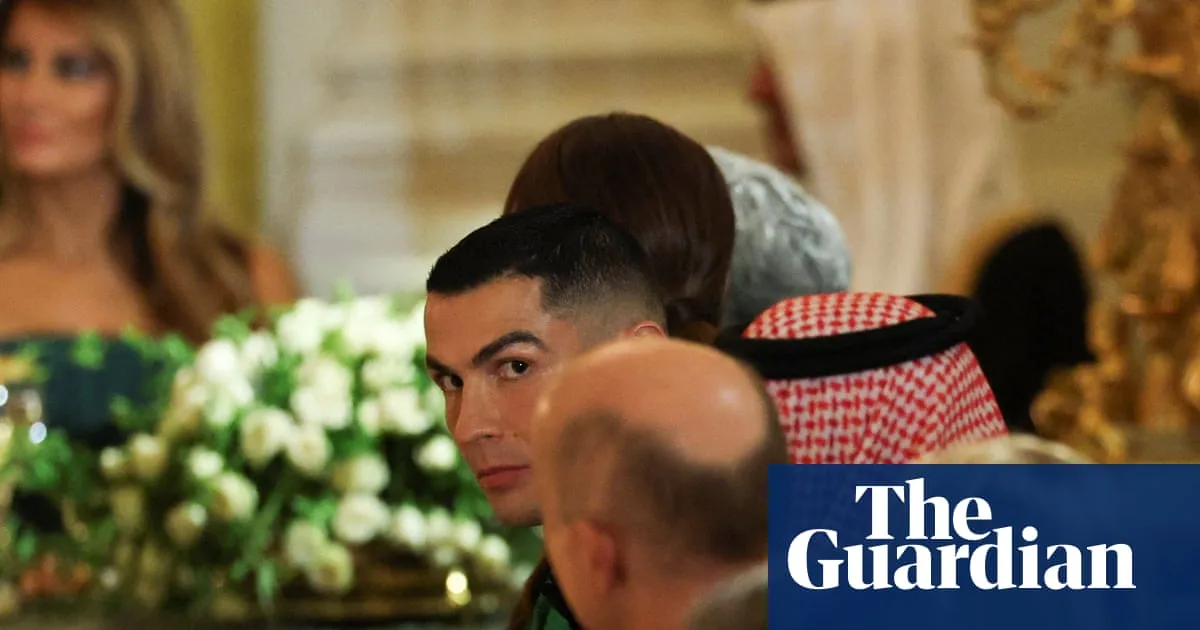
However, the timing and context have fuelled intense scrutiny. The announcement dropped just six days after Ronaldo was photographed at a high-profile state dinner at the White House. The event, hosted by former US President Donald Trump for Saudi Crown Prince Mohammed bin Salman, saw Ronaldo pose for a now-viral selfie with both Infantino and billionaire Elon Musk.
This unprecedented appearance of a footballer at such a political gathering offered a stark snapshot of the sport's current crossroads, intertwining with the 2026 and 2034 World Cup hosting plans of the US and Saudi Arabia respectively.
Eroding the Foundation of Fair Play
The core criticism centres on the erosion of sporting integrity. An offence that typically mandates a minimum three-match ban was reduced to one, ensuring the world's most famous player would miss only Portugal's opening World Cup game. Senior figures within the game have described it as "one of the worst things they've done".
This stands in sharp contrast to historical precedent. Governing bodies have traditionally been rigid in applying suspensions, refusing to bend for star players. The decision sets a dangerous precedent, with other national federations already seeking similar reductions for their banned players.
The move appears to prioritise commercial appeal and political alignment over the rulebook. It follows a pattern of Fifa actions under Infantino that have reshaped football's norms, from altering World Cup hosting parameters to unilaterally imposing a new calendar.
A Pattern of Behaviour Under Infantino's Leadership
The Ronaldo case is seen not as an isolated incident, but as a logical, if absurd, next step in a wider trend. The modern Fifa is increasingly accused of facilitating sportswashing and allowing the game to be leveraged for authoritarian politics, with Infantino frequently pictured alongside figures like Donald Trump.
Where such geopolitical influence can often feel complex and opaque, the Ronaldo decision cuts to the heart of Fifa's fundamental mission: to run the sport fairly. It risks undermining the essential trust that all competitive sport requires. The decision makes clear how the governing body is now bending the game to the will of its current hierarchy and commercial partners, rather than serving its members and protecting the sport's essence.
As football heads towards a 48-team World Cup in 2026, an expansion that many believe dilutes the magic of the perfect 32-team format, this episode threatens the very sporting trust that must underpin it. The fear is that a line has been crossed, and the sacred principle that all matches and all disciplinary measures should be equal is being irrevocably damaged.