England's Rugby Setback: A Psychological Hurdle, Not a Tactical Failure
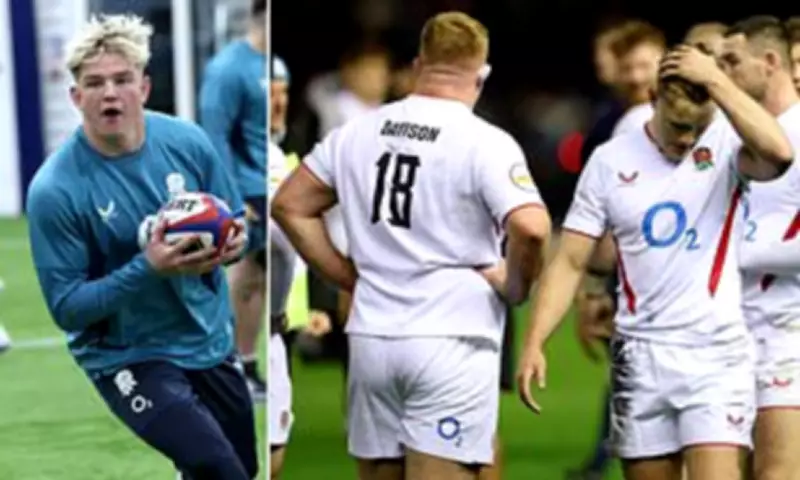
England endured a profoundly disappointing performance in Scotland, with Steve Borthwick's side making numerous errors early on to fall 17-0 behind. When a team loses at Test level, criticism inevitably follows, and England have faced their share this week. Borthwick and his players understand the reasons, but they should not abandon their strategy for Ireland based on one defeat.
The Proven Game Plan
There is a clear rationale behind England's 12-game winning streak prior to their trip to Edinburgh. That success was built on a specific game plan centred around kicking, which cannot be discarded after a single poor 80 minutes. Under Borthwick, England have evolved their attacking approach, but the core of their achievements over the past year has been the strength of their forwards, the kicking and game management of George Ford at fly-half, and the impact of their powerful bench.
In Edinburgh, however, England failed to perform, with multiple issues plaguing their display. Henry Arundell's two yellow cards and subsequent red meant Borthwick's side played with 14 men for 30 minutes, a disadvantage that cannot be underestimated. Losing a back-three player was particularly detrimental against Scotland, a team that exploits width and requires opponents to chase kicks effectively. Without Arundell, England were always likely to struggle.

Execution Over Tactics
England's slow start forced them to chase the game, a scenario ill-suited to their strengths. They excel when leading and applying pressure, using Ford's boot to strangle opponents. Falling 17-0 behind compelled them to abandon their usual tempo and take risks, which is not their forte. Discipline was poor, and uncharacteristic errors, such as frequent spills in contact, compounded their woes. Key players simply did not deliver.
In my view, England's issue against Scotland was entirely psychological, not tactical. They appear to have a mental barrier against Gregor Townsend's men. The failure of their kicking game was not due to flawed tactics but poor execution. Alex Mitchell and Ford's kicks lacked accuracy, often going too far and denying England opportunities to compete. Normally reliable in aerial contests, Freddie Steward and Tom Roebuck were outplayed by Scottish wingers Kyle Steyn and Jamie Dobie.
Looking Ahead to Ireland
If England lose three or four consecutive games, it would be appropriate to question their tactical approach, but it is far too early for that now. I was surprised Roebuck was dropped entirely, as his kick-chasing abilities could have been valuable, and shocked Arundell avoided a ban for his dangerous challenge. Some have argued England need to diversify beyond kicking, but this is unfair. They are not a one-trick pony, and kicking was instrumental in their unbeaten run, with 38 points directly from kicks in their autumn campaign.
The team selected for Ireland looks promising. Injecting energy with Henry Pollock, Tom Curry, and Ollie Lawrence should help address the slow start. Lawrence adds power in midfield, and I favour him at outside centre with Tommy Freeman on the wing, as they are England's best in those positions. Steward, Freeman, and Arundell will compete fiercely on Ford's kicks, while Pollock and Ben Earl target loose balls, enabling attacks with pace.
Sticking to Strengths
No team should apologise for leveraging their strengths. During my time with Wales, we achieved success by playing to our powerful backs' advantages. I recall a Six Nations victory over France in 2016, where we executed perfectly but faced criticism for not playing more attacking rugby. Questions arise after losses, but not wins, and England must remain steadfast. Borthwick's squad is not only talented but also likeable, with a genuine connection to fans that should not be undermined by one poor game.
England boast a strong home record, and I fully expect them to bounce back against Ireland, re-entering title contention. A final note on Maro Itoje, who earns his 100th cap this weekend. An iconic player for England, he deserves this milestone, and I anticipate a much happier outcome for him this Saturday.

Wales' Strategic Roof Decision
Turning to Wales, they face Scotland after heavy defeats by England and France. The Principality Stadium roof has long been a topic of debate, with Warren Gatland favouring it closed. The Welsh Rugby Union now mandates it shut for all Championship matches in Cardiff, but I believe Wales should consider opening it for the Scotland game. Rain is forecast, and Scotland struggled in wet conditions against Italy, with their scrum faltering. While Scotland prepare in sunny Spain, Wales could gain an advantage in adverse weather.
This is not to guarantee a Wales victory, but it could enhance their competitiveness. As a ball-playing team, Scotland benefits from perfect conditions, so why provide them? The stadium is Wales', and sporting performance should take precedence over entertainment. With upcoming games against Scotland, Ireland, Italy, and Fiji, Wales should be judged after this run, not prematurely.