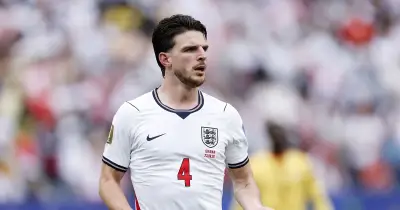
England manager Thomas Tuchel has strategically aligned the national team with the dominant tactical currents of contemporary football, specifically the dynamic, vertical style prevalent in the Premier League. According to football tactics analyst Alex Keble, this deliberate embrace of what Tuchel terms "Premier League DNA" should establish England as the favourites to win the 2026 FIFA World Cup.
Defining a National Identity Through Club Dominance
In his inaugural press conference, Tuchel declared his intention to "inject a little bit of club football into federation football," championing the Premier League's physical, direct style as a source of national pride and tactical blueprint. Keble contends this move is revolutionary, successfully defining an "English DNA" for the first time this century by leveraging the league's European supremacy as an untapped strategic asset.
The Historical Pattern of World Cup Winners
Keble's analysis rests on a compelling historical pattern: World Cup victors consistently mirror the prevailing tactical zeitgeist of their era. In 2006, Italy's defensively pragmatic triumph reflected a global trend towards conservatism, epitomised by clubs like Jose Mourinho's Chelsea. The 2010 victory of Spain's tiki-taka mirrored Pep Guardiola's Barcelona, while Germany's 2014 win showcased the gegenpressing revolution pioneered by Jurgen Klopp at Borussia Dortmund.
Even France's 2018 success, often seen as counter-trend, aligned with the pragmatic, counter-attacking models of Zinedine Zidane's Real Madrid and other dominant European clubs at the time, contrasting with Guardiola's Manchester City as the exception. The anomalous 2022 tournament in Qatar saw Argentina's flexible, adaptive approach under Lionel Scaloni suit a uniquely formless event.
The 2026 Tactical Zeitgeist: Premier League Verticality
The central question for 2026 is which nation best encapsulates the current tactical vanguard. Keble argues the answer lies unequivocally in England, home to the world's strongest and wealthiest league. The modern Premier League is characterised by intense verticality, manifested in two primary approaches: aggressive pressing to attack in transition, as seen at clubs like Newcastle United, or baiting presses to exploit spaces behind, a tactic of teams like Aston Villa and Brighton.
This environment has fostered a move away from static positional play towards more dynamic, man-to-man defensive systems and direct, rhythm-based attacking football. Guardiola himself noted this shift, stating "modern football is not positional."
Tuchel's Strategic Alignment
Thomas Tuchel's coaching philosophy, honed at Chelsea and Bayern Munich, perfectly intersects with this Premier League DNA. He emphasises a blend of possession dominance with high-pressing intensity and rapid transitions. His early focus for England has been on increasing touches in the opposition box and ball recoveries in the opponent's half, with many goals already coming from transitional situations—a Premier League specialty.
Furthermore, Tuchel is acutely aware of the set-piece prowess that could define a knockout tournament with limited training time. England boasts exceptional takers like Declan Rice and Bukayo Saka, with 31% of their goals under Tuchel originating from dead-ball situations. He has notably remarked that "the long throw-in is back," highlighting this as a potential tournament weapon.
An Inevitable Conclusion?
By repurposing the Premier League's defining characteristics as England's tactical identity, Tuchel has positioned his squad at the forefront of the 2026 football zeitgeist. Historical precedent suggests this is a proven formula for World Cup success. Keble posits that future retrospectives may view an England triumph not merely as the end of a 60-year drought, but as the logical, inevitable outcome of an era dominated by the Premier League's global tactical and financial superiority. The stage is set for England to translate their club competition's dominance onto the international stage.