The official draw for the 2026 FIFA World Cup was overshadowed by scenes of chaos and confusion in Washington DC on Friday, as thousands of attendees were forced to queue for hours in freezing conditions, raising serious questions about the tournament's preparedness.
Snow, Steel Fences, and Snaking Queues
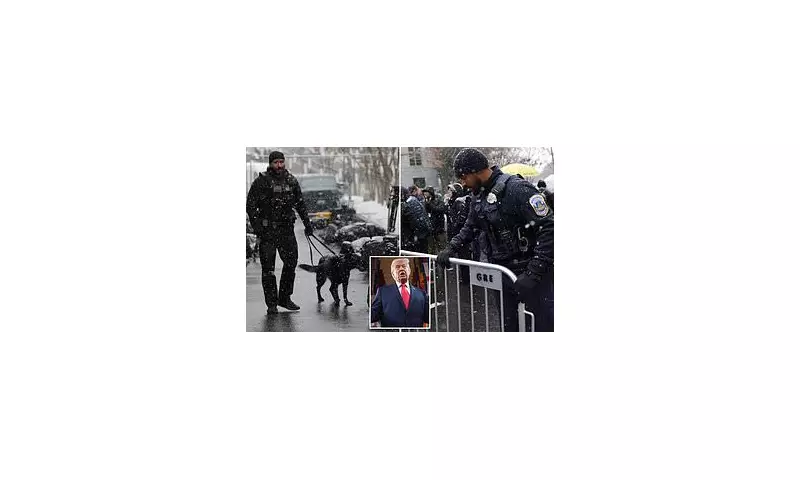
Hours before the ceremony at the John F. Kennedy Center was due to begin, a long line of people had formed along Jamal Khashoggi Way. With temperatures barely above -4°C (25°F) and snow falling, volunteers, staff, journalists, and guests were funnelled towards a single, small opening in a security fence. Progress was described as glacial, with people using umbrellas and ponchos for shelter.
The enhanced, airport-style security had been widely advertised, with National Guard troops seen scouting the venue the night before. Signs listed dozens of prohibited items, from balloons to selfie sticks. However, the reality was a bottleneck: thousands of people were processed through just three scanners at one entrance, leading to waits of up to two hours in the snow. The stringent measures were partly in preparation for the arrival of former US President Donald Trump, Canadian Prime Minister Mark Carney, and Mexican President Claudia Sheinbaum.
A Logistical Nightmare for a Record-Breaking Tournament
The chaotic preamble stood in stark contrast to the grand promises made inside the venue. With fewer than 200 days until the tournament begins, FIFA President Gianni Infantino heralded the 2026 World Cup as "the greatest event that humanity and mankind has ever seen and will ever see." The event will be the largest in history, spanning the United States, Canada, and Mexico, featuring 48 teams and 104 matches over five weeks.
Yet, the experience outside the Kennedy Center painted a different picture. The incident does not bode well for next summer, when the tournament will unfold across 16 host cities. The issue will shift from bitter cold to blistering heat, but the core challenge of moving and securing vast crowds remains. Concerns were amplified by recent events, including the final of the 2024 Copa America in Miami, where fans rushed entrances, creating dangerous crushes.
Trump's Presence and FIFA's Controversial Prize
Inside the hall, the ceremony itself was a lengthy affair featuring performances and appearances by celebrities like Tom Brady and Shaquille O'Neal. The political theatre, however, was unmistakable. Donald Trump, who attended events like the Club World Cup final and the Super Bowl since his return to the Oval Office, was a central figure.
In a moment that drew significant attention, Gianni Infantino awarded Trump the inaugural FIFA Peace Prize, presenting him with a medal, trophy, and certificate. This act cemented the visible alliance between the FIFA president and the former US leader. Trump's speech touched on topics from African wars to World Cup ticket sales, but was notably milder than his recent comments defending Saudi Crown Prince Mohammed bin Salman over the murder of journalist Jamal Khashoggi—the very namesake of the street where crowds shivered hours earlier.
As the Village People performed and Trump was seen dancing, the hundreds of international media present cycled through emotions from boredom to disbelief. The hope for organisers is that harsh lessons are learned from this frosty and fraught draw. With Infantino promising "104 Super Bowls" across North America, the margin for error in 2026 is vanishingly small.