Bodø/Glimt: The Arctic Underdog Lighting Up the Champions League
While the Champions League's last 16 typically showcases footballing giants like Real Madrid, Liverpool, and Bayern Munich, this season's narrative has been hijacked by an improbable contender from the far north. Bodø/Glimt, hailing from a modest Norwegian fishing town of just 55,000 residents, has not only gatecrashed Europe's elite competition but is thriving there, crafting a modern football fairy tale against all odds.
An Unlikely Setting for European Glory
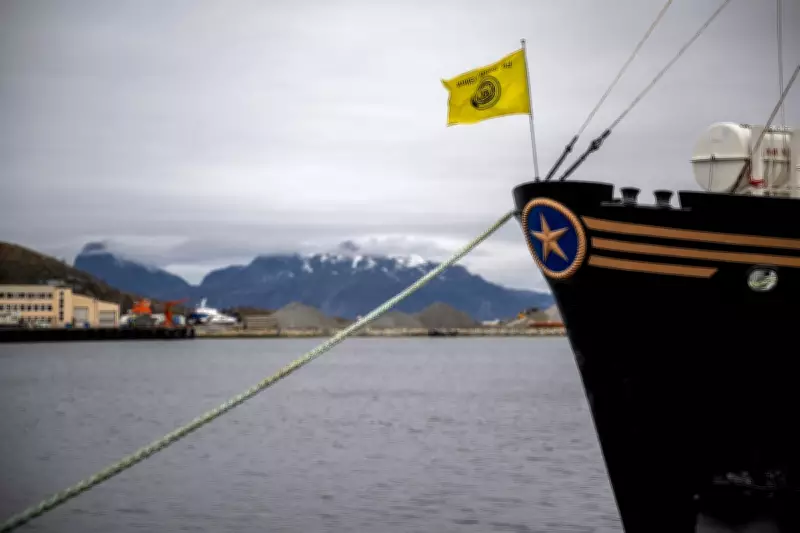
Bodø's location alone makes its Champions League participation remarkable. Situated more than 1,000 kilometers north of Oslo, above the Arctic Circle, it is the northernmost club ever to compete in the tournament's history. The town endures extreme conditions, with less than an hour of sunlight during the shortest winter days, forcing players to rely on supplements to compensate. Despite a forecasted kickoff temperature of 3°C (37°F) for their upcoming match, the team has adapted brilliantly, using their unique environment as a strength rather than a hindrance.
The club's home, Aspmyra Stadium, adds to its quirky charm. With a capacity of only 8,000, it is hardly designed for hosting Europe's biggest matches, and its artificial pitch has drawn criticism from purists who prefer natural grass. However, UEFA regulations permit approved synthetic surfaces up to the semifinals, allowing Bodø/Glimt to maintain their home advantage. A new 10,000-seat Arctic Arena is under construction, but it remains a testament to the club's humble origins.

The Fighter Pilot Behind the Success
Bodø/Glimt's transformation from a perennial "elevator club" bouncing between Norway's top divisions to a continental force is largely attributed to an unconventional figure: former fighter pilot Bjørn Mannsverk. Hired as a mental coach in 2017 after the team's relegation, Mannsverk applied techniques developed for bombing missions in Libya to foster a culture of openness and resilience.
Under his guidance, players began discussing their feelings openly, revamped their preparation and nutrition routines, and embraced mental training without stigma. Coach Kjetil Knutsen fully integrated these methods, implementing practices like rotating captains and post-goal huddles to maintain team solidarity. This psychological edge propelled Bodø/Glimt to their first Norwegian league title in 2020, with three more championships following in the next five years.
Defying Financial and Sporting Expectations
Unlike many Champions League contenders, Bodø/Glimt lacks funding from wealthy sheikhs or private investors. Their squad is assembled inexpensively, featuring largely unheralded players from Norway and Denmark. Star striker Kasper Høgh, a 25-year-old Dane without international caps, and attacker Jens Petter Hauge, who returned after a stint at AC Milan, exemplify the club's shrewd recruitment.
On the pitch, Bodø/Glimt is no defensive underdog. Under Knutsen's leadership, they play a free-flowing, high-intensity attacking style that has outclassed opponents like Manchester City in a stunning 3-1 home victory. Their Champions League run includes a 2-1 away win against Atlético Madrid and crucial successes over Inter Milan, showcasing their tactical prowess.
From Financial Modesty to European Revenue
The club's financial journey mirrors its sporting rise. In 2017, Bodø/Glimt operated on a budget of just 4.2 million euros ($5 million) with around 40 employees. By 2025, revenue soared to 80 million euros ($93 million), boosted by over 26 million euros ($30 million) from their Europa League campaign and subsequent Champions League earnings. While this pales in comparison to Real Madrid's billion-euro revenue, it represents a monumental shift for the Arctic club, with a 2026 budget projected at 50 million euros ($58 million) that could grow further with deeper Champions League progress.

What Lies Ahead for the Arctic Challengers?
As Bodø/Glimt prepares to face Portuguese champions Sporting Lisbon in the last 16, their fairy tale could continue. A victory would set up a quarterfinal clash against either Premier League leaders Arsenal or German champions Bayer Leverkusen, offering another chance to defy expectations. Regardless of the outcome, their story of resilience, innovative coaching, and community spirit has already cemented them as the feel-good narrative of this Champions League season, proving that even from the Arctic Circle, dreams can reach the highest echelons of football.