Bodø/Glimt's Arctic Champions League Dream: Plastic Pitches and Midnight Sun
In a Champions League last 16 brimming with footballing titans like Real Madrid, Liverpool, and Manchester City, one name emerges as the ultimate underdog: Bodø/Glimt. Hailing from a remote fishing town of 55,000 in northern Norway, this unassuming club has shattered expectations, securing a place among Europe's elite with a stunning four-win streak in the group stage.
An Arctic Outpost Defying Geography
Bodø sits more than 1,000 kilometers north of Oslo, positioned above the Arctic Circle where the Norwegian Sea meets the coastline. This location marks the farthest north the Champions League has ever ventured. During the depths of winter, the town experiences less than an hour of sunlight daily, prompting players to rely on vitamin supplements to counteract the lack of natural light. Despite frigid and windy conditions, locals have embraced the challenge, with kickoff against Sporting CP forecast at a brisk 3 degrees Celsius.
Beyond football, Bodø gained cultural recognition as the European Capital of Culture in 2024. However, it is the club's sporting achievements that now captivate the world.

The Quirky Home of Aspmyra Stadium
Bodø/Glimt's home ground, Aspmyra Stadium, holds approximately 8,000 spectators—a modest venue for Europe's premier club competition. Adding to its unique character is an artificial pitch, a feature often criticized in football for altering ball movement compared to natural grass. UEFA regulations permit approved synthetic surfaces up to the semifinals, allowing Bodø/Glimt to maintain their home advantage.
A new 10,000-seat Arctic Arena is under construction on the town's outskirts, though it remains relatively small by Champions League standards. This underscores the club's resourceful approach in an era of sprawling mega-stadiums.
The Fighter Pilot Behind the Success
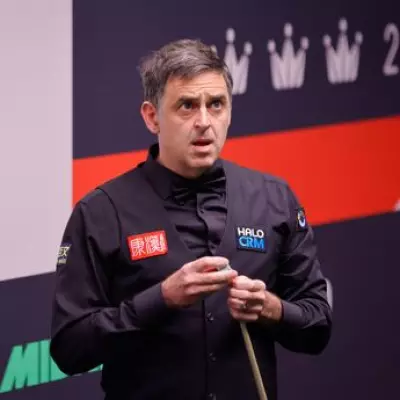
Founded in 1916, Bodø/Glimt waited over a century for their first Norwegian title, a transformation ignited by the arrival of former fighter pilot Bjørn Mannsverk. Hired as a mental coach in 2017 after the club's relegation, Mannsverk applied techniques from his military background, fostering open dialogue about emotions, revamping preparation and nutrition routines, and destigmatizing mental training.
Under manager Kjetil Knutsen, the team fully embraced these methods, including rotating captains and post-goal discussions to maintain unity. This cultural shift propelled Bodø/Glimt to their inaugural league crown in 2020, with three more titles in the subsequent five years. Continental success followed, including a Europa League semifinal appearance and a historic Champions League qualification.
A Squad Built on Humble Foundations
Unlike clubs backed by sovereign wealth or private equity, Bodø/Glimt operates on a modest budget, assembling a squad primarily from Norway and Denmark. Star striker Kasper Høgh, a 25-year-old Dane uncapped at international level, leads the attack alongside Jens Petter Hauge, who returned after a stint at AC Milan. Notably, only two Bodø/Glimt players were recently called up to the Norwegian national team.
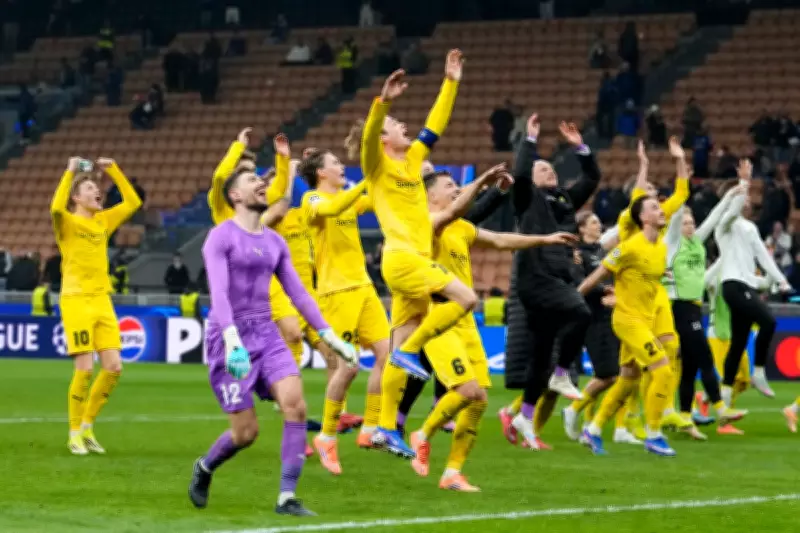
Knutsen's philosophy emphasizes free-flowing, high-intensity football rather than defensive pragmatism. This approach was evident in their dominant 3-1 victory over Manchester City at Aspmyra, showcasing tactical prowess against elite opposition.
Financial Ascent and Future Prospects
The club's financial trajectory mirrors its on-field rise. In 2017, Bodø/Glimt operated with a €4.2 million budget and 40 employees. By 2025, revenue soared to €80 million, fueled by Europa League and Champions League earnings. While paltry compared to Real Madrid's billion-euro turnover, this growth underscores their remarkable journey. For 2026, the club budgets €50 million, with potential increases tied to Champions League progress.
Should Bodø/Glimt overcome Sporting CP, a quarterfinal clash against Arsenal or Bayer Leverkusen awaits. Their story—from Arctic obscurity to continental acclaim—remains one of football's most inspiring narratives, proving that passion and innovation can triumph over geographical and financial constraints.