Charlie Nicholas's Wembley Glory: Arsenal's 1987 League Cup Triumph
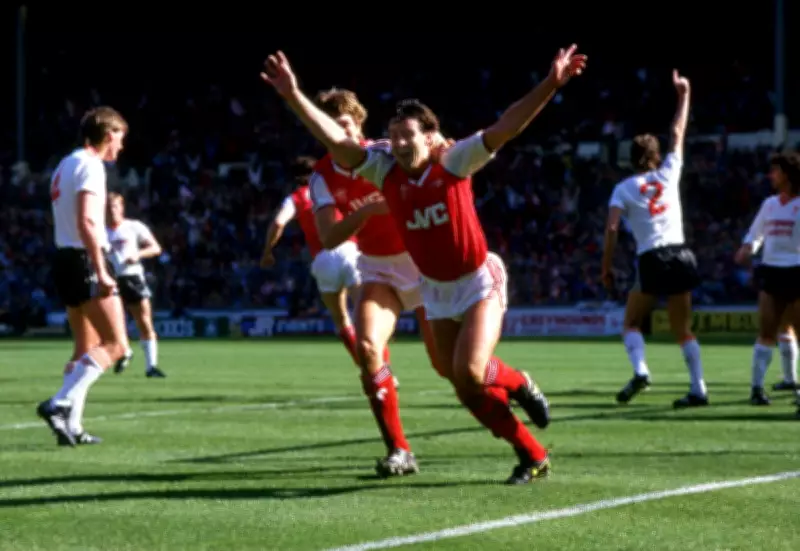
On a sun-drenched Sunday afternoon at Wembley in April 1987, Charlie Nicholas delivered a performance that etched his name into Arsenal folklore. With Barry Davies famously declaring him "the Bonnie Prince," Nicholas scored both goals in a thrilling 2-1 comeback victory over Liverpool, securing Arsenal's first-ever League Cup trophy and ending an agonising eight-year wait for silverware.
From Celtic Hype to Arsenal Hero
Nicholas's arrival from Celtic in 1983 had generated immense excitement, but his time at Highbury had been marked by inconsistency under managers Terry Neill and Don Howe. While he occasionally dazzled, particularly in north London derbies against Tottenham, his flair often clashed with the more disciplined approach favoured by the club. When George Graham took charge in 1986, rumours swirled that Nicholas's days were numbered, as his style seemed ill-suited to Graham's emphasis on energy and industry. Indeed, he would depart for Aberdeen in January 1988, but not before leaving Arsenal fans with an unforgettable parting gift.
The Road to Wembley: A Spirited Comeback
Arsenal's journey to the final was itself a tale of resilience. In the semi-final against Tottenham, they trailed 2-0 on aggregate at half-time in the second leg, with even the Spurs stadium announcer prematurely advertising ticket details for Wembley. Hearing this in the dressing room sparked a furious reaction: Arsenal scored twice to force a replay, then came from behind again to win 2-1 at White Hart Lane. Graham's young squad, dubbed "young guns," showcased a never-say-die attitude that would prove crucial.

Final Showdown: Arsenal vs. Liverpool
Facing Liverpool in the final was a daunting prospect. The Reds were overwhelming favourites, having made Wembley a "second home" with eight domestic cup finals in a decade. However, Arsenal had reasons for optimism: Liverpool were faltering in the title race, having lost their previous two league matches, and key players like Mark Lawrenson and Steve Nicol were sidelined with season-ending injuries.
The match unfolded as a classic Wembley spectacle, complete with live BBC coverage, a 3pm kick-off, and iconic pundits like Bobby Charlton. Liverpool started strongly, with Ian Rush opening the scoring in the 23rd minute after a slick move involving Jan Mølby and Steve McMahon. At that point, Liverpool's record of never losing when Rush scored—144 matches unbeaten—loomed large.
Nicholas Rises to the Occasion
Rather than collapse, Arsenal rallied. Paul Davis hit the post before Nicholas equalised in the 30th minute, sweeping home after a goalmouth scramble. Tony Adams, in his autobiography, recalled feeling confident of victory even after conceding, a sentiment echoed by captain Kenny Sansom. As Arsenal grew in confidence, controlling midfield through Davis and Steve Williams, the stage was set for a dramatic finale.
With extra time looming, substitute Perry Groves—a £50,000 signing from Colchester—used his blistering pace to beat Gary Gillespie and cut the ball back to Nicholas in the 83rd minute. Nicholas's shot deflected off Ronnie Whelan and trickled past Bruce Grobbelaar, sealing a 2-1 win. Celebrations erupted, with Graham punching the air and even BBC presenter Bob Wilson momentarily forgetting his impartiality.
Legacy of the Victory
The triumph marked a turning point for Arsenal. Nicholas expressed hope that Wembley would be "the start of something big," and while his own career at the club dwindled with the arrival of Alan Smith, Graham used the success as a springboard. He built a team that would later challenge Liverpool's dominance, laying foundations for future glory. As David Lacey noted in his match report, Arsenal's younger players "came of age," and the victory in their centenary season symbolised a resurgence that echoed through the years.
From "one-nil down, two-one up" chants to the end of Rush's unbeaten streak, the 1987 League Cup final remains a cherished memory, illustrating how a single match can redefine a club's destiny.