Inter Milan's Doping Scandal: Herrera's 'Bomb' Pills and Football's Dark 1960s Era
Inter Milan Doping Scandal: Herrera's 'Bomb' Pills Exposed

Inter Milan's Doping Scandal: Herrera's 'Bomb' Pills and Football's Dark 1960s Era

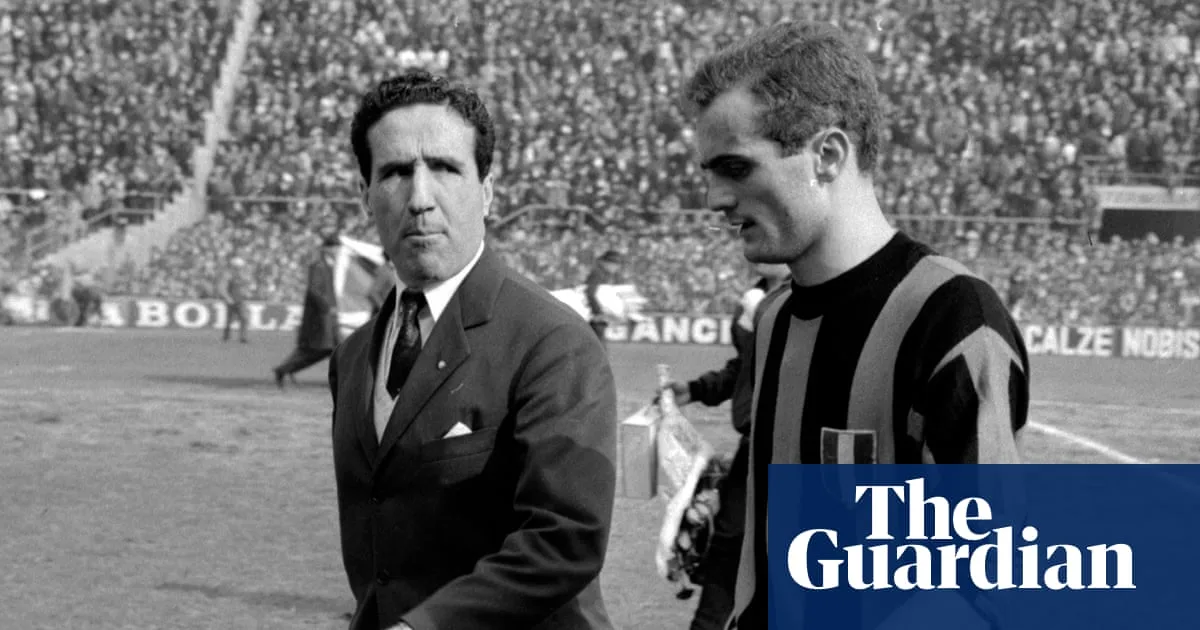
In the early 1960s, Inter Milan's training ground was stocked with pharmaceuticals to such an extent that it resembled a small hospital, echoing later descriptions of doping cultures at clubs like Juventus. This shocking environment, detailed in an extract from Richard Fitzpatrick's new book, reveals how coach Helenio Herrera, known as HH, orchestrated a systematic doping programme that exploited young players as test subjects.

Guinea Pigs and Hallucinatory Effects

Ferruccio Mazzola, a youth academy player at Inter and younger brother of star Sandro Mazzola, described in his memoir how HH used youth-team members as guinea pigs for drug experiments. He recounted taking white tablets that induced severe insomnia and hallucinations, leaving him feeling like a fish stranded on a riverbank. The side-effects included uncontrollable shaking, resembling epileptic fits, and were followed by days of extreme fatigue.

Many players resisted by hiding pills under their tongues and spitting them out later, but Herrera was vigilant. He dissolved the substances into coffee and personally ensured consumption before matches. As youth-team player Pierluigi Gambogi noted, the pills were like bombs that provided a powerful kick, driven by players' desires to advance their careers.

Brutal Consequences and Deceptive Practices

The dangers were starkly illustrated by Marcello Giusti, a centre-forward who took a pill before a reserve game in 1962. After the match, he experienced a psychotic episode, climbing walls and drooling like a rabid dog. His teammates initially thought he was joking, but the situation turned dire when Herrera callously ordered the team bus to leave without him, forcing Giusti to chase it down on foot.

Despite the Italian Football Federation introducing doping controls in the 1961-62 season, clubs found myriad ways to cheat. Franco Zaglio, an Inter midfielder, explained that for European competitions with high prize money, risks were taken freely. In Serie A, teams used elaborate schemes, such as substituting clean urine from bench players via hidden vials in bathrobes, to deceive testers.

Widespread Complicity and Legal Battles

Ferruccio Mazzola, who died in 2013, argued in his 2004 whistleblowing memoir that Inter was not alone in these practices, stating it was naive to view them as the sole culprit among Italy's great teams. His revelations sparked a feud with his brother Sandro and led to a libel lawsuit by Inter in 2005, which the club lost in 2008 after failing to disprove the allegations.

In court, former players testified about HH's concoctions, including altered coffee and fake vitamins. Sandro Mazzola later admitted to avoiding the pills by hiding them in his boots, after a massage therapist warned him they contained Simpamina, a dangerous amphetamine with severe side-effects.

Legacy of a Dark Chapter

This exposé sheds light on a troubling era in football history, where performance-enhancing drugs were rampant and authority figures like Herrera enforced compliance through fear. Fitzpatrick's book, HH: Helenio Herrera – Football's Original Master of the Dark Arts, offers a comprehensive look at these practices, challenging the glorified image of Inter's successes during Herrera's tenure.