
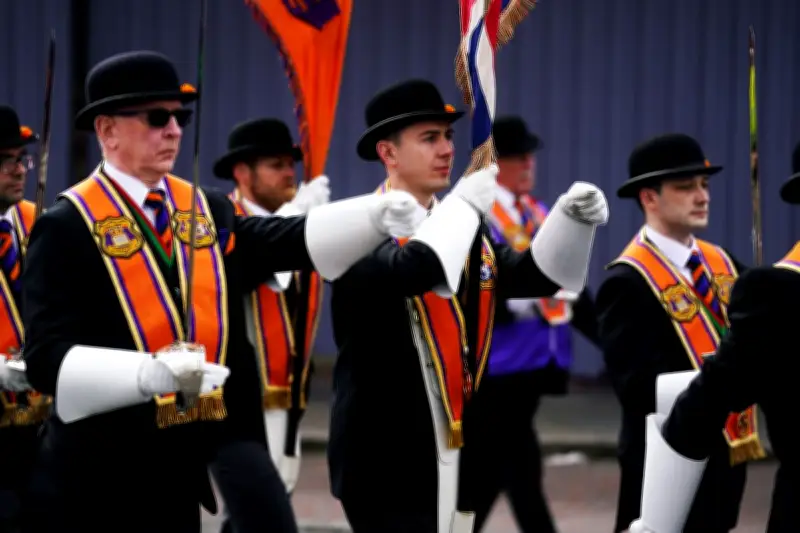
Tens of thousands are expected to take to the streets across Northern Ireland for the Orange Order’s annual July 12 parades, which will be held on Monday, July 13, as the traditional date fell on a Sunday this year.
Parade details and locations
The festivities will be spread across 18 main locations to commemorate the 336th anniversary of the Battle of the Boyne, in which the Protestant King William of Orange defeated the Catholic King James II. Orangemen and women from more than 1,000 lodges will be accompanied by approximately 600 marching bands.
The County Armagh demonstration is generally regarded as the largest parade, while Belfast has the longest route, with participants walking over six miles to the field.
Bonfires and incidents
The parades follow the burning of bonfires at hundreds of locations in loyalist neighbourhoods over the weekend, including traditional Eleventh Night bonfires. While most bonfires were uncontentious, there was condemnation after a replica of a mosque was placed on top of a bonfire in Moyghashel, County Tyrone. The fire was lit earlier than anticipated on Thursday after the Police Service of Northern Ireland (PSNI) commenced an operation to remove the effigy.
Additionally, a man died in hospital on Saturday after falling off a loyalist bonfire in east Belfast on Friday night.
Other events and policing
The Orange Order parade in Rossnowlagh, County Donegal, took place on Saturday. The traditional July 13 events organized by the Royal Black Preceptory in Scarva, County Armagh, will be held on Tuesday, featuring a parade and a sham fight between actors playing rival monarchs William and James.
The PSNI will undertake one of its biggest policing operations of the year on Monday to facilitate the parades.
Quotes from Orange Order Grand Master
Orange Order Grand Master Harold Henning said the significance of Orange culture and tradition is “underlined by the scale of the parades.” He stated: “The tradition of Orange parades stretch back 230 years, and the Twelfth continues to draw huge attendances of both participants and spectators. Our parades are a vibrant public expression of our identity, culture and heritage and that tradition is one which is held dear by a great many people in our community.”
He added: “The colour and pageantry on show on the Twelfth has increasingly been proven to be an attraction to visitors to Northern Ireland seeking an authentic cultural and heritage experience. The hundreds of bands on display include some of the very best marching flute, pipe, brass and accordion bands in the world. The iconic traditional sound of the Lambeg drum is another unique aspect of the Twelfth, and one which we are glad to see flourishing with a new generation of fifers and drummers.”




