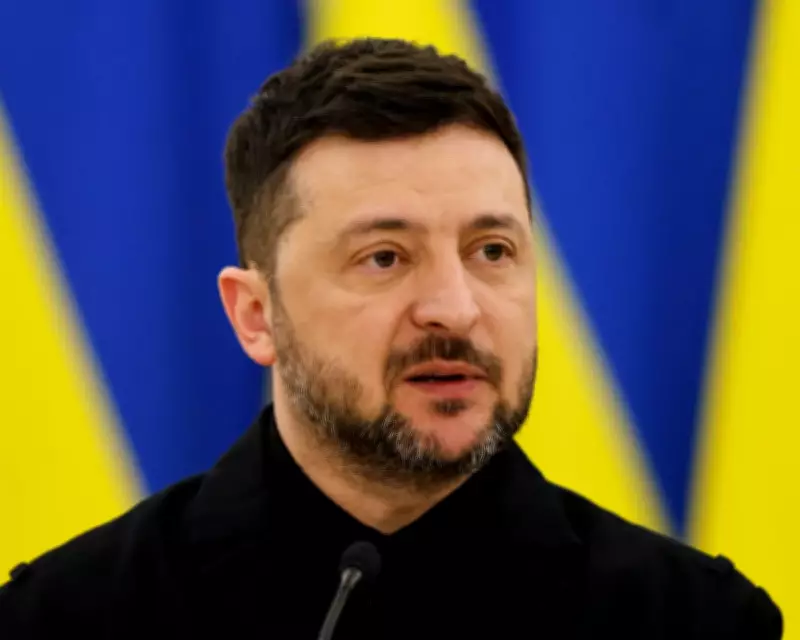
President Volodymyr Zelenskyy has declared that Ukraine will conduct elections solely when all essential security guarantees are established and a ceasefire with Russia is in effect. This announcement comes as he refutes claims that he intends to organize new ballots under pressure from the United States.
Security Conditions for Democratic Process
In a voice note shared with reporters on Wednesday, Zelenskyy emphasized the prerequisites for holding elections in the war-torn nation. "We will move to elections when all the necessary security guarantees are in place," he stated. "I have said it's very simple to do: establish a ceasefire, and there will be elections." He further suggested that if Russia cooperates, hostilities could potentially conclude by summer.
Since Russia's invasion in 2022, Ukraine has operated under martial law, effectively suspending all electoral activities. This legal framework has postponed any political voting until the conflict subsides and stability is restored.

Escalating Military Tensions and Civilian Casualties
Amid these discussions, Russian strikes continue to inflict devastation across Ukraine. On Wednesday, attacks in the Dnipropetrovsk region resulted in the deaths of four civilians and injuries to several others. Regional governor Oleksandr Ganzha reported that the assaults occurred in three small localities near Synelnykove, east of Dnipro.
In one incident, a man was killed and his wife wounded, while in another, a couple and their 45-year-old son perished, with an additional man injured. A woman was hurt in a separate village, highlighting the ongoing humanitarian crisis.
In response to the escalating violence, senior Ukrainian officials convened to enhance air defence capabilities around Kyiv. Energy minister Denys Shmyhal announced on Telegram that critical infrastructure facilities have been identified and prioritized for protection following recent Russian air attacks on energy systems. These assaults have left thousands without power and heat, prompting urgent repairs.
International Diplomacy and Pressure
Zelenskyy has called for increased international pressure on Russia to expedite the war's end. He asserted that the United States must play a pivotal role in compelling Moscow to engage in peace negotiations. "It depends not only on Ukraine, but also on America, which must exert pressure – excuse me for saying so, but there is no other way: it must exert pressure on Russia," he remarked on Wednesday.
This statement follows earlier indications from Washington about aiming to conclude the conflict by June. Zelenskyy noted that Russia is still deliberating its participation in proposed trilateral peace talks in Miami, while Ukraine remains prepared to attend.
Allied Support and Defence Initiatives
In a show of solidarity, British defence minister John Healey announced a £150 million commitment to the Prioritised Ukraine Requirements List (Purl) initiative. This program, established last summer, ensures the continuous flow of US weapons to Ukraine amid stalled American military assistance.
"Together we must provide Ukraine with the critical air defence it needs in response to Putin's brutal onslaught," Healey declared in a Wednesday statement. US ambassador to NATO Matthew Whitaker revealed that allies have already contributed over $4.5 billion through this mechanism.
Broader Implications and Regional Concerns
The conflict's ramifications extend beyond the battlefield. Pro-war bloggers in Russia have warned that a government crackdown on the Telegram social media app could impair military communications, as the platform's founder resists Moscow's pressures. Russia's communications watchdog has threatened to slow the app nationwide, citing regulatory violations.
Additionally, the safety of Europe's largest nuclear power plant remains a critical issue. Pavlo Kovtoniuk, head of Ukraine's nuclear operator Energoatom, asserted that the Zaporizhzhia plant can only be safely restarted under Ukrainian control. He cautioned that Russia lacks necessary equipment and spare parts, risking a nuclear accident if attempts are made to reactivate the reactors.

In a poignant display of defiance, Ukrainian skeleton racer Vladyslav Heraskevych has vowed to wear a "helmet of memory" honoring deceased athletes, despite facing potential disqualification from the International Olympic Committee. "I will not betray these athletes," he affirmed, underscoring the personal sacrifices intertwined with the national struggle.