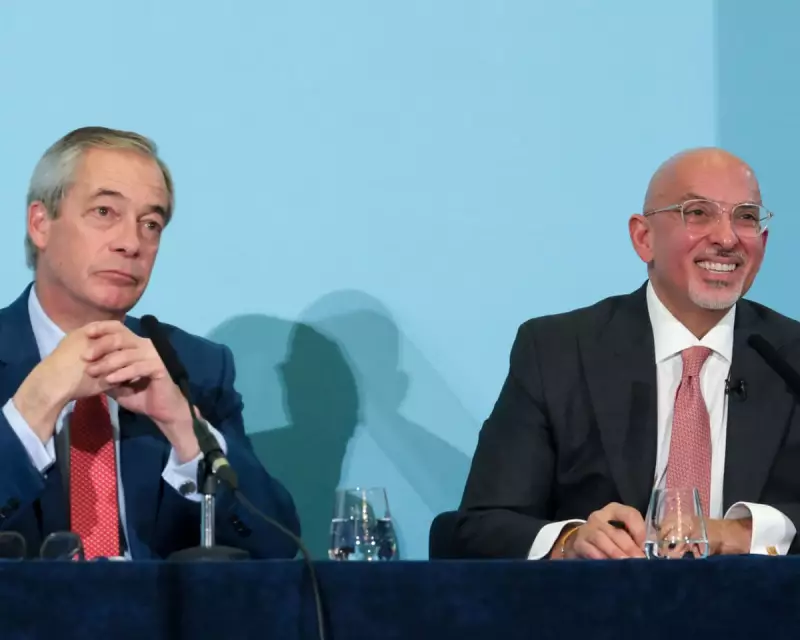
The political landscape shifted dramatically this week as former Conservative chancellor Nadhim Zahawi crossed the floor to join Nigel Farage's Reform UK. This move, the 20th such defection from the Tories, presents both a significant opportunity and a profound dilemma for the insurgent party as it seeks to transform poll leads into a credible government.
A Calculated Defection with Political Baggage
Nadhim Zahawi's ministerial CV is precisely what Reform UK has been lacking. As the former chancellor and health minister who oversaw the successful Covid vaccine rollout, he brings a sheen of governmental experience that party leader Nigel Farage has openly admitted is a major hurdle. However, this experience comes wrapped in the tainted brand of the ousted Conservative administration.
Zahawi's political flexibility has been noted by allies and opponents alike. His brief tenure as chancellor in July 2022 came during the death throes of Boris Johnson's premiership, after Rishi Sunak's resignation. Zahawi initially backed Johnson, only to call for his resignation a day later while refusing to quit his own post—a move that saw colleagues privately label him an opportunist. Even Farage remarked at the time that it showed Zahawi was only interested in "climbing that greasy pole".

The Conservative response to his defection was swift and brutal, briefing that he had "begged" for a peerage just weeks ago and was refused due to the scandal that ended his frontbench career. In 2023, Zahawi was sacked as Tory party chair after an investigation found he failed to be transparent about a £5 million settlement with HMRC over unpaid taxes.
The Inherent Tension: Reform or Conservative Party 2.0?
Farage's strategic quandary is now thrown into sharp relief. While Zahawi's defection—following those of Lee Anderson and Danny Kruger—is a major coup, it risks turning Reform into what some are calling "Tory party 2.0". An insurgent movement, by its nature, is not typically composed of figures who were in government for the past 14 years. The attraction for ex-Tories is clear: Reform leads in the polls and offers a potential path back to power. Yet, as Reform's Zia Yusuf warned, "washed up" former MPs will not be prioritised for candidacies.
This recruitment drive also resurrects Zahawi's complicated history with Farage. For years, the two have sparred publicly on social media. In a 2015 post on X (only deleted this Monday), Zahawi labelled Farage's comments on Polish workers "offensive and racist" and said he would be "frightened" to live in a country run by him. Policy flashpoints loom too, notably on vaccines, where Zahawi's proudest achievement clashes with Reform's platforming of controversial doctor Aseem Malhotra, who made unfounded claims about vaccine safety.
Broader Implications for a Weakened Conservative Party
The immediate fear for the Conservatives—that Zahawi's move would trigger a mass exodus of sitting MPs—has, for now, partially dissipated. Polls suggest Reform's momentum may be stalling, and head-to-head surveys show Keir Starmer, Kemi Badenoch, and Ed Davey all beating Nigel Farage. Furthermore, Prime Minister Liz Truss has shown faint signs of stabilising her party, which has a notorious survival instinct. With years until the next election, potential defectors can afford to wait and see.
Nevertheless, the defection of a figure of Zahawi's stature is a symbolic blow. He once vowed to be a "lifelong Tory", declaring in 2014 he would "die a Conservative". His claim on Monday that the Tory brand is now "defunct" and incapable of forming the next government is a powerful attack from within. The ultimate prize for Reform would be to trigger a wave of sitting MP defections, which could herald the end of the Conservative Party as a major force.

For Reform, the challenge is integration. Can Nigel Farage, a leader not known for sharing the limelight, build a stable and effective partnership with a seasoned operator like Zahawi, given their antagonistic past? Ambition has united them for now, but with Farage's career littered with dramatic fallouts, this new alliance will be tested from day one. Zahawi is unlikely to be the last Tory to make this calculation, but whether he helps build a government or merely a pale imitation of one remains the critical question.