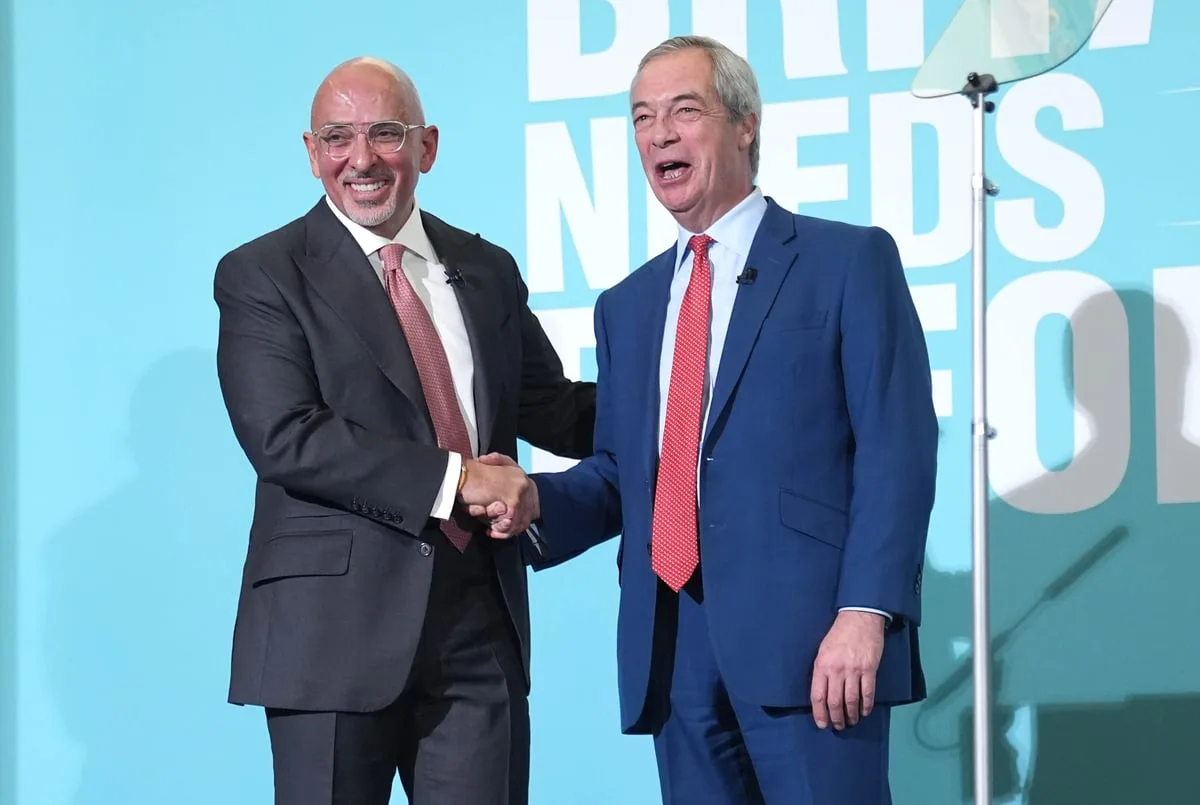
In a significant blow to Rishi Sunak's Conservative Party, former cabinet minister Nadhim Zahawi has crossed the floor to join Nigel Farage's Reform UK. The defection, announced on Monday 12 January 2026, marks one of the most high-profile Tory departures to the rival right-wing party.
From Chancellor to 'Foot Soldier': Zahawi's Rocky Road
Nadhim Zahawi is by far the most senior Conservative figure to defect to Reform UK. His political career includes a brief but tumultuous tenure as Chancellor of the Exchequer in 2022, following Rishi Sunak's resignation during Boris Johnson's collapsing administration. He served as caretaker chancellor for just two months.
His time in high office, however, led to serious personal repercussions. While serving as Conservative Party Chair under Prime Minister Sunak, an investigation by The Independent revealed he had not been fully transparent about an HMRC inquiry into his tax affairs upon becoming chancellor. HMRC concluded he had been "careless" regarding a capital gains tax matter.
A subsequent probe by the independent adviser on ministerial conduct found in January 2023 that Zahawi had "shown insufficient regard for the general principles of the ministerial code." This resulted in his sacking by Sunak. Zahawi later stood down as an MP at the 2024 election. He was also previously criticised in 2013 for claiming £58,000 in MPs' expenses for heating his stables, for which he apologised.
What Zahawi Brings to the Reform UK Table
Despite the controversies, Zahawi offers Reform UK certain assets it currently lacks. Nigel Farage has openly admitted his party needs more experience at the highest levels of government. Zahawi provides a business background as the co-founder of polling firm YouGov and a compelling personal narrative as a Kurdish-born Iraqi refugee who arrived in Britain speaking no English.
He is a strong media performer and was considered a competent Education Secretary. His most notable achievement was leading the team that oversaw the rapid COVID-19 vaccine rollout in 2021. However, this record may sit uneasily with the anti-vaccine faction within Reform's membership.
Zahawi has stated he wishes to be a humble "foot soldier" for Farage, claiming the UK has reached a "dark and dangerous chapter." He is expected to work with fellow defector Danny Kruger to develop policies, hire staff, and raise funds ahead of the general election.
A Conservative Party in All But Name?
Reform UK's ranks are increasingly filled with former Conservatives. From its founding figures like Nigel Farage, Richard Tice, and Arron Banks—who left the Tories in the 1990s—to the recent wave of defectors including Kruger, Zia Yusuf, and now Zahawi, the party draws overwhelmingly from the right of the Tory spectrum.
Farage argues that the local, Welsh, and Scottish elections on 7 May 2026 will spell the extinction of the Conservative Party, triggering further defections. His goal is to "unite the right" under his leadership, leaving figures like Kemi Badenoch with a diminished centrist rump.
The risk for Reform is appearing as a refuge for failed Conservative politicians seeking a route back to power, rather than a party of fresh ideas. Farage has had limited success in attracting talent from outside the political bubble.
Speculation now turns to who might follow Zahawi. Farage says he is talking to "all sorts of people" from the Johnson/Truss/Sunak eras. All eyes are on figures like Jacob Rees-Mogg, though his loyalty to the Conservatives remains strong. A potential by-election in his old seat of North East Somerset—triggered by the arrest of the current Labour MP—could force the issue if Reform chooses to stand against him.
As for former Prime Minister Liz Truss, she is considered a potential defector but may currently be viewed as too toxic an asset for Reform to embrace immediately.




