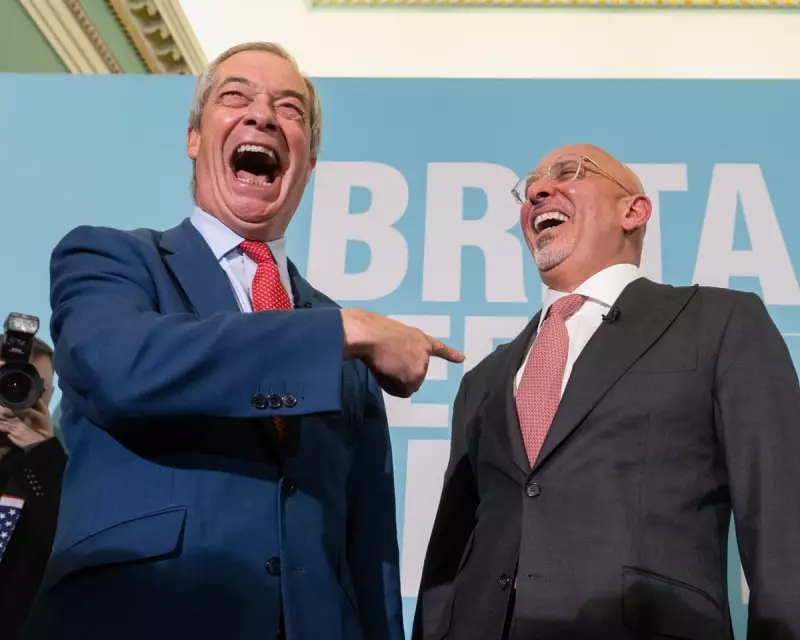
In a move that underscores the ongoing realignment of British politics, former Conservative Party chairman Nadhim Zahawi has officially joined Nigel Farage's Reform UK. The defection, announced at a press conference in central London, represents one of the most high-profile conversions to the populist party to date.
A Calculated Defection Amidst Tory Turmoil
The unveiling took place at the Institute of Directors, where Farage presented his latest recruit. For Zahawi, a former chancellor and prominent business figure, the switch follows the loss of his parliamentary seat in the 2024 general election. According to sources within the Conservative Party, Zahawi had sought a peerage from senior Tory Kemi Badenoch just weeks prior to his defection, a bid that was apparently unsuccessful.
Zahawi insisted his decision was a matter of principle, claiming he let his Conservative membership lapse in December. He framed his move as a response to a nation in crisis, stating the country needed his experience. This narrative of self-importance was met with scepticism, given his central role in the very governments he now criticises for the state of the economy.

A Career of Controversy and Political Agility
Zahawi's political career is a litany of controversies and sharp political turns. He was sacked as Tory chairman in early 2023 for failing to disclose he was under investigation by HM Revenue and Customs over a multi-million pound tax settlement. The settlement included a 30% penalty, indicating behaviour deemed more serious than mere oversight.
His judgement has frequently been questioned. He served as chancellor under Boris Johnson for a mere 48 hours before calling for the Prime Minister's resignation. He backed Liz Truss's leadership, then Johnson again, before ultimately switching allegiance to Rishi Sunak as his political survival instincts kicked in. Earlier in his career, he was criticised for claiming parliamentary expenses for heating his stables.
Reform's Growing Roster of Tory Refugees
Farage appeared unconcerned by Zahawi's chequered past, welcoming him warmly. For the Reform leader, the acquisition serves a dual purpose: it inflicts maximum damage on the Conservative Party and helps diversify his party's image beyond that of a one-man band. Zahawi joins other former Tories in Reform ranks, including Lee Anderson, Andrea Jenkyns, Jake Berry, and Danny Kruger.
When challenged on past comments, Zahawi performed remarkable political gymnastics. He dismissed a 2015 tweet in which he declared he "could never live in a country run by Farage" and that the Reform leader offered only division. He also brushed aside the irony that, under Reform's current strict immigration proposals, his own family might have been barred from entering the UK.
Uncomfortable Questions and Defensive Reactions
The press conference grew tense when journalists probed Zahawi's tax affairs and past criticisms. He became visibly tetchy, labelling one question from a Daily Telegraph reporter as "stupid" and snapping, "I expected better of you." Farage intervened protectively, signalling an end to the line of questioning.
On policy, awkward moments arose regarding Reform's platform. Zahawi, the former vaccines minister, was asked about Reform giving a platform to a medic who falsely claimed the King's cancer was caused by a Covid vaccine. Farage fielded the question, defending it as an exercise in free speech. He extended this principle to defending the availability of Grok AI as a premium porn service on the social media platform X.
The event concluded with Zahawi seemingly restored to a position he craves: centre stage, with a renewed sense of political purpose, however opportunistic it may appear to observers. For Farage, the peerage Zahawi reportedly desires was jokingly noted as "in the post," contingent on Reform ever holding the power to grant it. This defection is less a political bombshell and more a stark illustration of the shifting loyalties and existential struggles defining the UK's right-wing landscape.