Vance's 2028 Presidential Ambitions Clouded by Iran Conflict and Family
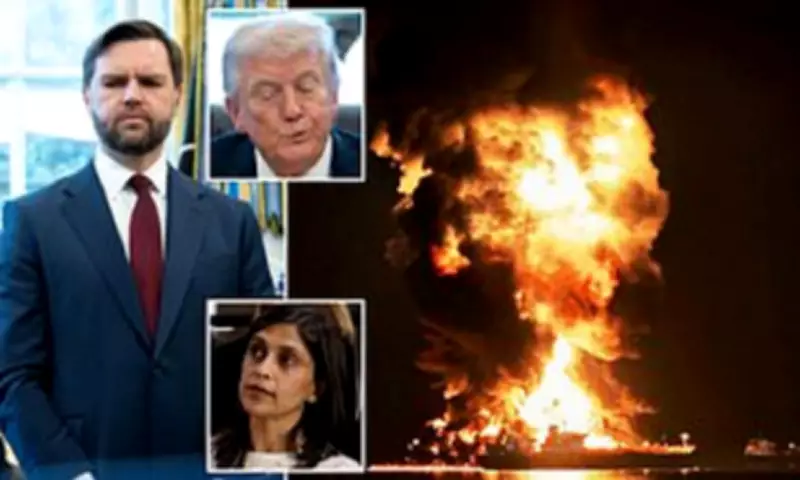
Vice President JD Vance is reconsidering a potential run for the presidency in the 2028 election, as former President Donald Trump's military confrontation with Iran intensifies in the Middle East. According to sources close to Vance who spoke with The Washington Post, if the conflict persists for several months, it could severely undermine the next Republican presidential nominee's prospects.
Family Considerations Influence Political Decision
Vance has informed his closest advisers that he has not yet decided whether to seek the GOP nomination in 2028, largely due to the impending arrival of his fourth child this summer. He and his wife, Usha Vance, wish to assess how another baby will impact their family life before committing to a demanding campaign trail. This personal factor has prompted Vance to rethink his presidential ambitions, adding a layer of uncertainty to his political future.
Silence on Middle East Conflict Contrasts with Past Stance
Notably, Vance, who began his political career as a vocal opponent of prolonged military engagements in the Middle East, has remained conspicuously quiet as Trump advances the war against Iran. This silence comes amid mounting pressure on the Vice President, exacerbated by the dramatic resignation of former Counterterrorism Director Joe Kent. Before Kent's public departure, in which he criticized Trump and alleged the war was initiated due to Israel, Vance attempted to dissuade him from turning the exit into a public dispute, though this effort ultimately failed.

Rubio Emerges as Trump's Likely Successor
Meanwhile, Senator Marco Rubio is increasingly viewed as Trump's probable successor for the 2028 election. A year ago, after Trump returned to the Oval Office, Vance was seen as the frontrunner. However, Trump's recent foreign policy shifts have highlighted Rubio's hawkish influence. Rubio was present alongside Trump in the makeshift Situation Room at Mar-a-Lago in January during the military operation against Venezuela that resulted in the capture of dictator Nicolás Maduro. He was also by the President's side at the Florida estate at the onset of Operation Epic Fury, as missiles targeted Tehran. Vance was absent from both meetings, fueling speculation about a potential rift with Trump.
Trump Acknowledges Vance's Hesitation
Earlier this month, Trump admitted that Vance was initially "maybe less enthusiastic" and "philosophically a little bit different" regarding the war on Iran. This acknowledgment underscores the growing divide, with Rubio's alignment contrasting sharply with Vance's reserved stance.
Global Oil Crisis and Casualties Escalate
The conflict has triggered a global oil crisis, with gasoline prices in the US surging to an average of $3.90 per gallon from $2.90 before the war began three weeks ago. The Strait of Hormuz, through which a fifth of the world's oil flows, remains blockaded by Iranian mines and missiles, exacerbating economic pressures. Additionally, at least 13 US troops have been killed and over 200 injured since the start of Operation Epic Fury, highlighting the human cost of the escalation.
Betting Markets Reflect Shifting Odds
Vance's chances of securing the GOP nomination have significantly declined on betting markets like Kalshi. Near the end of last year, he held approximately a 54% chance of becoming the nominee. Currently, Rubio is nearly tied with him, as Vance maintains a 38% chance while Rubio stands at 31%, indicating a notable shift in political forecasting.