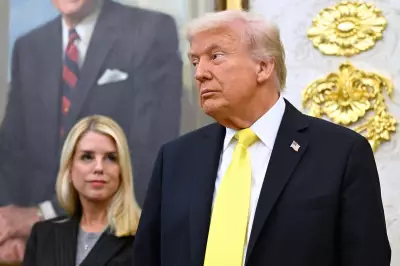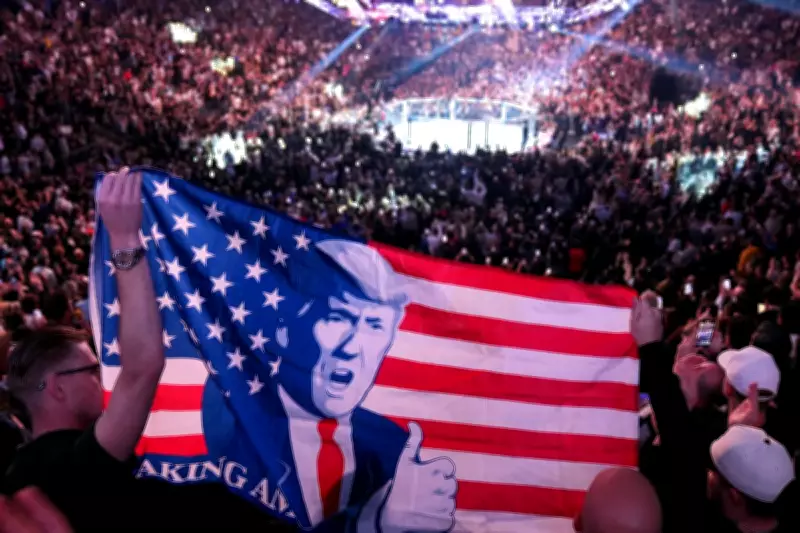
In a striking fusion of sport and statecraft, the Ultimate Fighting Championship is set to bring its signature cage-match spectacle directly to the White House lawn. This unprecedented event, scheduled for June 14, will serve as a dual celebration for President Donald Trump's 80th birthday and the nation's 250th anniversary. Crews will soon erect a six-foot wire-mesh octagon on the South Lawn, transforming the symbolic heart of American democracy into a venue for mixed martial arts combat.
A President's Passion for Pugilism
The decision to host a UFC event at 1600 Pennsylvania Avenue is a deeply personal one for President Trump, whose political brand has long been characterised by a pugilistic, no-holds-barred approach. "I have respect for fighters, you know, when you can take 200 shots to the face and then look forward to the second round," Trump remarked during a recent podcast interview with Logan Paul. This celebration of bloody, brute force dovetails perfectly with what analysts describe as Trump's gleefully combative charisma and his embrace of an extreme ideological masculinity.
Trump's affinity for the sport is well-documented. He became the first sitting president to attend a UFC event in 2019, witnessing a bout stopped due to a severe facial cut. To the uninitiated, UFC may appear to celebrate violence, and it remains wildly popular with young men. However, veteran MMA referee and commentator "Big John" McCarthy offers a different perspective. "A lot of people don't understand fighting and they think fighting is about anger. It's not. If you're angry when you fight, you'll lose," McCarthy explained. "Fighting is about technique and style, and understanding how to make your opponent make mistakes while you don't. I totally understand why he likes it. Because I do."

Strategic Symbiosis: UFC and Trumpian Politics
The partnership is mutually beneficial and strategically calculated. "It is hard to find a phrase more Trumpian than Ultimate Fighting Championship," observed one analyst. Trump, a committed devotee of hyperbole, relishes grand descriptors like "ultimate." The term "championship" also resonates with a president who constantly professes love for winning. Professor Kyle Kusz of the University of Rhode Island, who studies sports and the far right, stated, "He uses UFC to portray himself as a manly sportsman. This is calculated. He knows what he's doing." Kusz sees clear parallels between the sport's style of masculinity and Trump's approach to policy and politics.
The logistics are ambitious. UFC boss Dana White, a longtime friend of the President, will oversee the construction of a temporary 5,000-seat arena near the White House entrance. The league plans to issue 85,000 free tickets, with eight large screens set up in a nearby park for additional viewers. In a significant scheduling shift, the event will occur on a Sunday instead of UFC's traditional Saturday slot and will be broadcast live on Paramount+, a platform controlled by the Ellison family, close Trump allies. The event's importance was underscored when France rescheduled its G7 summit to avoid a conflict with Trump's birthday festivities.
Controversy and Criticism of the Fight Card
Despite Trump's boast that the event will feature "all top guys," the announced fight card has faced significant criticism from fans and fighters alike. Notably absent are marquee names like former two-division champion Jon Jones, who requested his release from UFC after being excluded, and global icon Conor McGregor. Former champion Ronda Rousey, mounting her own comeback outside UFC, was blunt in her assessment: "The UFC's White knows the White House card sucks. It fell extremely short of expectations."
The current card, still being finalised, includes two championship bouts:

- Brazil's Alex Pereira vs. France's Ciryl Gane for the interim UFC heavyweight title.
- Spanish-Georgian lightweight champion Ilia Topuria vs. interim champ Justin Gaethje, one of only two Americans currently holding a UFC championship belt.
The White House has declined to address criticisms of the card or its aggressive political overtones. Communications director Steven Cheung, a former UFC spokesman, instead hailed the event as "one of the greatest and most historic sports events in history" and "a testament to his vision to celebrate America's monumental 250th anniversary."
UFC's Journey to the Mainstream
UFC's path to the White House lawn marks a remarkable evolution for a sport once derided as "human cockfighting" by the late Senator John McCain. Historian and podcast host Patrick Wyman notes that UFC solidified its status as a major US sports league with a 2018 media-rights deal with ESPN. Trump himself played a role in its early growth, hosting bouts like 2001's "Battle on the Boardwalk" at his Atlantic City casino.
Wyman suggests that UFC's strategic focus on building its brand over individual fighters has cultivated a core demographic of men aged mid-40s to early-60s—a group already inclined to support Trump. "I think it's a pretty perfect encapsulation of the way that Donald Trump thinks about politics," Wyman said of the White House event, citing its "transactional nature" and the blurred lines between business and politics.
The political utility of this alliance is clear. Trump's 2024 reelection campaign actively leveraged his UFC connections to engage voters outside traditional politics. Notably, two days after his conviction on 34 felony counts in June 2024, Trump attended a UFC bout in New Jersey, with the campaign using footage of his raucous reception to launch its TikTok account. He has since attended several other UFC events, often with political entourages in tow.
Sports and the Presidency: A Longstanding Tradition
While unprecedented in scale, Trump's use of sports for political appeal is part of a long presidential tradition. Republican George W. Bush's perfect strike at Yankee Stadium during the 2001 World Series became a symbol of resilience. Republican Richard Nixon's public football fandom was so pronounced that aides feared alienating voters, according to Chris Cillizza, author of "Power Players: Sports, Politics, and the American Presidency."
"Such worries are gone today," Cillizza notes, "since sports now tends to self-select by political affiliation. In an era where people feel like politicians are mostly weirdo aliens, sports—playing them, having knowledge about them—represents one of the best ways to prove to voters you are actually a human being."
As construction begins on the White House octagon, this event stands as a potent symbol of a presidency and a political movement that celebrates combat, both in the cage and in the arena of public life.