Trump Administration's Shifting Justifications for Iran Invasion Fail to Convince
The Trump administration faces mounting criticism for its inability to provide a consistent explanation for the United States' invasion of Iran. This communication chaos points to deeper issues: either a fundamental lack of consensus regarding the President's intentions or a leader juggling too many contradictory thoughts simultaneously.
Midnight Regime Change Declaration
President Trump's original announcement, delivered via social media in the early hours, presented a clear call for regime change. He described the Iranian government as "a vicious group of very hard terrible people." While this characterization might hold some truth, similar descriptions could apply to numerous other nations like Russia, North Korea, or Afghanistan—countries the US has not chosen to invade.
Furthermore, domestic brutality alone does not typically justify military intervention when no imminent threat exists to other sovereign states. Even invoking a duty to prevent genocide falls short, as Iran's internal situation, however horrific, does not approach that catastrophic threshold.

The Evolving Threat Narrative
Trump's initial message also emphasized danger, claiming Iran's "menacing activities endanger the United States, our troops, our bases overseas and our allies throughout the world." This argument gained some validity after Iran began launching regional missiles on Sunday. However, on Saturday, before the invasion commenced, intelligence assessments suggested Iran's capabilities were significantly degraded.
Its economy was in ruins, its nuclear program reportedly dismantled, and internal dissent threatened the regime. The nation's ability and apparent willingness to project power beyond its borders appeared more limited than in decades. Consequently, the portrayal of an imminent threat to American security seems manufactured rather than genuine.
Historical Grievances and Nuclear Ambiguity
The administration subsequently compiled a greatest hits list of Iranian transgressions: chants of "Death to America," terrorism support, and the 1979 US Embassy takeover. Notably absent was any mention of the 1953 CIA coup that overthrew an elected Iranian president, installing the brutal Shah whose downfall directly led to the Islamic Republic.
Trump referenced the 1983 Marine barracks bombing—a horrific act—but reviving forty-year-old grievances for contemporary military action appears strategically questionable. He further suggested Iranian involvement in the 1998 USS Cole attack, despite Al Qaeda claiming responsibility and a US court holding Sudan accountable.
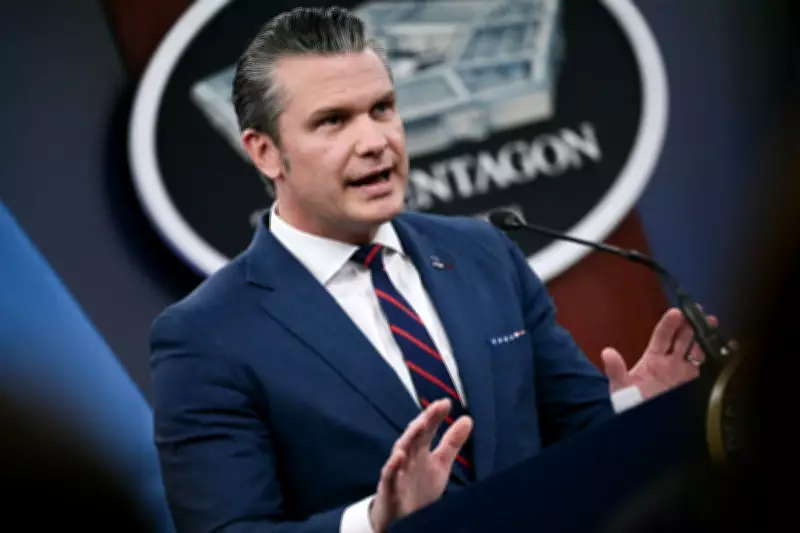
Most confusingly, both President Trump and Secretary of War Hegseth previously declared Iran's nuclear facilities "completely and totally obliterated" along with its nuclear ambitions. By Saturday, credible estimates indicated Iran was further from obtaining nuclear weapons than it had been in years.
Contradictory Messaging and Strategic Confusion
Additional justifications emerged: Iran rejecting opportunities to renounce nuclear ambitions and developing ballistic missiles threatening allies and potentially the American mainland. These concerns are legitimate, which is why the Obama administration negotiated the 2015 nuclear agreement. That deal, while imperfect, blocked Iran's pathways to nuclear weapons for 10-15 years, with Iran complying until Trump unilaterally abandoned it three years later.
Negotiations between Iran and the US occurred as recently as last Thursday, with Oman's Foreign Minister stating "A peace deal is within our reach." This interview was prerecorded Friday for Sunday broadcast, by which time the invasion had already begun. Clearly, military planning predated these talks, where the US presented maximalist terms it knew would be rejected.
Administration Discord and Political Calculations
When Iranians protested, the regime responded with deadly force, killing thousands. While this violence was terrible, Trump's sudden advocacy for dissent through invasion requires skepticism, echoing problematic historical parallels like Iraq in 1991 or Hungary in 1956.

On Monday, Secretary Hegseth performed a complete reversal, stating "This is not a so-called regime change war but the regime sure did change and the world will be better off for it." By Tuesday, Secretary of State Rubio and Speaker Johnson introduced yet another rationale: Israel planned to attack anyway, Iran would retaliate against US targets, so America might as well align with Israeli strategy. This reasoning plays directly into accusations that the US operates at Netanyahu's behest.
This conflict lurches from one poorly conceived justification to another, hoping something resonates with the American public. Bellicose, improvisational grandiosity cannot substitute for clear, competent strategic planning. The administration's inconsistent narratives reveal not merely a communication failure but a profound absence of coherent foreign policy vision.