Trump's Marathon State of the Union Address Emphasizes Spectacle Amid Plummeting Poll Numbers
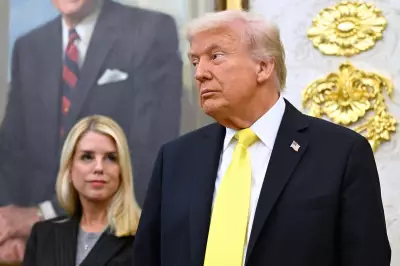
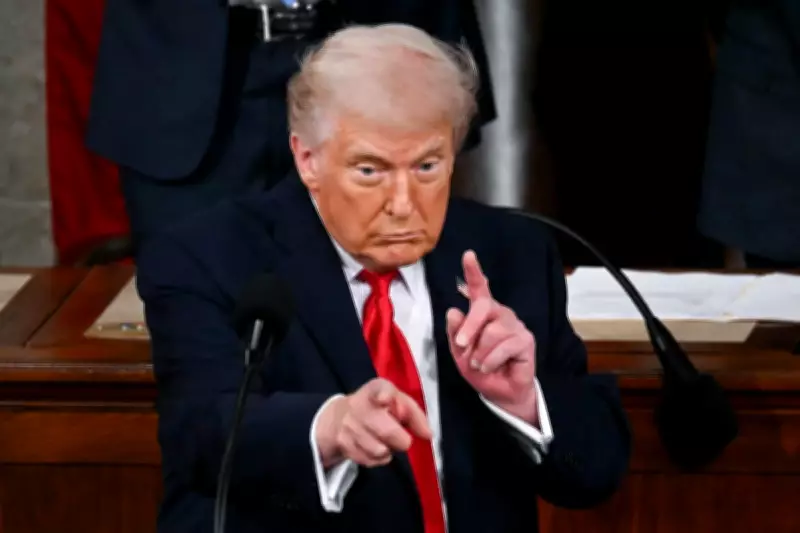
President Donald Trump transformed his annual State of the Union address into a televised awards ceremony, delivering the longest speech to Congress in presidential history while offering minimal substantive policy proposals. With 251 days remaining until midterm elections that will determine control of Congress, Trump used his prime-time platform to distribute surprise medals and repeat familiar boasts about America's supposed "golden age," all while mocking concerns about affordability that have contributed to his declining approval ratings.
Record-Breaking Speech Focuses on Rhetoric Over Solutions
Opening what would become a nearly two-hour address, Trump claimed the country was "bigger, better, richer and stronger than ever before" following his first year back in the White House. He boasted of achieving "a transformation like no one has ever seen before and a turnaround for the ages," asserting he had solved the problems that returned him to power. As Republicans applauded dutifully, Trump highlighted falling inflation, rising incomes, and what he described as an $18 trillion influx of foreign investment since his inauguration.
However, the president faced significant criticism for his approach to economic policy. He pledged to continue imposing import taxes that economists estimate have cost American families at least $1,700 each since last year, while attacking the Supreme Court for ruling he couldn't impose tariffs using the 1977 International Emergency Economic Powers Act. Trump repeated his misleading claim that foreign countries pay these tariffs, which are actually taxes paid by Americans, and even suggested his tariff policies could "substantially replace the modern-day system of income tax."

Awards Ceremony Atmosphere Dominates Proceedings
Trump turned the traditional address into a spectacle by presenting some of the nation's highest honors to sympathetic recipients invited to the House gallery. After criticizing Democratic immigration policies, he had a West Virginia National Guard general award Purple Hearts to a soldier wounded in Washington, DC and to the family of a second soldier killed in the same attack. The president also announced he would award the Presidential Medal of Freedom to Olympic gold medal-winning hockey goaltender Connor Hellebuyck, who appeared in the press gallery with teammates.
The awards presentation continued throughout the speech, with military brass distributing additional honors. Coast Guard swimmer Scott Ruskin received the Legion of Merit for saving lives during Texas floods, while Army Chief Warrant Officer Eric Slover and retired Navy Captain Royce Williams were awarded Medals of Honor for their service. At one point, Trump even lamented his desire for a Congressional Medal of Honor himself, despite never having served in the military and receiving five deferments during the Vietnam War.
Political Theater and Democratic Responses
The address featured significant political theater, with Trump attempting to create attack ad material by asking Democrats to stand for restrictive voting laws and anti-immigrant proposals. He described crimes against white Americans in graphic terms while criticizing what he called "open border" policies. Democratic responses varied from silent protest to disruptive actions, with Texas Representative Al Green being removed from the chamber after holding up a sign reading "Black People Aren't Apes" in apparent response to Trump's posting of a racist AI video depicting the Obamas.
A substantial number of Democrats boycotted the address entirely, attending alternative events like MoveOn's "People's State of the Union." Those present included at least 14 survivors of Jeffrey Epstein's sex trafficking ring, invited by Democratic members to highlight what they allege is a Justice Department cover-up protecting Trump and his allies from accountability for their Epstein associations. Trump made no mention of Epstein during his nearly two hours of speaking.

Cratering Approval Ratings and Public Dissatisfaction
Recent polling reveals significant public dissatisfaction with Trump's presidency. A CNN/SSRS survey found 61% of Americans believe his policies will send the country in the wrong direction, while only 36% approve of his performance—a 12-point drop from his last address to Congress. Independent voters who supported Trump in 2024 have largely abandoned him, with only 26% approving of his job performance. Latino support has plummeted from 41% to 22%, while 57% of Americans disapprove of his economic management.
Specific policy areas show even greater disapproval, with 64% of Americans disapproving of his handling of both inflation and tariffs, and 58% disapproving of his immigration approach following controversial enforcement operations. A CBS News poll indicated 69% of Americans wanted Trump to address cost of living concerns, while 62% wanted to hear about the economy—topics he largely avoided while mocking the term "affordability" as something Democrats "just used."
Democratic leaders responded harshly to the address. Democratic National Committee Chairman Ken Martin called Trump a "stunning failure" who voters "are no longer buying what he's selling." House Minority Leader Hakeem Jeffries accused Trump of "spewing lies, propaganda and hatred" for nearly two hours rather than presenting "a positive vision for our future and the economy." As the midterm elections approach, Trump's record-long speech appears to have done little to address the fundamental concerns driving his declining political standing with all but his most loyal supporters.