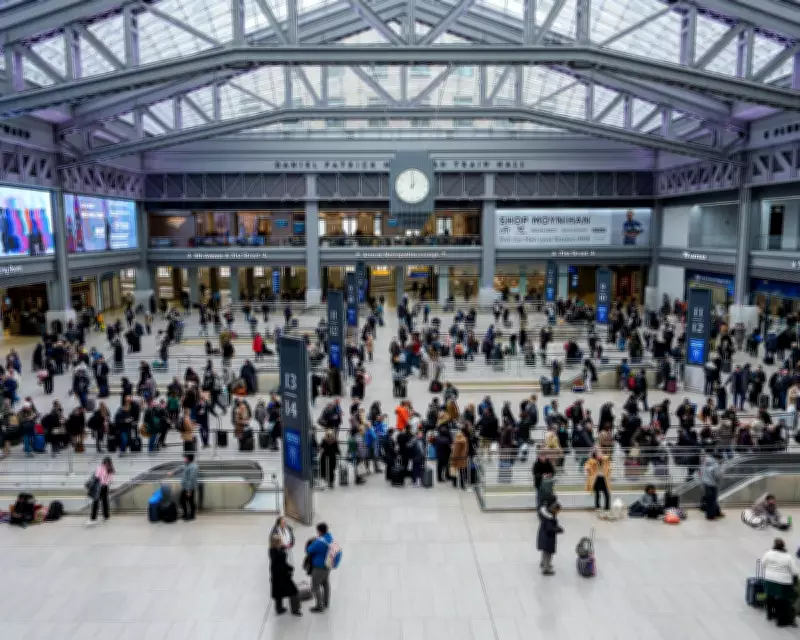
Donald Trump's relentless pursuit of self-aggrandizement has taken a new turn, as the former president aims to have Congress rename New York's Penn Station and Washington Dulles International Airport in his honor. However, this move is shrouded in controversy, with allegations emerging that Trump attempted to leverage federal funding for a major infrastructure project in exchange for these naming rights.
The Alleged Quid Pro Quo
Reports indicate that Trump reportedly told Senate Minority Leader Chuck Schumer he would unfreeze billions of dollars in federal funding for the Gateway project—a critical rail tunnel initiative connecting New York and New Jersey—if Schumer supported renaming the two transportation hubs. This has sparked accusations of a presidential shakedown, where Trump seemingly threatened to hold already-approved congressional funds hostage to advance his personal branding campaign.
Shifting Explanations and Denials
In the aftermath of these reports, Trump and his aides have offered conflicting accounts. Trump claimed it was Schumer who suggested renaming Penn Station, a statement Schumer vehemently denied as an "absolute lie." White House Press Secretary Karoline Leavitt later contradicted Trump, acknowledging that the president had floated the idea during his conversation with Schumer.

The administration's rationale for withholding Gateway project funds has also evolved. Initially, it cited a review into diversity practices among contractors, but later shifted to blaming Democrats for refusing to negotiate on immigration policies. This changing rhetoric has been criticized as a bureaucratic weaponization of culture war issues to mask what many see as a corrupt exchange.
Legal and Financial Developments
On February 6, a federal judge ordered the Trump administration to release overdue payments for the Gateway project, leading to the disbursement of $205 million in funds by February 18. Construction, which had halted due to lack of funding, could resume soon. However, the U.S. Transportation Department has appealed the judge's order, potentially freezing payments again if courts rule in its favor.
Broader Self-Promotion Efforts
Trump's bid to rename Penn Station and Dulles Airport is part of a broader pattern of using his political influence for personal glorification. Since returning to the White House, he has added his name to institutions like the Kennedy Center for the Performing Arts and a class of navy warships, while also lobbying for the Washington Commanders' new stadium to bear his name. Republican lawmakers have further fueled this trend, proposing bills to rename Dulles Airport and even add Trump's face to Mount Rushmore.
Public Backlash and Polling Data
Many Americans are growing weary of Trump's narcissistic displays. A recent CNN poll revealed that 58% of the public believes Trump has "gone too far" in using presidential power, with 62% expressing similar sentiments about his changes to cultural institutions. Notably, only 37% of respondents think Trump prioritizes the country's good over personal gain, highlighting widespread skepticism about his motives.
Historical Context and Precedents
No previous U.S. president has attempted to attach their name to so many buildings or monuments while still in office. Historically, such honors are bestowed posthumously or by subsequent administrations, as seen with John F. Kennedy after his assassination. Trump's aggressive self-promotion stands in stark contrast, raising ethical concerns about the blending of public office and personal brand.
The renaming of the Kennedy Center, overseen by a Trump-appointed board, has already backfired, leading to performance cancellations by high-profile artists and a lawsuit challenging its legality. Trump's subsequent announcement to close the center for renovations suggests an effort to avoid further embarrassment.
Conclusion: A Pattern of Hypocrisy
Trump's landmark renaming efforts underscore a deeper hypocrisy, where he claims to address economic issues while dedicating significant resources to self-monumentalization. As legal battles and public disapproval mount, this episode reinforces perceptions of a leader more focused on personal legacy than public service, with potential long-term implications for political norms and anti-corruption safeguards.