Trump's Iran War Address Reveals Deepening Leadership Crisis
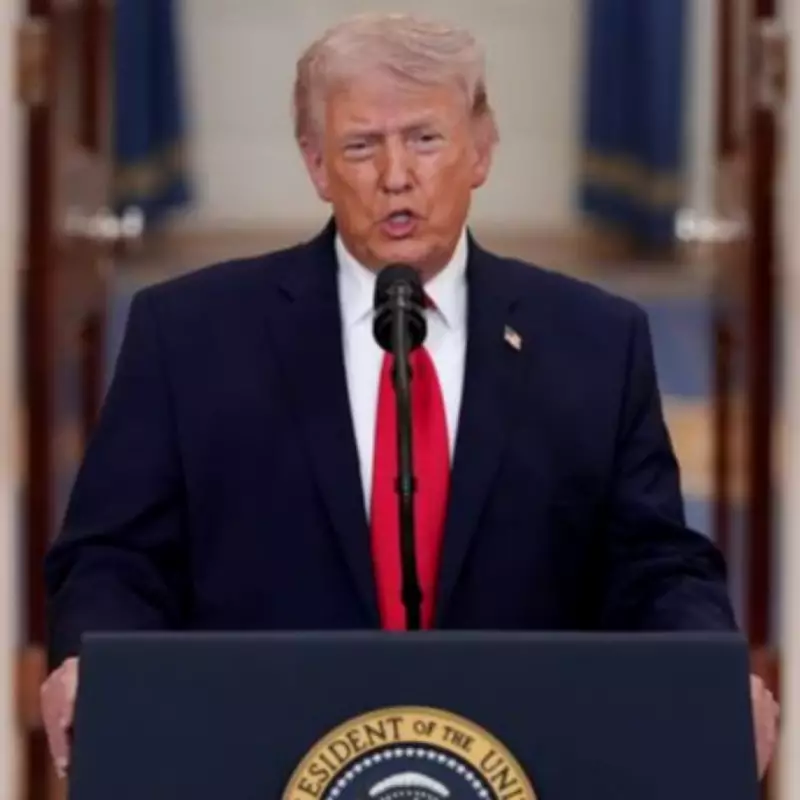
Donald Trump's recent national address concerning the ongoing Iran conflict has starkly exposed a presidency floundering without coherent strategy or factual grounding. The 19-minute speech delivered from the Blue Room represented not leadership but rather a collection of bluster, bravado, and carefully constructed half-truths designed to obscure a reality rapidly spiraling beyond presidential control.
A Speech of Confusion Instead of Clarity
For those anticipating clear direction regarding the month-long conflict, the address provided only confusion. Those seeking honesty encountered repeated falsehoods, while those hoping for genuine leadership received what amounted to a greatest-hits compilation of familiar talking points, none bearing meaningful resemblance to actual truth. The most extraordinary aspect remains that Trump possessed a genuine opportunity just hours earlier to either conclude the Iran war or at least claim victory and withdraw.
Given his established talent for rewriting reality, substantial portions of the American public might well have accepted such a declaration. A pause in hostilities could have followed, financial markets might have stabilized, and even his fracturing MAGA base could have rallied behind this manufactured success narrative. Instead, the president chose the opposite course, driven not by strategic considerations but by personal ego and theatrical need.

Factual Inaccuracies and Invented Justifications
The address repeated familiar false claims, including the thoroughly debunked assertion that Barack Obama "gave" Iran billions of dollars, when in reality those funds represented Iranian assets returned under negotiated agreements. More critically, Trump justified the ongoing conflict by claiming Iran stood on the "doorstep" of nuclear weapon capability, a position unsupported by available evidence and lacking any imminent threat assessment.
Now, thirty-two days into a conflict promised as swift and decisive, the war continues dragging on, destabilizing global markets and revealing the profound lack of planning that preceded military engagement. Despite presidential claims of Iranian forces being "decimated," Tehran maintains control over the strategically vital Strait of Hormuz, with oil prices climbing, shipping routes disrupted, and international allies quietly distancing themselves from the conflict.
Strategic Vacuum and Contradictory Messaging
The most revealing aspect of the address involved not what Trump said but what he couldn't articulate. No clear endgame emerged, no explanation of what victory actually entails, and no coherent plan for achieving resolution. Instead, the speech offered threats, contradictions, and vague timelines suggesting the conflict might conclude in "two or three weeks" as though war could be scheduled between golf rounds.
Contradictions proliferated throughout the address. At one moment, Trump declared the job essentially completed, while moments later he threatened escalation. He initially dismissed regime change objectives, then hinted the current Iranian government might not survive. This incoherence culminated in perhaps the most revealing line, as Trump suggested other nations should "go in and take it" regarding Middle Eastern oil, treating geopolitics as playground confrontation rather than serious international relations.
Global Consequences and Magical Thinking
The practical consequences continue mounting daily. The Strait of Hormuz remains dangerously tense, with oil tankers facing constant threats and instability sending shockwaves through global energy markets. Trump's insistence that the strait will reopen "naturally" and that the war will somehow resolve itself echoes the same magical thinking previously deployed during the COVID-19 pandemic, where problems were expected to disappear simply through presidential declaration.

The brutal truth remains straightforward. Donald Trump initiated a war he fundamentally misunderstood, against an opponent he significantly underestimated, without any serious planning for subsequent developments. He possessed a genuine opportunity to step back and declare the conflict concluded, yet instead stepped forward and demonstrated to the world his complete lack of understanding regarding how to achieve resolution. The address didn't showcase leadership but rather exposed its profound absence at a moment demanding genuine statesmanship.