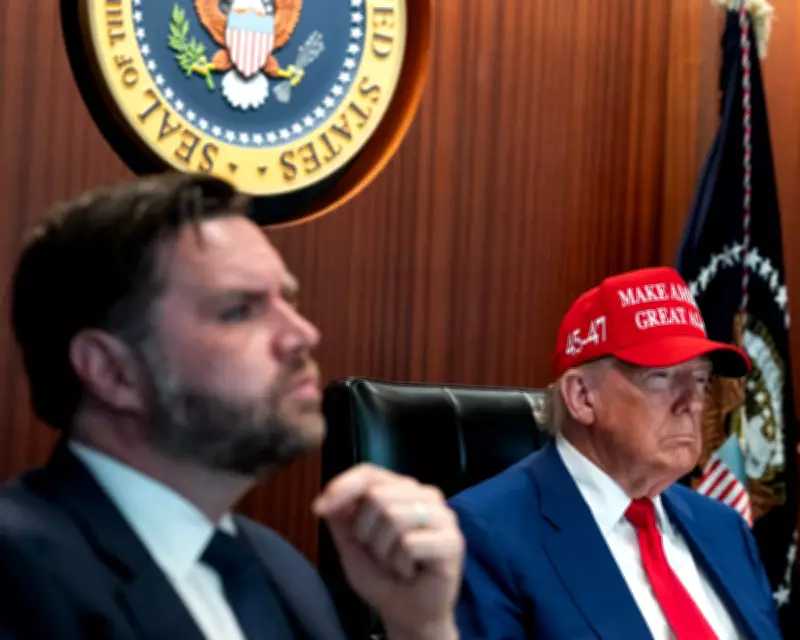
In the White House situation room on 21 June 2025, Donald Trump and JD Vance were captured in a moment of high-stakes decision-making, a scene that underscores the immense power wielded by the US president. Yet, as global tensions simmer, a pressing question emerges: if Trump were an ageing relative, when would it be time to intervene for safety? This analogy highlights the delicate balance between leadership and vulnerability in the highest office.
Public Concerns Over Presidential Fitness
Recent polls reveal deep unease among Americans. According to Reuters-Ipsos, 61% believe Trump has grown more erratic with age, while 56%, in a Washington Post survey, doubt his mental sharpness to handle challenges. Trump himself boasts of acing cognitive tests, which he describes as "very hard," though these are typically screening tools for mild impairment in the elderly. His recent behaviour, including rambling about Sharpie pens during a war cabinet meeting and making baffling jokes about Pearl Harbor in front of Japan's prime minister, fuels these concerns.
Global Stakes and Constitutional Checks
The implications extend far beyond domestic politics. With Trump contemplating military action in Iran, including readying nearly 10,000 troops without congressional approval, the risks are monumental. An estimated 45 million people face acute hunger if Gulf gas disruptions affect fertiliser supplies, tying global stability to presidential judgment. Constitutional safeguards, such as Congress's war declaration power, exist but are not iron-clad. Wall Street traders even monitor market falls as a potential restraint on Trump's actions, showing how economic forces may influence decisions more than political checks.

Historical Precedents and Hidden Truths
History shows that leaders' health issues are often concealed. For instance, John F. Kennedy was on amphetines during the Cuban missile crisis, a fact revealed only posthumously. Similarly, Winston Churchill's drinking habits and Harold Wilson's early dementia were hidden from the public. In the US, Joe Biden's frailty became fully apparent only after he opted out of a second term, despite prior public suspicions. These cases illustrate how inner circles often prioritise loyalty over transparency, leaving constitutional safeguards reliant on personal resolve.
The Dilemma of Intervention
Why might officials hide a leader's decline? Fear of reprisal, loss of influence, or public panic are key factors, but so is the fierce loyalty bred in political trenches. This mirrors familial struggles with elderly parents, where guilt and hesitation delay necessary interventions, such as revoking driving privileges. In politics, however, the stakes are exponentially higher, with millions of lives potentially at risk in conflicts or economic crises.
Mechanisms for Accountability
The 25th Amendment allows for suspending a president's powers if the vice-president and cabinet majority deem them unfit, but it's rarely invoked without consent, as seen with George W. Bush's surgery. Regular medicals for presidents lack full transparency, as Biden's case demonstrates. Without robust enforcement, these safeguards are merely theoretical, leaving the world as passengers in a superpower's "speeding truck," vulnerable to erratic leadership.
As debates over Trump's cognitive fitness intensify, the effectiveness of US constitutional protections remains in question. In an era of global interconnectedness, the need for reliable safeguards has never been more critical, yet their implementation hinges on the courage of those closest to power.