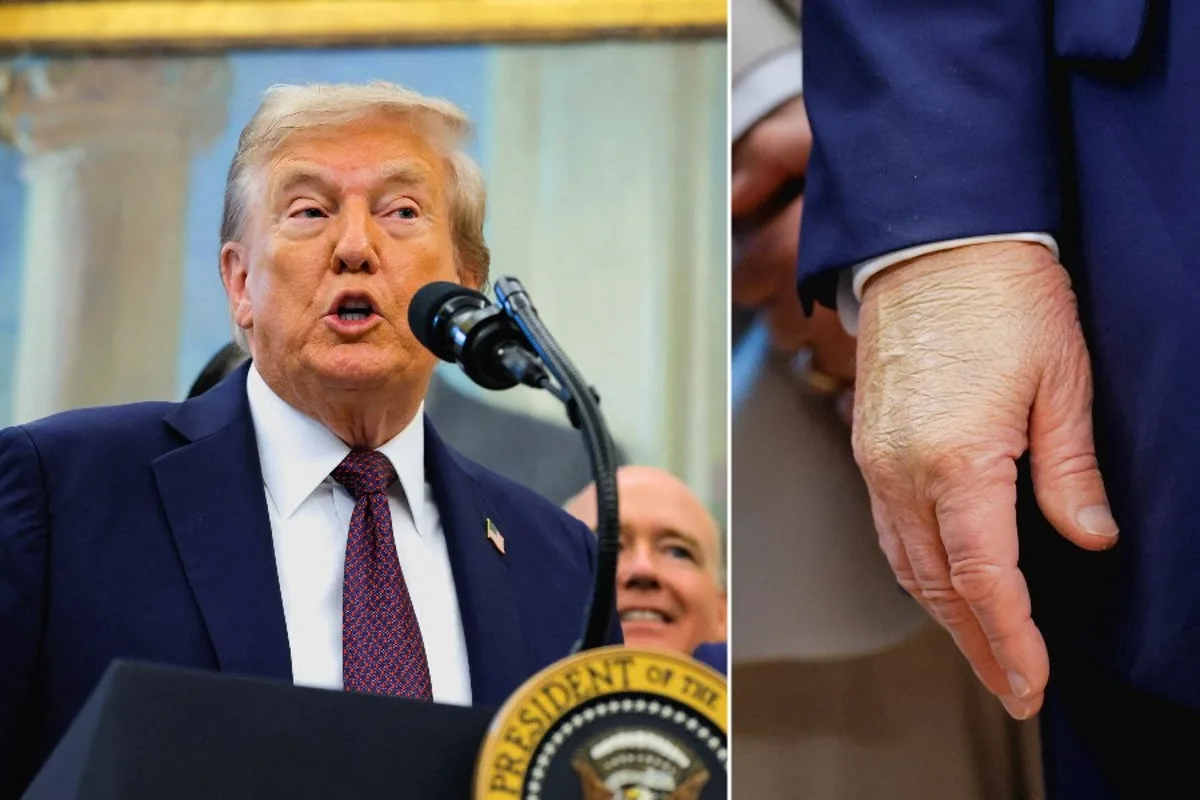
President Donald Trump has dismissed speculation about his health as “so fake” news, appearing in public for the first time in nearly a week with a bruised hand. The president addressed reporters on Tuesday after announcing the relocation of U.S. Space Command headquarters from Colorado to Alabama, his first public engagement since a Labour Day weekend with no official schedule triggered online rumours about his wellbeing.
When asked if he was aware of questions about his health, Trump said he had heard some talk but blamed the media for the frenzy. “It’s fake news. It’s so fake. That’s why the media has so little credibility,” he told reporters. He insisted he had been “very active” over the long weekend, noting he had posted “pretty poignant Truths” on his social media platform.
Conspiracy theories flourished after Trump’s schedule went blank over the holiday weekend. On Saturday, “Where is Donald Trump” trended on X, and questions about his health topped Google searches, even as he was photographed visiting his Virginia golf course. Vice President J.D. Vance also drew attention after saying he was ready to assume the presidency if a “terrible tragedy occurred,” though he added that Trump was in “incredibly good health.”
Trump’s health has been under scrutiny throughout his second term, with photos of swollen ankles and bruised hands circulating online. The White House has attributed the bruising to frequent handshaking and aspirin use, and his doctor has described him as in “excellent health.” The president appeared without concealer on his right hand last month, revealing a recurring bruise that officials say is linked to chronic venous insufficiency, a common condition in older adults.