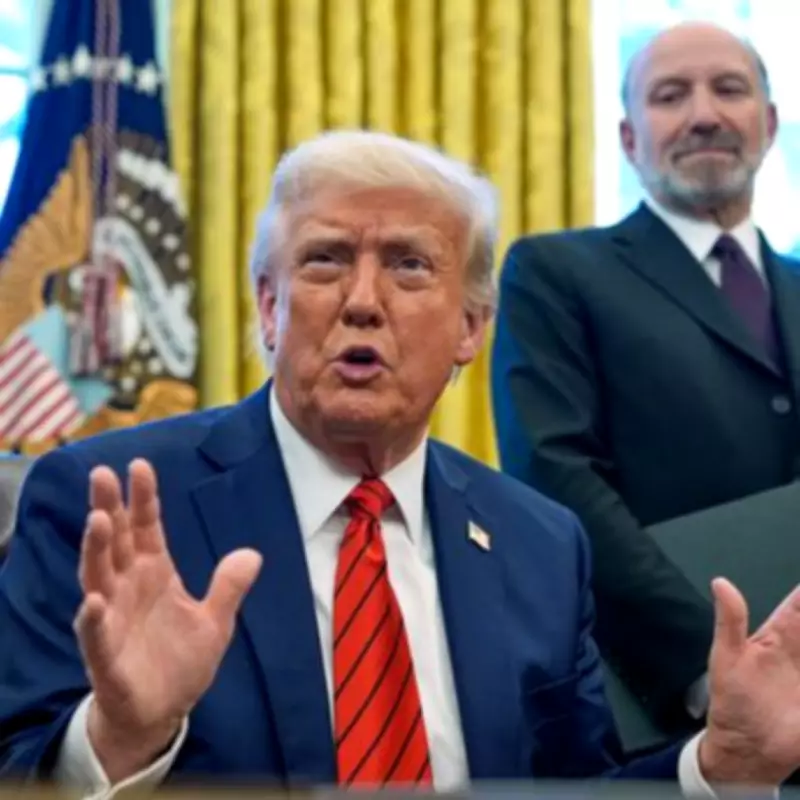
Trump Faces Mounting Pressure to Dismiss Commerce Secretary Over Epstein Links
Donald Trump, renowned for his decisive firings on television's The Apprentice, now confronts a real-world dilemma with Commerce Secretary Howard Lutnick. Amid bipartisan demands for accountability, Trump's reluctance to act has sparked scrutiny, as Lutnick's admitted visit to Jeffrey Epstein's Caribbean island, Little St James, in December 2012 comes to light.
Lutnick's Contradictory Account and Epstein Connections
Howard Lutnick previously asserted that he met Epstein in 2005, vowing never to associate with the billionaire again after an uncomfortable sexual innuendo. However, newly disclosed emails from the Epstein Files reveal a different narrative. An email sent by Lutnick's wife, Allison, in December 2012—after Epstein's conviction as a registered child sex offender—expressed eagerness to join Epstein for lunch.
Under oath before Congress, Lutnick confirmed this meeting, stating, "We had lunch on the island for an hour, and we left with all of my children, my nannies, and my wife." This admission starkly contrasts his earlier claims, raising questions about his judgment and transparency.

White House Stands Firm Amid Growing Outrage
Despite bipartisan calls for Lutnick's resignation, the White House has reiterated Trump's unwavering support. Press Secretary Karoline Leavitt emphasized, "The president fully supports the secretary," highlighting a pattern of Trump's hesitation to dismiss officials despite clear errors. This stance echoes past incidents, such as the promotion of national security adviser Mike Waltz after a security breach, rather than his termination.
Epstein survivors and voters alike are demanding a zero-tolerance approach toward individuals linked to the disgraced financier post-conviction. Lutnick's actions, particularly the 2012 island visit, present a pivotal test for Trump's administration and its commitment to ethical governance.
A Broader Pattern of Administrative Leniency
Trump's administration has faced criticism for retaining officials embroiled in controversies. For instance, Secretary of War Pete Hegseth remained in his role despite allegations of ordering illegal strikes, while Waltz's promotion to UN Ambassador followed a mishandling of classified information. These precedents suggest a reluctance to enforce accountability, fueling public and political frustration.
As outrage builds over elite connections to Epstein, Lutnick's case underscores the need for decisive action. Trump's iconic phrase, "you're fired," now resonates as a call for integrity, with many urging him to apply it to his Commerce Secretary without further delay.