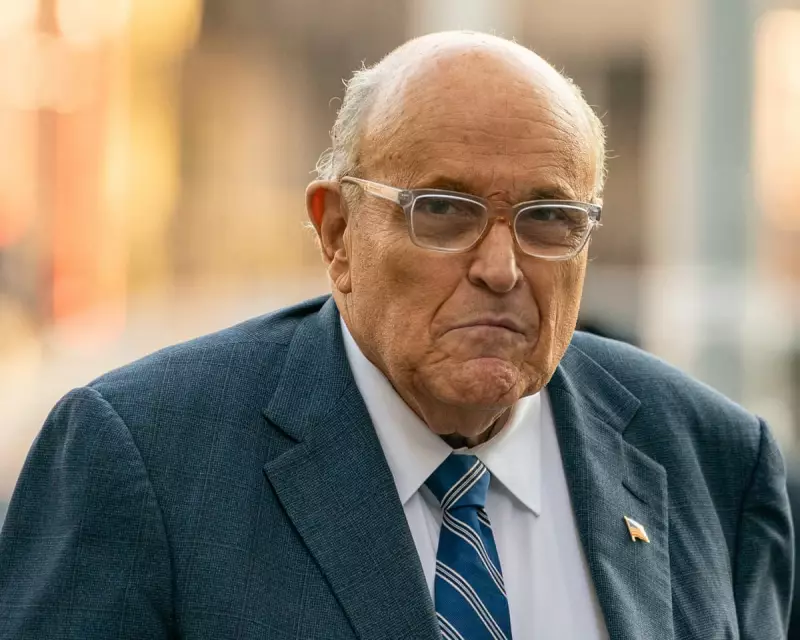
In a sweeping move that continues his pattern of rewriting the aftermath of the 2020 presidential election, Donald Trump has granted full pardons to 77 individuals involved in efforts to overturn the election results, including his close allies Rudy Giuliani and Mark Meadows.
The Presidential Clemency Announcement
The pardons were announced late on Sunday in a post to X by US pardon attorney Ed Martin, who described the action as allowing healing to begin for those involved. Martin thanked Trump, attorney general Pam Bondi, and her deputy Todd Blanche for enabling him to achieve the president's intent.
Those pardoned include Rudy Giuliani and Sidney Powell, former lawyers to Trump, and Mark Meadows, who served as White House chief of staff during Trump's first term. Other prominent names receiving clemency include Jenna Ellis and John Eastman, attorneys who advised Trump during and after the election that Joe Biden won.
Limited Impact and Ongoing Legal Battles
The presidential pardons are described as largely symbolic since they only apply within the federal justice system and provide no protection against state-level prosecutions. According to the New York Times, the clemency is full, complete and unconditional but limited to federal courts.
Many of those pardoned continue to face legal exposure at state level, particularly in battleground states that Biden won including Georgia, Arizona, Michigan, Wisconsin and Nevada. The pardon document specifically states that it does not apply to the president of the United States.
Proceedings remain active against several individuals in Georgia, where an election interference case against an initial 19 defendants, including Trump himself, has stalled due to the disqualification of Fulton county prosecutor Fani Willis.
Consequences for Key Figures
Despite the federal pardons, the individuals involved have faced severe professional and legal consequences for their roles in the election scheme.
Rudy Giuliani has been barred from practicing law in both New York and Washington DC and was ordered to pay almost $150 million to two Georgia election workers he defamed. The former New York City mayor was also involved in defamation trials with voting machine manufacturers Dominion and Smartmatic.
Mark Meadows failed to persuade the Supreme Court to move the Georgia election case to federal court and pleaded not guilty last year to criminal charges in Arizona, where he was among 18 indicted defendants.
Several other attorneys involved have faced professional discipline: Kenneth Chesebro was disbarred in New York for his involvement, while Jenna Ellis had her Colorado law license suspended for three years. Efforts to disbar Sidney Powell failed when a Texas panel ruled her misdemeanor convictions in Georgia were neither serious nor intentional.
Trump's proclamation, dated 7th November, described efforts to prosecute those accused of aiding his attempts to remain in power as a grave national injustice and stated the pardons were designed to continue the process of national reconciliation.
This action extends Trump's pattern of granting clemency to those involved in the aftermath of the 2020 election. On his first day back in office in January, Trump issued full presidential pardons for more than 1,500 people involved in the 6th January 2021 attack on Congress, which resulted in five deaths and numerous injuries among law enforcement officers.
The White House did not immediately respond to requests for comment on Monday regarding the latest round of pardons.