Trump Demands Senate Pass Voting Restrictions or Face Legislative Shutdown
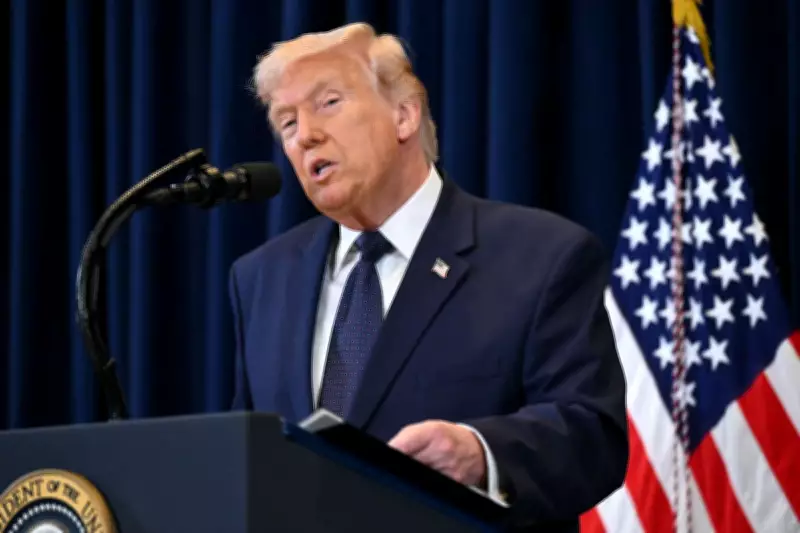
President Donald Trump has transformed the United States Senate into a critical battleground for his political agenda, employing the filibuster as a strategic weapon in his latest confrontation. On Monday, March 9, 2026, Trump declared he would refuse to sign any legislation until the Senate approves the SAVE America Act, which mandates proof of citizenship for voter registration in federal elections.
Hostage Tactics and Democratic Outrage
Democrats have characterized Trump's ultimatum as a hostage-taking maneuver, arguing the legislation serves primarily to disenfranchise voters rather than address legitimate electoral concerns. Senate Minority Leader Chuck Schumer condemned the move on social media, stating, "Donald Trump is preparing to hold our government hostage unless we help him undermine our right to vote, our elections, our democracy."
Trump's demands extend beyond the SAVE Act. He has additionally called for bans on mail-in voting except in limited circumstances and prohibitions on gender-affirming healthcare for transgender youth, which he controversially labeled "mutilization." He also seeks to exclude transgender youth from women's sports.

The Filibuster Showdown
Passing the SAVE Act would require overcoming the Senate's 60-vote filibuster threshold. Conservative organizations like Heritage Action advocate for a "talking filibuster" strategy, where supporters would hold the floor indefinitely through continuous debate until opponents relent. This approach mirrors classic parliamentary obstruction tactics depicted in films like Mr. Smith Goes to Washington.
However, Senate Majority Leader John Thune expressed skepticism, noting Democrats previously attempted similar tactics. "And obviously, what people don’t realize, I think, is that it’s all unlimited debate, but also unlimited amendments," Thune warned, suggesting Democrats could weaponize the process.
Republican Division and Political Calculations
Trump aggressively promoted the talking filibuster during a Monday press conference, claiming it would secure Republican victories in upcoming midterm elections. "I don't think you can politically exist if you're not going to do voter ID and these things," Trump asserted. "It'll guarantee the midterms."
Yet significant Republican resistance remains. Senator Thom Tillis of North Carolina cautioned that a prolonged filibuster could force vulnerable Republicans to cast politically damaging votes. "It could be several weeks long, unending amendments, no telling how many bad votes for people in a cycle with no certainty of it being successful on the other side," Tillis explained. "That doesn't sound like a business proposition."
Senator Lindsey Graham of South Carolina appeared ambivalent, telling reporters, "We’ll talk about it. It’s got some downsides. It’s got some upsides. But I’m ready to vote."
Campaign Dynamics and Endorsement Pressures
The conflict carries immediate electoral implications. Following a Texas Senate primary runoff, Trump promised an endorsement while MAGA-aligned Attorney General Ken Paxton vowed to withdraw his challenge against incumbent Senator John Cornyn if Republican leadership eliminated the filibuster to pass the SAVE Act.
Cornyn affirmed his support for the legislation, stating on social media, "Contrary to fake news in the twitterverse: I have supported the Save America Act from day one. I will happily support the ‘talking filibuster’ if that’s what it takes to pass this into law."
Institutional Clash and Uncertain Outcome
Despite internal Republican unease, Trump shows no signs of retreating. Having repeatedly pressured the Senate throughout his presidency, he now faces a potential institutional standoff with a body historically resistant to procedural radicalism. Senator Raphael Warnock summarized the situation, saying, "Donald Trump is trying to save his power. And so he's going to ring all those familiar bells of division, because he's running desperately in the end, it's not gonna work."

This confrontation may represent a defining moment where the Senate's traditional adherence to rules collides directly with presidential demands, with the integrity of American voting systems hanging in the balance.