Trump Administration Admits Major Error in Medicaid Fraud Accusations Against New York
The Trump administration has publicly admitted it made a substantial factual error in data used to help justify a fraud investigation into New York's Medicaid program. This glaring mistake significantly undermines President Donald Trump's federal campaign to tackle waste, particularly in Democratic-led states, and has prompted health analysts to question how many of the administration's sweeping anti-fraud efforts nationwide were based on faulty findings.
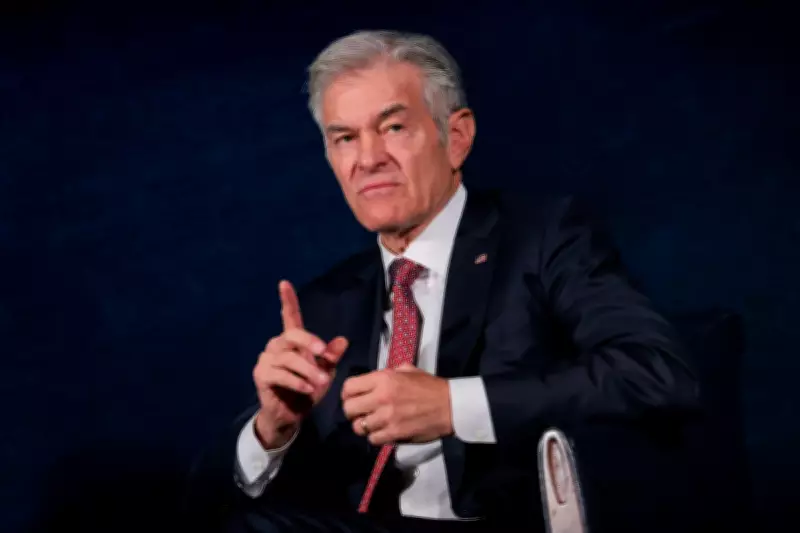
Dr. Mehmet Oz's Inaccurate Claims
The error appeared in comments made last month by Dr. Mehmet Oz, the administrator of the Centers for Medicare & Medicaid Services (CMS). In a social media video and a letter to New York's Democratic governor announcing the fraud investigation, Oz claimed that New York's Medicaid program provided personal care services to approximately 5 million people last year. Personal care services assist individuals with basic activities like bathing, grooming, and meal preparation.
Oz stated that this would amount to nearly three-fourths of the state's 6.8 million Medicaid enrollees, calling the level of utilization "unheard of" and demanding New York "come clean about its Medicaid program."

Corrected Figures Reveal Significant Discrepancy
However, CMS spokesman Chris Krepich told The Associated Press this week that the actual number of New Yorkers who used those services last year was about 450,000, representing only 6% to 7% of total enrollees. Krepich explained that the agency misidentified New York's approach to applying billing codes and has since refined its methodology.
"CMS is committed to ensuring its analyses fully reflect state-specific billing practices and will continue to work closely with New York to validate data and strengthen program integrity oversight," Krepich said in an emailed statement.
Political and Analytical Reactions
Michael Kinnucan, senior health policy adviser at the Fiscal Policy Institute, whose analysis highlighted the administration's inaccurate claim, criticized the approach. "These numbers could have been cleared up in a phone call, so it's really slapdash," Kinnucan said, expressing concern that the administration's adversarial stance "politicizes" what should be a collaborative effort to address fraud.
Cadence Acquaviva, senior public information officer for the New York Department of Health, called Oz's initial mischaracterizations "a targeted attempt to obscure the facts." A spokesperson for Governor Kathy Hochul stated, "The initial claim by CMS was patently false, and we are glad they now admit it."
Broader Context of Anti-Fraud Efforts
The New York probe is part of a larger crackdown, with the Trump administration approaching at least four other states—California, Florida, Maine, and Minnesota—with investigations into potential healthcare fraud. This anti-fraud effort appears to be expanding as midterm election voters express concerns about affordability.
Last month, Trump signed an executive order creating an anti-fraud task force across federal benefit programs led by Vice President JD Vance. As part of this initiative, Vance announced the administration would temporarily halt $243 million in Medicaid funding to Minnesota over fraud concerns, prompting a lawsuit from the state.
Additional Inaccuracies in Oz's Claims
In his video, Oz made at least two other claims that Medicaid advocates and beneficiaries say distorted the facts. He asserted that New York recently made its screening for personal care eligibility "more lenient by allowing problems like being 'easily distracted' to qualify for a personal care assistant."
Rebecca Antar, director of the health law unit at the Legal Aid Society, countered that the state actually made program requirements more stringent in a rule change effective last September, with "easily distracted" not appearing among the criteria. Krepich responded that Oz was questioning whether New York's standards were "sufficiently rigorous."

Oz also referred to personal care services as "something that our families would normally do for us, like carrying groceries." Kathleen Downes, a 33-year-old with quadriplegic cerebral palsy who uses personal care services in Nassau County, found this offensive, noting that not all beneficiaries have family members willing or able to provide such care.
"He's assuming that everybody wants to and can just do it for free forever," Downes said. "And that's not feasible for a lot of people."
Ongoing Investigation and Concerns
Despite the admitted error, Krepich confirmed the fraud probe is ongoing, as the administration still has concerns with New York's oversight of personal care services and the Medicaid program. CMS has raised other issues about New York's program, including higher per-beneficiary spending, elevated personal care expenditures, and a large personal care aide workforce.
Health analysts attribute the state's high spending to both elevated service costs and a policy choice to provide robust at-home care. The incident reflects a common criticism of Trump's second administration—that it tends to attack first and confirm facts later—and underscores the complexities of Medicaid oversight in a politically charged environment.