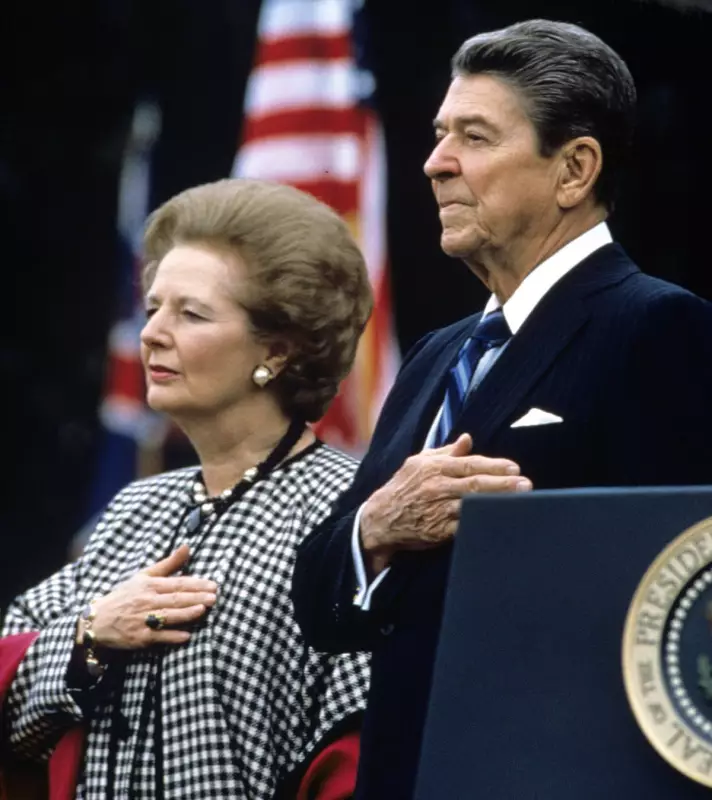
Recent correspondence to the Guardian has drawn a stark parallel between the economic trajectories of the United Kingdom and the United States, arguing that the legacy of Margaret Thatcher closely mirrors that of Ronald Reagan.
A Familiar Story of Deregulation and Decline
The letters were prompted by an article from former US Labour Secretary Robert Reich, published on 29 January, which detailed how a focus on corporate profit has driven American society towards disintegration. Readers from the UK responded that this narrative feels intimately familiar. Tony Rowlands from Bristol contrasts the post-war capitalism of figures like Harold Macmillan and Edward Heath—which supported a functional NHS, vibrant industry, and affordable housing—with the changes that followed.
He identifies the start of a profound shift with the premiership of Margaret Thatcher. Her government's aggressive deregulation, systematic assault on union membership, and the deliberate replacement of the nation's industrial base with an economy centred on finance, shopping, and property, are cited as the root causes of today's deeply divided society.

The Chilling Parallels: From Wall Street to the City
In her letter, Kate Purcell from Coventry highlights a specific paragraph from Reich's work which she found particularly chilling. It lists the hallmarks of the US's 'off the rails' period since Reagan: "deregulation, privatisation, free trade, wild gambling by Wall Street, union-busting, monopolisation, record levels of inequality, stagnant wages for most, staggering wealth for a few, big money taking over politics."
Purcell states that by simply substituting Margaret Thatcher for Ronald Reagan and the City of London for Wall Street, this summary captures precisely what has transpired in Britain. She warns that the situation may be more perilous in the UK, as many key services and resources are now owned by overseas organisations with no inherent stake in national wellbeing if it conflicts with profit.
A pointed example given is the NHS federated data platform, supplied by the US firm Palantir despite significant concerns from medical professionals, MPs, and the public. This, she argues, shows a government persisting with neoliberal policies rather than heeding warnings about their dangers.
A Call for Concerted Action, Not Gentle Nudges
Both correspondents agree on the need for a forceful response. While Reich suggests that protest is confronting the accelerated 'nightmare' under Trump in the US, Tony Rowlands asserts that British society must also force the pace of change. He contends that occasional, mild pressure on Whitehall is insufficient to address the deep-seated issues of inequality, the proliferation of food banks, and the normalisation of precarious zero-hours contracts.
The collective message from these letters is clear: the economic and social reforms initiated in the 1980s, championed by Reagan and Thatcher, have left a lasting imprint of corporate greed and brutal inequality on both sides of the Atlantic. The call is for a fundamental reckoning and a more assertive push for systemic change.