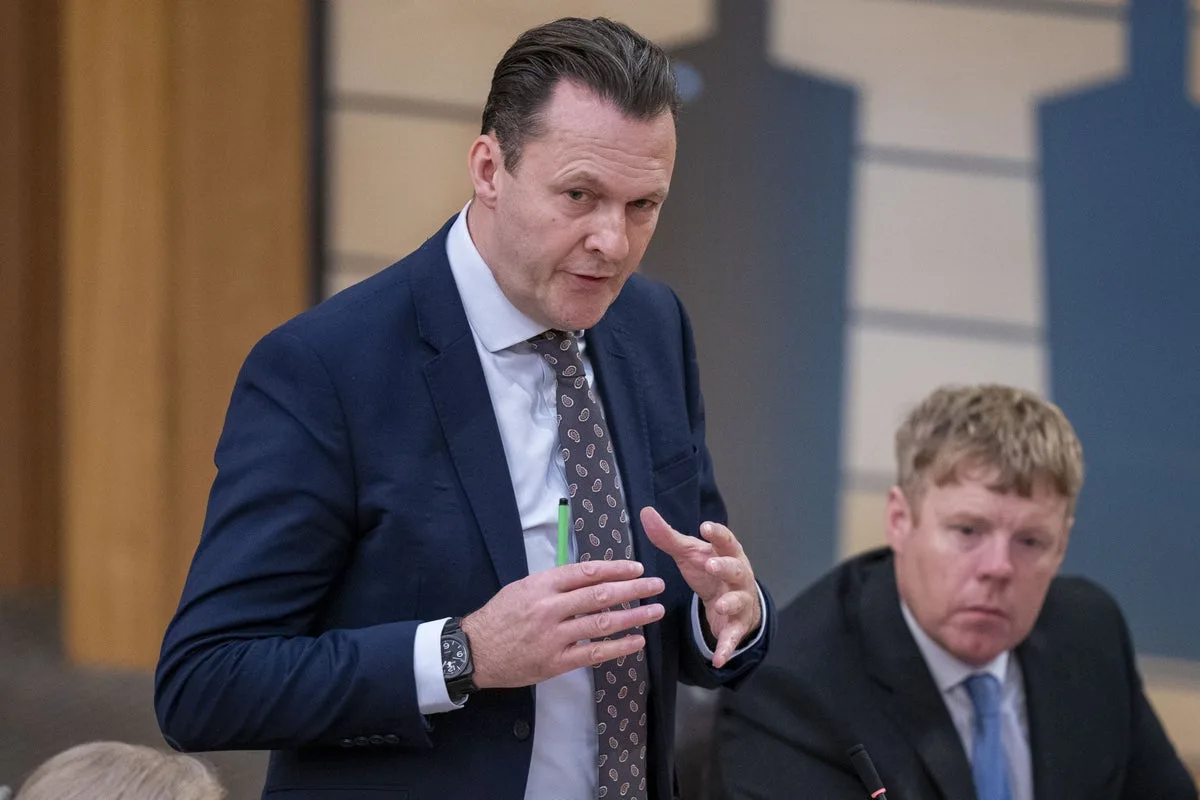
Scottish Tory Leader Brands Swinney's Anger as 'Faux Outrage' in Lord Advocate Row
Swinney's 'Faux Outrage' Over Lord Advocate Criticism, Says Tory Leader

Scottish Tory Leader Accuses Swinney of 'Faux Outrage' in Lord Advocate Dispute

The First Minister's vehement defence of the Lord Advocate has been dismissed as 'faux outrage' by the leader of the Scottish Conservatives, Russell Findlay. The political storm erupted following revelations that Lord Advocate Dorothy Bain KC informed First Minister John Swinney weeks in advance about criminal charges against former SNP chief executive Peter Murrell.

Heated Exchange at First Minister's Questions

Thursday's session of First Minister's Questions at Holyrood descended into acrimony as John Swinney staunchly defended Scotland's top law officer. Russell Findlay had levelled serious allegations, accusing the Lord Advocate of 'corruption' in her handling of the sensitive case.

The controversy centres on a confidential minute sent by Dorothy Bain KC to the First Minister on January 19. This document disclosed that Peter Murrell – the estranged husband of former First Minister Nicola Sturgeon – had been charged with embezzling approximately £460,000 from SNP funds. This information remained private for several weeks before becoming public knowledge.

Allegations of Political Advantage

Both Russell Findlay and Scottish Labour leader Anas Sarwar have argued that this early notification provided the SNP Government with a significant political advantage. The minute was reportedly circulated among some of the First Minister's most senior advisers, raising questions about procedural propriety.

Speaking on BBC Radio Scotland on Friday, ahead of his party's conference in Edinburgh, Mr Findlay intensified his criticism. He suggested that John Swinney's angry performance in parliament was a calculated distraction from the substantive issues at hand.

'It's absolutely stinking and I think John Swinney's faux outrage is a desperate attempt to detract and distract from the real issues about this sorry mess,' the Scottish Tory leader declared.

'Stinks of Corruption' Claims

Mr Findlay, who will deliver his final pre-election address to party members on Saturday, elaborated on his concerns. 'The whole sorry mess stinks of corruption – it's not normal what happened and it's not right what happened,' he stated.

He highlighted the Lord Advocate's previous recusal from the entire investigation process, contrasting it with the discovery of her private email briefing to the First Minister. 'This Lord Advocate said she had recused herself from the entire process, yet a newspaper discovers that she's been emailing John Swinney a private briefing with sensitive details of the case involving Nicola Sturgeon,' he noted.

The Scottish Conservative leader further pointed to the political connections involved. 'Bear in mind, this is a Lord Advocate that was appointed to the SNP Government by Nicola Sturgeon and retained by John Swinney. This information was politically advantageous to the SNP Government.'

Robust Defences from the Lord Advocate and First Minister

Dorothy Bain KC, who faced an urgent question on the matter in Holyrood this week, has categorically rejected all allegations of corruption. Meanwhile, John Swinney has expressed his 'absolute confidence' in the law officer's professional conduct and integrity.

Addressing the Scottish Parliament directly on Thursday, the First Minister delivered a passionate defence of the Lord Advocate. 'I want to say something very directly to Mr Findlay, to Parliament and to the public in Scotland,' he began.

'Dorothy Bain is an outstanding prosecutor, she is an outstanding lawyer, she has 40 years of unimpeachable service to the public interest in Scotland. She alone is responsible for more cases of sexual violence of men against women being brought to justice than any other person, and I put on record today my absolute confidence in the Lord Advocate in undertaking her duties.'

This escalating row occurs against the backdrop of the impending Scottish elections in May, ensuring that questions of governmental transparency and judicial independence will remain at the forefront of political debate. The controversy underscores ongoing tensions between the Scottish Government and opposition parties regarding the boundaries between legal processes and political oversight.




