Scotland's First Minister John Swinney has launched a scathing attack on Prime Minister Keir Starmer, accusing him of creating an "appalling vacuum of leadership" as the controversy over Peter Mandelson's appointment as US ambassador intensifies. The Prime Minister has faced mounting pressure after revelations emerged that Lord Mandelson had not passed necessary vetting checks before being appointed to the prestigious diplomatic role.
Vetting Failure Sparks Political Firestorm
The political storm erupted when it was disclosed that Foreign Office officials had granted security clearance to Mandelson against the explicit recommendation of UK Security Vetting. This revelation has plunged the Starmer government into crisis, with opposition figures demanding accountability and transparency.
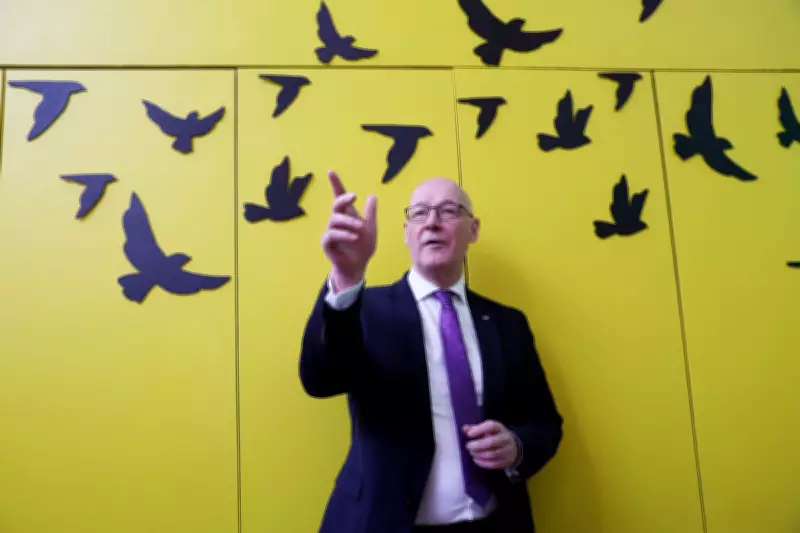
Speaking to journalists in Edinburgh on Wednesday, Swinney delivered a blistering critique of the Prime Minister's handling of the situation. "As I look at the evidence of Olly Robbins yesterday – and whatever the trials and tribulations, the bits and pieces in this whole farce about Mandelson's appointment to the most prestigious ambassadorial role in the United Kingdom, it's crystal clear that there was political impetus behind this to make it happen," Swinney stated emphatically.

Dismissal of Foreign Office Chief Questioned
The controversy deepened when Sir Olly Robbins, the Foreign Office chief who was fired over the Mandelson appointment, told a Westminster committee this week that there had been an "atmosphere of pressure" to push through the controversial appointment. Swinney seized on this testimony to bolster his criticism of Starmer's leadership.
"This is a political decision and it should be owned by the Prime Minister," Swinney declared. "The dismissal of Sir Olly was to 'cover' the Prime Minister. The only conclusion to that is the Prime Minister should resign. I think the Prime Minister's leadership has been just weak and appalling."
Starmer's Defense at Prime Minister's Questions
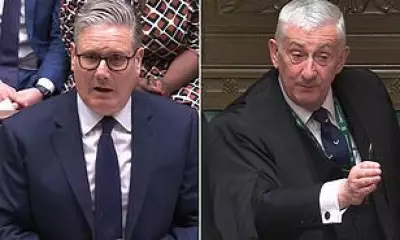
During Prime Minister's Questions on Wednesday, Sir Keir Starmer attempted to defend his government's actions, insisting that full due process had been followed in Mandelson's appointment. The Prime Minister pointed to Sir Olly Robbins' testimony as evidence that he had not been informed about the vetting concerns.
"What I set out to the House on Monday is that Foreign Office officials granted security clearance to Mandelson against the recommendation of UK Security Vetting," Starmer explained. "Yesterday Sir Olly Robbins was asked if he shared that decision with me, Number 10 or any other ministers. He gave a clear answer. 'No'. That puts to bed all the allegations levelled at me by those opposite in relation to this."
The Prime Minister acknowledged that not sharing this information represented "a serious error of judgment" and insisted that "if it had have been, Mandelson would not have been committed to post."
International Context and Judgment Concerns
When questioned about whether calling for the Prime Minister's resignation was appropriate during a period of heightened international tensions, Swinney remained steadfast in his criticism. He argued that Starmer had demonstrated "completely flawed judgment" in his handling of the Mandelson appointment.
"I understand the point, because the world is a very volatile place, but I don't think Keir Starmer's judgment is particularly good in that context," the First Minister responded, highlighting concerns about leadership during global instability.
Impact on Scottish Labour's Election Prospects
Swinney also suggested that the controversy had significantly damaged Scottish Labour's chances in the upcoming Holyrood election scheduled for May. "He's proved a point that I've been making – that Labour governments are ineffective," Swinney asserted. "They don't work very well, we've been told 'wait for a Labour Government at Westminster, everything will get better'. It's appalling, it's a shambles, it's chaos, and bad decisions have been taken."

The First Minister's comments reflect growing political tensions as the Mandelson appointment controversy continues to dominate political discourse. Mandelson was ultimately fired from the ambassadorial role after new revelations emerged about his relationship with convicted paedophile financier Jeffrey Epstein, adding another layer of complexity to an already contentious situation.
As the political fallout continues, questions remain about accountability, transparency in government appointments, and the quality of leadership at the highest levels of British politics. The controversy has exposed significant rifts within the political establishment and raised fundamental questions about vetting processes for high-profile diplomatic positions.