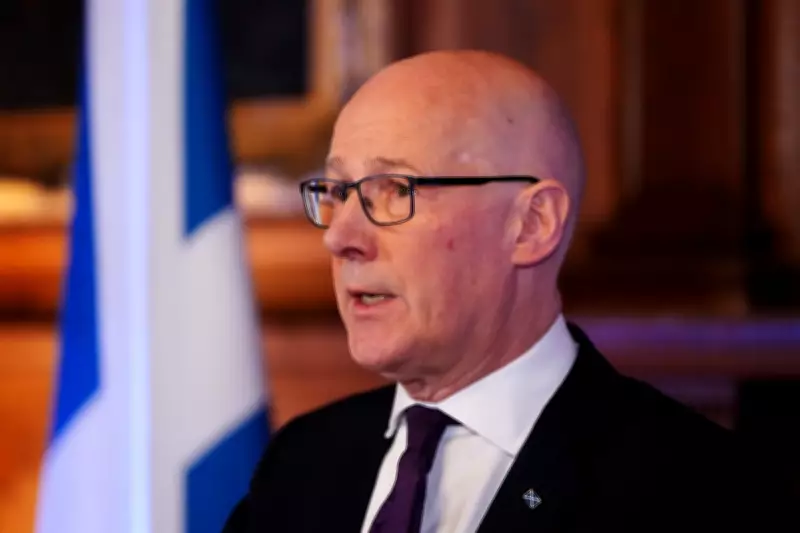
Swinney Orders Investigation into Scottish Government Dealings with Mandelson
First Minister John Swinney has directed a comprehensive investigation into the Scottish Government's transactions and engagements with former Labour minister Peter Mandelson. This decisive move comes as Lord Mandelson faces a police probe over allegations of misconduct in public office, with newly released documents suggesting he passed government information to convicted paedophile financier Jeffrey Epstein during the 2008 financial crisis.
Examining Potential Undermining of Scottish Interests
Speaking to ITV Border on Wednesday, Mr Swinney expressed serious concerns about whether Scotland's position had been compromised through its dealings with the controversial peer. The First Minister revealed he has instructed the Permanent Secretary of the Scottish Government to conduct what he termed an "investigatory audit" covering two distinct periods.
The investigation will scrutinise:

- All Scottish Government transactions during the financial crash period when Mandelson allegedly supplied material to Epstein
- More recent engagements with Mandelson regarding whisky tariffs in the United States during the previous year
"I'm now concerned about the implications of that for Scotland," Swinney stated, referring to the revelations about Mandelson's Epstein connections. "I want to see if, in any way, shape or form, the position and the interests of Scotland have been undermined as a consequence of the behaviour that Peter Mandelson has been involved in."
Questioning Prime Ministerial Judgment
The Scottish First Minister delivered a scathing assessment of the Prime Minister's decision to appoint Mandelson as US ambassador, describing it as a "disastrous and very dangerous decision." Swinney questioned why Mandelson received the diplomatic posting despite his known association with Epstein being a matter of public record for years.
"It is absolutely and completely unacceptable that at a time where we faced the implications of the financial crash, or even last year, when I was trying to advance the interests of Scotland, that our approach was undermined by Peter Mandelson," Swinney emphasised.
Cross-Party Criticism and Political Fallout
Scottish Labour leader Anas Sarwar echoed concerns about Mandelson's appointment, telling journalists: "It's quite clearly the case that Peter Mandelson should not have been the ambassador to the US. It's right that he is not a member of the Labour Party and he should not sit in the House of Lords."
Sarwar referenced the Prime Minister's admission that, with hindsight, he would not have appointed Mandelson to the ambassadorial role, calling this recognition "clearly a mistake."
Westminster Pressure and Political Counter-Accusations
SNP Westminster leader Stephen Flynn has been among the most vocal parliamentarians demanding Mandelson's expulsion from the House of Lords. Flynn drew connections between Mandelson's Epstein relationship and Scottish Labour MSP Pam Duncan-Glancy's association with convicted paedophile Sean Morton.
While Duncan-Glancy has been removed from Scottish Labour's front bench and will not stand in May's election, she retains the party whip. This has prompted criticism from Flynn, who accused Sarwar of "appalling judgment" regarding both Mandelson and Duncan-Glancy.
Sarwar responded forcefully to Flynn's comparisons, describing them as "frankly disgusting and beneath them." The Scottish Labour leader contrasted his party's actions with the SNP's handling of former MP Patrick Grady, who was suspended from the Commons for inappropriate behaviour toward a staff member but later returned to the SNP.
Broader Implications and Ongoing Developments
The investigation ordered by Swinney represents a significant escalation in political scrutiny surrounding Mandelson's activities and their potential impact on Scottish interests. As police continue their misconduct investigation into the former minister, the Scottish Government's audit will examine whether sensitive information or strategic positions were compromised during critical economic periods.

This development occurs against a backdrop of increasing political tension between Scottish and UK governments, with the Mandelson case becoming a focal point for debates about judgment, accountability, and the protection of national interests in intergovernmental relations.