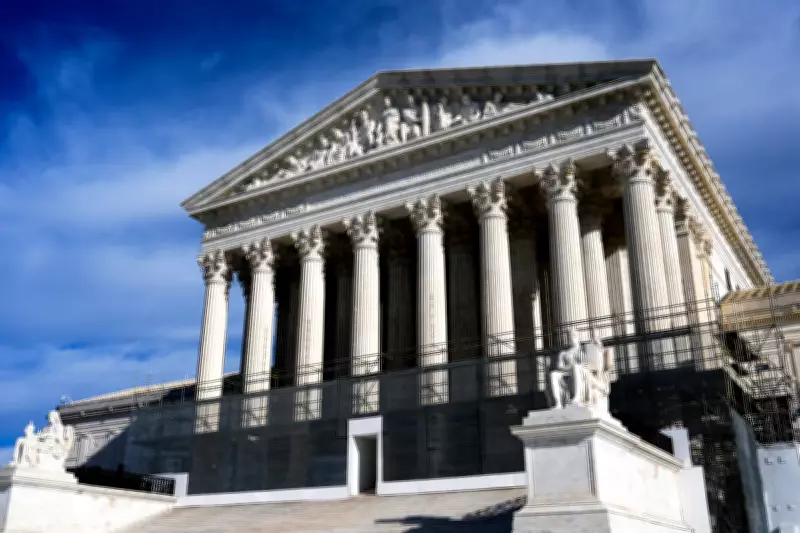
Supreme Court Delivers Major Blow to Trump's Tariff Agenda
The United States Supreme Court has delivered a landmark ruling, striking down President Donald Trump's sweeping global tariffs in a decision that represents a substantial defeat for his economic agenda. The 6-3 verdict, announced on Friday, centered on tariffs unilaterally imposed by Trump under emergency powers legislation, including the extensive "reciprocal" levies applied to nearly every nation.
Constitutional Authority at the Core
Chief Justice John Roberts, writing for the majority, emphasized that the Constitution "very clearly" grants Congress the exclusive power to impose taxes, which encompasses tariffs. "The Framers did not vest any part of the taxing power in the Executive Branch," Roberts stated. This ruling marks the first major component of Trump's broad policy platform to be directly challenged and overturned by the nation's highest court, despite his appointment of three conservative justices during his initial term.
Justice Brett Kavanaugh authored the dissenting opinion, arguing that "The tariffs at issue here may or may not be wise policy. But as a matter of text, history, and precedent, they are clearly lawful."

Immediate Political and Economic Reactions
President Trump responded to the decision during a meeting with governors, calling it "a disgrace" according to a source familiar with the private conversation. He later addressed the press, describing the ruling as "deeply disappointing." The White House briefing room featured new, subdued lighting for the appearance, though officials did not confirm if this change was related to the court's announcement.
House Speaker Mike Johnson expressed support for Trump's tariff approach on social media, stating they had "brought in billions of dollars and created immense leverage for America's trade strategy." Johnson added that "Congress and the Administration will determine the best path forward in the coming weeks."
Mixed Responses from Republicans and Industry
Washington Republican Representative Dan Newhouse, one of two GOP members who voted to impeach Trump during his first term and was subsequently reelected, welcomed the decision. "This ruling restores balance between the legislative and executive branches," Newhouse stated, while expressing commitment to collaborate with Trump on targeted tariffs to benefit American farmers, businesses, and consumers.
The Consumer Brands Association, representing companies like PepsiCo and Proctor & Gamble, hailed the ruling as "a pivotal moment in trade policy." The organization highlighted supply chain challenges, noting that inputs such as tin mill steel remain subject to a 50% tariff despite insufficient domestic production.
Financial Markets and Economic Implications
Wall Street exhibited a relatively muted response to the decision, with the S&P 500 edging 0.1% higher in midday trading. Brian Jacobsen, chief economic strategist at Annex Wealth Management, suggested many investors had anticipated such a ruling, leading to tempered market reactions. The Dow Jones Industrial Average declined by 125 points, while the Nasdaq composite rose 0.3%.
Economists indicate the decision is unlikely to significantly reduce overall inflation. The Federal Reserve estimates that inflation remains approximately half a percentage point higher than it would be without the tariffs. However, over time, prices for automobiles, furniture, clothing, and other goods that increased following tariff implementation could see modest reductions.
Industry-Specific Impacts and Legal Ramifications
The Home Furnishings Association informed its members that while certain tariffs were invalidated, others on steel, upholstered furniture, kitchen cabinets, and bathroom vanities remain in effect, along with specific levies on Chinese products. The association advocates for trade policies that ensure "stability, predictability, and fairness."
Michigan's automotive sector, represented by MichAuto executive director Glenn Stevens Jr., expressed relief, noting that the state's manufacturing industries have been "disproportionately negatively impacted" by tariffs. Stevens emphasized support for tariffs that ensure a "level playing field" globally but opposed those targeting North American trading partners.

Refund Challenges and Future Legal Battles
The Supreme Court's decision did not address whether businesses could obtain refunds for billions paid under the tariffs. Democratic Senator Maria Cantwell of Washington has called on Treasury Secretary Scott Bessent to develop a plan for reimbursement, warning that many small and medium-sized businesses face financial strain.
The Liberty Justice Center, a libertarian-leaning public interest law firm that represented businesses challenging the tariffs, pledged to assist small businesses through the refund process. Chairman Sara Albrecht stated, "The Liberty Justice Center's work is just beginning."
International Perspectives and Ongoing Trade Tensions
Mexico's President Claudia Sheinbaum acknowledged the ruling cautiously, stating, "We're going to wait and see its reach." Mexico has avoided the full impact of tariffs by intensifying efforts against drug cartels under pressure from the Trump administration. The Mexican peso strengthened following the announcement.
The British government expects its "privileged trading position" with the U.S. to continue, noting that the U.K. received the lowest reciprocal tariff rate of 10%. A government spokesman affirmed, "We will work with the Administration to understand how the ruling will affect tariffs for the U.K. and the rest of the world."
Expert Analysis and Future Outlook
Trade law professor Kathleen Claussen of Georgetown University remarked, "It's hard to see any pathway here where tariffs end. I am pretty convinced he could rebuild the tariff landscape he has now using other authorities." Trump retains alternative statutory powers to impose tariffs, including Section 232 of the 1962 Trade Expansion Act and provisions dating to the Great Depression.
Former U.S. trade negotiator Wendy Cutler observed that trading partners were aware of the legal risks associated with Trump's use of emergency powers. "They are waiting to see the Administration's Plan B," Cutler noted, adding that abandoning recent trade agreements appears unlikely.
Public Opinion and Political Fallout
According to an AP-NORC poll from January, approximately 60% of Americans believed Trump had "gone too far" in imposing new tariffs. The poll revealed sharp partisan divides, with about 90% of Democrats and 60% of independents agreeing, compared to 25% of Republicans. A separate April poll indicated that 76% of respondents expected Trump's tariff policies to increase consumer goods costs.
Senate Democratic Leader Chuck Schumer declared the ruling "a win for the wallets of American consumers," urging Trump to end "this reckless trade war for good."
Conclusion: A Constitutional Check with Ongoing Implications
The Supreme Court's decision represents a significant constitutional check on executive power, reaffirming Congressional authority over taxation and tariffs. While providing relief to certain industries and trading partners, the ruling does not eliminate Trump's ability to pursue aggressive trade policies through alternative legal mechanisms. The coming weeks will likely see intensified negotiations, potential refund processes, and continued debate over the future of U.S. trade strategy under the current administration.