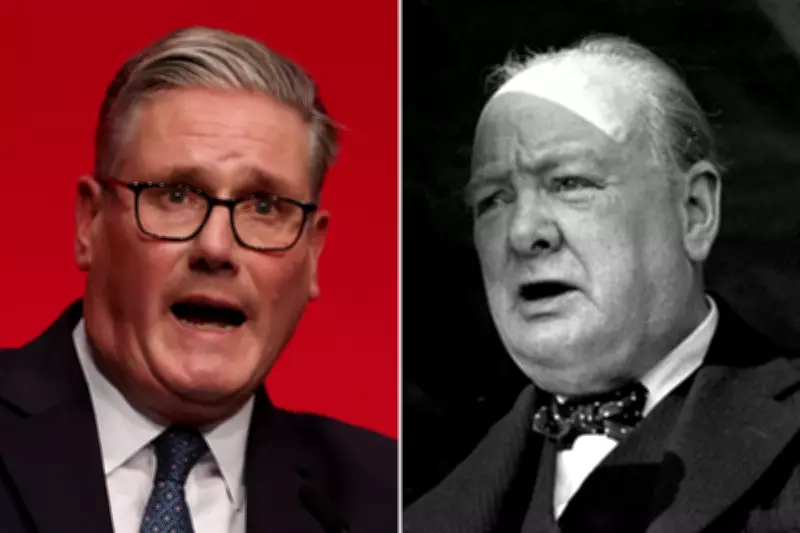
Keir Starmer's Iran War Stance Defines Leadership Amid Trump Criticism
Prime Minister Keir Starmer has firmly declared he will not join any war with Iran without a solid legal foundation, positioning himself against Donald Trump's aggressive rhetoric. This stance comes as Trump publicly insulted Starmer, comparing him unfavourably to Winston Churchill, a move that has ironically strengthened the prime minister's standing with the British public.
Trump's Insults Bolster Starmer's Position
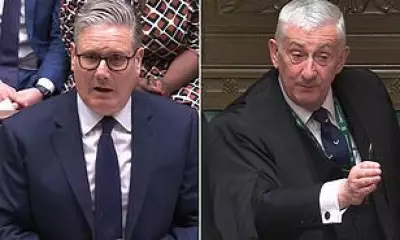
During Prime Minister's Questions, Starmer dismissed concerns about the UK-US alliance, emphasising joint actions to protect citizens as evidence of the "special relationship in action." He stated, "Hanging on to President Trump's latest words is not the special relationship in action." Trump's comment, "This is not Winston Churchill that we're dealing with," has become a focal point, with Conservatives attempting to portray Starmer as weak, while Labour MPs celebrate his defiance.
Starmer told Kemi Badenoch that moments of conflict in the Middle East "define a leader of the opposition," implying she failed her test by not addressing her past support for Trump's strikes against Iran. For Starmer, this situation defines a prime minister, and Trump's insult has proven useful. Being accused of excessive caution by someone deeply unpopular in Britain has helped clarify Starmer's alignment with public sentiment, which opposes offensive military action.

Public Opinion and Political Strategy
A cabinet minister revealed to The i Paper that Trump's rudeness was "pretty helpful to Keir in distancing him from Trump's war." Starmer, who recently faced job insecurity, now appears more relaxed, buoyed by positive economic news and political support. Insiders describe him as "intensely relaxed" about the attack, a phrase borrowed from Peter Mandelson, reflecting his confidence.
At Prime Minister's Questions, Labour backbenchers like Uma Kumaran praised Starmer's "leadership" and "cool head on Iran." Even Emily Thornberry, whom Starmer overlooked for attorney general, defended him from her role as foreign affairs committee chair, noting, "I can't help but wonder what Churchill would have made of Trump. He certainly ain't no Franklin D Roosevelt."
International and Historical Context
James Murray, Chief Secretary to the Treasury, straightforwardly answered "No" when asked if Trump's words would upset Starmer. German Chancellor Friedrich Merz claimed to have defended Starmer to Trump after the criticism about US planes taking longer routes. The Churchill comparison, however, may not be as damaging as Trump assumes.
Historically, Britons admired Churchill but opted for Clement Attlee's humility post-war. Recent experience with Boris Johnson, who fancied himself a Churchillian figure, shows that such comparisons don't guarantee approval. Ancient doubts about Churchill as an impetuous warmonger, which delayed his premiership until national survival was at stake, now resurface to Starmer's advantage.
Starmer's deliberate approach, including limiting US use of British bases to defensive purposes, has drawn implicit praise. As one observer noted, Trump's criticism inadvertently highlights Starmer's prudent leadership, aligning him with public opposition to reckless military engagements and solidifying his political footing amid ongoing tensions.