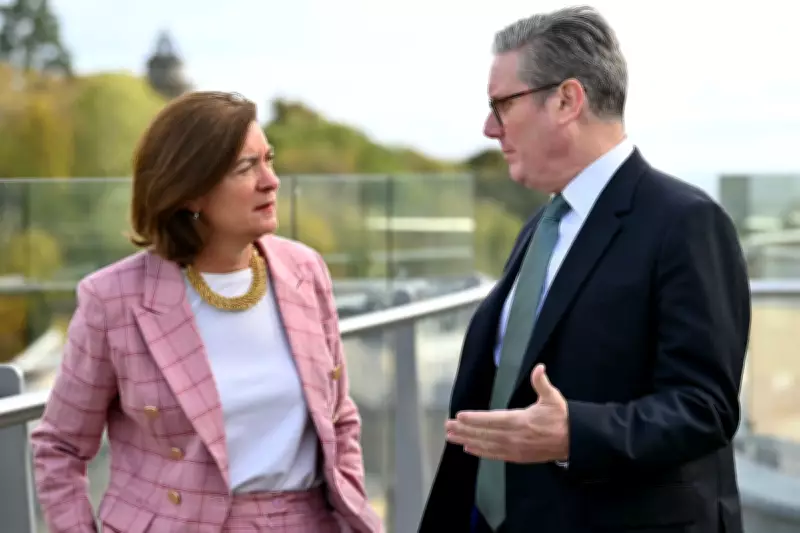
Prime Minister Sir Keir Starmer is preparing for his first public appearance since the government executed a significant U-turn on postponing dozens of council elections scheduled for May. This development comes as Labour confronts mounting pressure from political rivals Plaid Cymru and Reform UK in Wales, with a critical Senedd vote looming later this year.
Election Reversal and Legal Challenges
Initially, thirty English council polls had been delayed to assist town halls during a major reorganisation of local government. However, the Ministry of Housing, Communities and Local Government (MHCLG) reinstated these votes on Monday after receiving legal advice prompted by a challenge from Reform UK. This move is widely regarded as the government's fifteenth major policy reversal since Sir Keir assumed office nineteen months ago.
Among other notable U-turns was the decision to restrict the winter fuel payment to pensioner households on means-tested benefits, only to later restore it to all pensioners earning £35,000 or less annually. Additionally, farmers protested outside Parliament with tractors after Chancellor Rachel Reeves proposed levying inheritance tax on assets exceeding £1 million, a threshold subsequently raised to £2.5 million in a climbdown.

Political Pressure and Internal Criticism
Sir Keir has faced calls to resign from Anas Sarwar, the leader of Scottish Labour, who cited "too many mistakes" in Downing Street as the party gears up for a Holyrood election. In contrast, Welsh Labour leader Baroness Eluned Morgan expressed support for Sir Keir, emphasizing her commitment to judging any prime minister based on their delivery for Wales and criticizing the "revolving-door leadership under the Conservatives."
Railway Projects and Investment in Wales
During his visit to Wales, Sir Keir is expected to endorse several railway initiatives, fostering collaboration between Westminster and Cardiff Bay. Key projects include new stations at Magor and Undy, Llanwern, Cardiff East, Newport West, Somerton, Cardiff Parkway, and Deeside Industrial Park. Sir Keir highlighted this as a transformative investment, stating, "This Government is turning the page on historic dither and delay with seven new stations, thousands of jobs, and a generational commitment to build a rail network fit for Wales's future." He emphasized that this initiative represents long-term change rather than temporary fixes, aiming to position Wales advantageously and stimulate national construction efforts.
Polling and Electoral Dynamics
Recent YouGov polling indicates challenging electoral prospects for Labour in Wales, with 37% of the public planning to support Plaid Cymru in the upcoming Senedd election and 23% favoring Reform UK. Labour trails at 10%, behind the Greens at 13%. In England, Reform UK leader Nigel Farage claimed a victory following the reinstatement of May's elections, asserting on social media that "Only Reform UK fights for democracy." The government has agreed to cover Reform UK's legal costs incurred during the challenge to the postponement decision.
Funding and Local Government Concerns
An MHCLG spokesperson confirmed that the decision to reinstate elections was based on legal advice, prioritizing certainty for councils. Local Government Secretary Steve Reed acknowledged the pressures faced by councils undergoing reorganisation, announcing up to £63 million in capacity funding for 21 affected areas, supplementing £7.6 million allocated last year for proposal development. However, Richard Wright, chairman of the District Councils' Network and Conservative leader of North Kesteven District Council, warned of an "unnecessary race against time" to ensure smooth elections, questioning the government's grasp of the legal complexities involved in the largest council shake-up in fifty years.

Devolution Setbacks and Frustration
At a Norfolk County Council meeting, Conservative leader Kay Mason Billig expressed profound frustration, describing the past months as "awful" and lamenting that ten years of work on devolution and local government reorganisation may be wasted. She cited the inability to consent to necessary statutory instruments before elections, potentially derailing a mayoral county combined authority that promised significant long-term funding for Norfolk and Suffolk. Ms. Mason Billig sharply criticized Steve Reed, using strong language to convey her dismay at the government's handling of the situation.