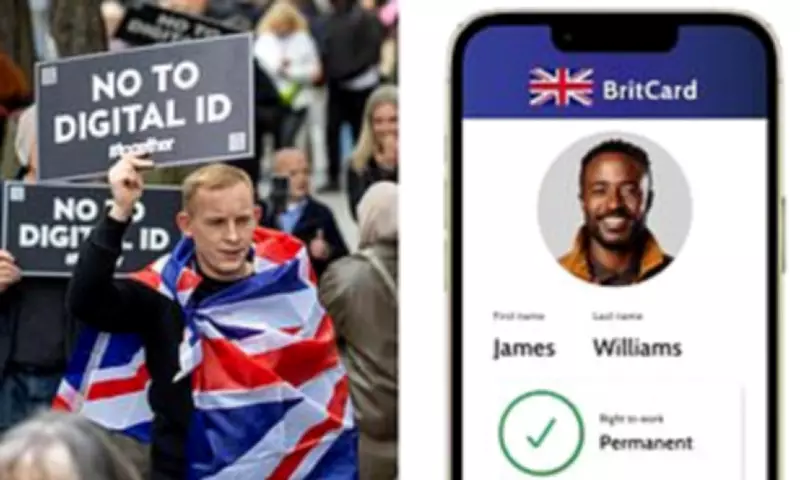
Starmer's Digital ID Cards Abandon Gender Recording After Major Policy Retreat
Keir Starmer's controversial digital ID card proposal has undergone significant revision, with plans to exclude any recording of users' sex or gender information entirely. The Labour leader's initiative will instead rely on biometric authentication technology to verify identities, a move that has sparked criticism from political opponents who describe the development as a farce.
Mandatory Requirement Scrapped Following Labour Rebellion
The digital ID scheme represents a substantial retreat from Starmer's original position, which would have made the cards mandatory for employment across the United Kingdom. Following a significant rebellion from Labour MPs in January and widespread public opposition, the policy has been downgraded to a voluntary system. This dramatic U-turn came after months of pressure from within Starmer's own party ranks and growing concerns about civil liberties.
Conservative Criticism and Consultation Process
Claire Coutinho, the shadow equalities minister, launched a scathing attack on the revised proposal, stating: 'Having struggled for so long to define what a woman is, Labour have now decided it's easier just to abolish the concept entirely. For all the flaws in the government's digital ID plans, there can be no excuse for failing to accurately record a person's biological sex.'

Ministers have initiated an eight-week consultation period regarding the creation of new digital identification for government services, with submissions closing on May 5. The consultation document explicitly states that including sex and gender data 'would not enhance checks that the digital ID belongs to the person presenting it.'
Starmer's Evolving Position on Gender Definitions
The Labour leader's stance on gender identity has undergone multiple transformations in recent years:
- In 2021, Starmer criticised then Labour MP Rosie Duffield for asserting that only women can have a cervix
- By 2023, he stated that '99.9 per cent' of women 'of course haven't got a penis'
- The same year, he described a woman simply as an 'adult female'
- Last year, Starmer reversed his position again, stating he no longer believed transgender women were women following a Supreme Court ruling that defined womanhood by biological sex under equality law
Practical Applications and Security Concerns
The proposed digital ID cards would function similarly to passports or e-visas, providing proof of the holder's right to work in the UK. When initially announced, Starmer positioned them as a tool to combat illegal migrant employment and reduce small boat crossings across the English Channel.
Proponents argue the system would make accessing public services quicker, easier and more secure, though critics point to significant security vulnerabilities. They reference Estonia's 2021 digital ID data breach that exposed millions of citizens' private information as a cautionary example of potential system failures.
Independent MP Criticism and System Principles
Rosie Duffield, who now serves as an independent MP after leaving Labour, condemned the exclusion of sex and gender data, arguing it 'makes a farce of the whole idea' of digital identification.
The consultation framework outlines three core principles for the proposed system:
- Making digital ID useful for practical applications
- Ensuring the system remains inclusive of all users
- Building trust through transparent implementation
The government aims to create a system that 'people will want to get rather than something they must have.' When users register, verification will occur through programmatic checks and biometric authentication, neither of which require specific sex or gender information according to the proposal.

Minimal Data Collection Approach
A Cabinet Office spokesperson emphasized the government's commitment to data minimization, stating: 'We want digital IDs to hold as little personal data as possible. But if people think additional data should be included, they are welcome to provide their views in the consultation.' This approach reflects growing public concern about privacy and data protection in an increasingly digital society.