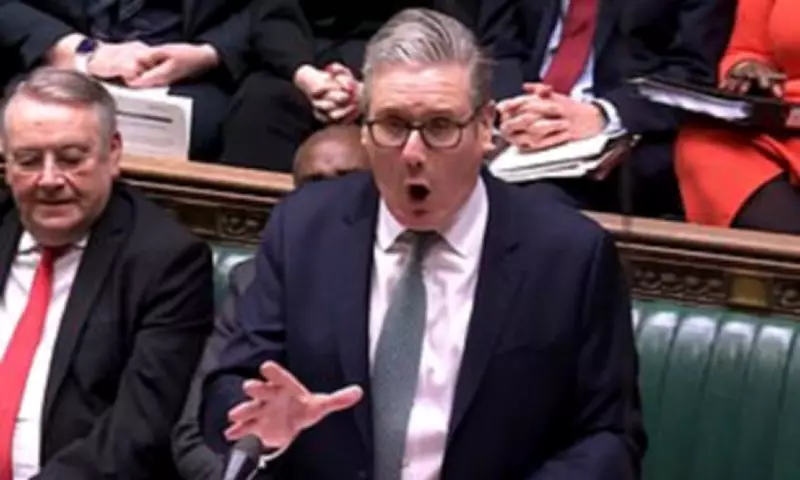
Prime Minister Confronted Over Paedophile Apologist Allegations in Commons
When a Prime Minister stands accused in the House of Commons of "stuffing government with paedophile apologists", their political credibility faces an existential threat. Sir Keir Starmer now finds himself in precisely this position, with many questioning whether he can ever be taken seriously as the leader of the nation again. The uncomfortable expressions on Labour MPs' faces as they sat behind him on the green leather benches yesterday spoke volumes about the severity of this crisis.
Matthew Doyle Peerage Creates Indefensible Controversy
Amid the ongoing scandal surrounding Peter Mandelson, Sir Keir has become embroiled in another outrage that appears impossible to justify. Conservative MP Kemi Badenoch revealed that the Prime Minister's former director of communications, Matthew Doyle, had actively campaigned for a man convicted of possessing indecent images of girls as young as ten years old. Despite this troubling background, Doyle has been rewarded with a peerage.
Even the most politically naive Labour backbencher understands that association with paedophile-related matters typically results in immediate political annihilation. Yet Sir Keir failed to grasp this fundamental reality. Rather than taking decisive action when these facts emerged, the Prime Minister inexplicably proceeded with Doyle's ennoblement, granting him – as Mrs Badenoch pointed out – a lifetime position in Parliament.

Starmer's Inadequate Response to Devastating Accusations
Sir Keir's response to these grave allegations proved woefully inadequate. His puce-faced display of piety offered no substantive defense against such a devastating political takedown. Instead, he attempted to deflect attention by referencing Mrs Badenoch's failure to bar Liz Truss from the Conservative Party – a deeply peculiar diversionary tactic that only highlighted his vulnerability.
This response reinforced the perception that the Prime Minister has positioned himself as what critics describe as "a recruitment consultant for paedophiles' pals", further damaging his already precarious standing.
Labour's Brexit Position Shows Signs of Softening
While the current Labour leadership has attempted to distance itself from any suggestion of reversing Britain's hard-won Brexit freedoms, the party's underlying affinity for Brussels continues to surface. Chancellor Rachel Reeves demonstrated this yesterday when she admitted in a speech that "the biggest prize is closer integration with Europe" in terms of economic expansion.
This represents a significant shift in tone from the Chancellor and indicates that one of Sir Keir's key electoral "red lines" is beginning to blur. As the Prime Minister's position becomes increasingly destabilized, the more radical elements within his party are likely to seize the opportunity. Their probable agenda includes substantially increasing taxes on higher earners, followed by renewed discussions about rejoining the European Union – a move that would impose considerable costs on both the country and individual taxpayers.
Green Party Faces Internal Extremism Concerns
While many millennials and some left-leaning older voters maintain the misconception that the Green Party consists merely of harmless environmental enthusiasts, a more sinister reality is emerging. The party contains a significant contingent whose policies and attitudes raise serious concerns, prompting alarm even among its own membership.
Counter-Terror Police Alerted Over Hard-Left Infiltration
Concerned Green Party members have alerted counter-terrorism police following an influx of hard-left, pro-Palestinian activists determined to have the party officially adopt "anti-Zionism" as policy. These members fear that their seemingly naive leader, Zack Polanski, is allowing anti-Semitic extremism to gain ground within the organization.
Anyone familiar with Mr. Polanski's existing policies – particularly his anti-NATO stance – will recognize that behind the party's peaceful, inclusive facade lies a more troubling reality. The Green Party increasingly resembles a wolf in sheep's clothing, with extremist elements exploiting its environmental platform to advance more radical agendas.

This three-pronged political crisis – encompassing Starmer's peerage scandal, Labour's ambiguous Brexit position, and Green Party extremism concerns – reveals significant vulnerabilities across the British political landscape as parties grapple with internal divisions and external pressures.