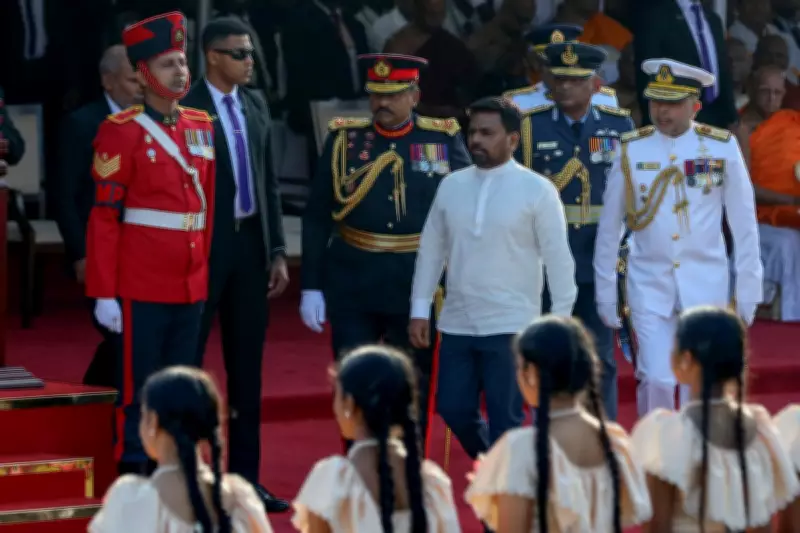
Sri Lankan legislators have delivered a decisive blow to their own financial privileges, overwhelmingly voting to scrap parliamentary pensions in a landmark move that fulfills a central campaign promise by the ruling Marxist-leaning government.
Overwhelming Parliamentary Support for Pension Abolition
Lawmakers passed the significant bill on Tuesday by an impressive margin of 154 votes in the 225-member House, with only two legislators voting against the measure. The remaining members were not present during the crucial vote that marks a substantial shift in parliamentary benefits.
Previously, Sri Lankan lawmakers were entitled to receive a pension after completing just a single five-year term in office. The newly enacted legislation completely halts payments to anyone who currently receives or qualifies for these parliamentary pensions, representing a dramatic reversal of long-standing entitlements.

President Dissanayake Delivers on Election Pledge
President Anura Kumara Dissanayake, who was voted into office in 2024 following widespread public discontent, had prominently pledged to end the parliamentary pension practice during his election campaign. This move represents a continuation of his government's efforts to reduce political privileges that have drawn public ire.
In a similar austerity measure last September, Dissanayake's administration abolished numerous perks previously provided to former presidents in direct response to popular demand. Those eliminated benefits included state funding for housing, various allowances, presidential pensions, and transport provisions. Additionally, the government scrapped offices and staff allocations for former presidents and their widows, affecting five living past presidents and one widow.
Economic Crisis Drives Political Reform
President Dissanayake's electoral victory was largely propelled by public resentment against politicians widely accused of responsibility for Sri Lanka's worst economic crisis in 2022. That devastating period saw severe shortages of essential items including food, medicine, fuel, and electricity, triggering massive protests that ultimately forced then-President Gotabaya Rajapaksa to resign from office.
Justice Minister Harshana Nanayakkara, who presented the pension abolition bill in parliament, declared that an important election promise had now been fulfilled. He emphasized that lawmakers had no moral justification to receive pensions while the nation continued struggling to emerge from its unprecedented economic turmoil.
Background of Sri Lanka's Economic Collapse
Sri Lanka declared bankruptcy in April 2022 with staggering debts exceeding $83 billion, more than half of which was owed to foreign creditors. The nation subsequently sought assistance from the International Monetary Fund, which approved a substantial $2.9 billion four-year bailout package in 2023. This agreement required Sri Lanka to undertake comprehensive debt restructuring as a condition of the financial support.
The island nation has since reported concluding its debt restructuring process after reaching agreements with bilateral and multilateral creditors alongside private bondholders. Sri Lanka is currently seeking to obtain approximately $17 billion in debt service relief as part of its economic recovery efforts.
Experts attribute Sri Lanka's economic crisis to multiple converging factors, including significant economic mismanagement combined with the lingering fallout from the COVID-19 pandemic. The devastating 2019 terrorism attacks that crippled the country's vital tourism industry further exacerbated economic difficulties, while pandemic-related disruptions severely affected the flow of remittances from Sri Lankans working abroad.
This parliamentary pension abolition represents more than symbolic politics—it signifies a tangible response to public demands for accountability and shared sacrifice during challenging economic times. The government's actions reflect a broader commitment to reforming political privileges that had become increasingly controversial amid widespread economic hardship affecting ordinary citizens.