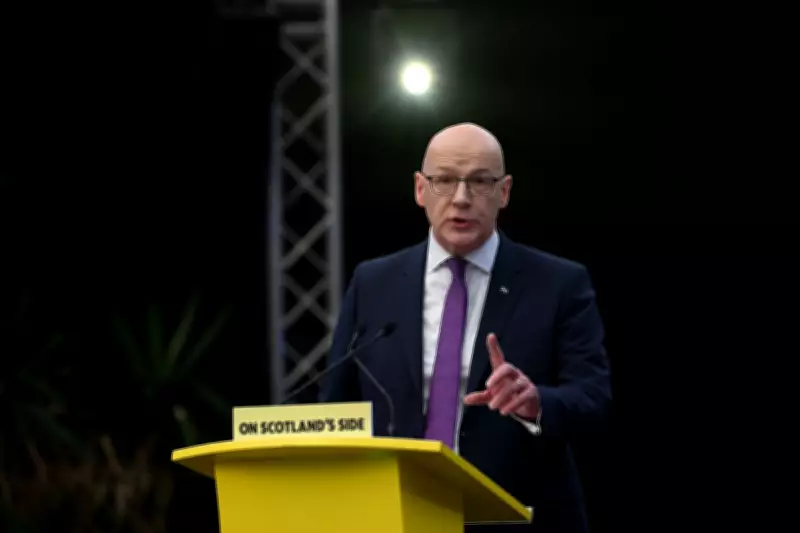
The UK Government has launched a scathing attack on the Scottish National Party's manifesto commitment to impose price caps on essential food items, branding the policy as "undeliverable" and warning it could saddle the Scottish Government with millions of pounds in legal expenses. This criticism comes as First Minister and SNP leader John Swinney unveiled his party's election platform on Thursday, promising to limit the cost of up to 50 staple goods like milk, bread, and eggs in response to mounting concerns over the cost-of-living crisis.
Legal Hurdles and Devolution Constraints
A senior UK Government source highlighted that any such move, which the SNP intends to justify on public health grounds akin to minimum unit pricing for alcohol, would be subject to the UK Internal Market Act. This legislation can block measures that might adversely affect other parts of the country. While the source did not explicitly state whether UK ministers would veto the proposal, they emphasised its impracticality, stating, "This is an incoherent and undeliverable policy that risks costing the Scottish Government millions in legal bills."
The source further argued, "John Swinney has invented a policy more likely to put money in the pockets of lawyers than the pockets of working people." In contrast, the UK Government asserted its focus is on immediate actions to alleviate the cost of living, such as reducing fuel bills.

SNP's Rationale and Implementation Plans
During the manifesto launch in Glasgow, Mr Swinney defended the plan, citing severe economic pressures that are impacting national nutrition. He acknowledged that under current devolution arrangements, Holyrood typically cannot set retail prices directly. However, he pointed to existing powers over public health as a legal basis for introducing "fair food prices" on everyday items that constitute a healthy diet.
Mr Swinney outlined that legislation would be introduced early in the new parliamentary term to establish these caps, with specific prices for individual items to be determined by ministers. A "sunset clause" would ensure the measure is discontinued once it is no longer deemed necessary. He framed the initiative as part of broader efforts to reduce grocery costs and increase household disposable income.
Industry and Opposition Reactions
Ewan McDonald-Russell, deputy head of the Scottish Retail Consortium, criticised the policy as "wrongheaded," suggesting that instead of price controls, more financial support should be directed to retailers to enable them to lower costs for consumers. Meanwhile, political opponents were quick to dismiss the SNP's promises.
Scottish Labour deputy leader Dame Jackie Baillie declared the manifesto pledges "not worth the paper they are written on," citing unmet promises from previous elections and ongoing issues in healthcare, education, and infrastructure. Scottish Liberal Democrat deputy leader Wendy Chamberlain labelled the document a "snoozefest" and accused the SNP of recycling implausible commitments. Scottish Tory leader Russell Findlay urged pro-UK voters to view the launch as a "wake-up call."
Broader Manifesto Commitments
The 76-page SNP manifesto also includes a pledge not to increase income tax rates or bands, with plans to simplify the tax system to aid those struggling financially. Although Mr Swinney did not confirm specifics, it is understood that merging the bottom three tax bands is under consideration. Additionally, he promised to cap bus fares at £2 per journey if re-elected, with subsidies to cover the difference for operators, potentially reaching £210 million by 2031-32 based on passenger numbers.
Mr Swinney positioned himself as offering "experienced, principled, reliable leadership" during turbulent times, reiterating his lifelong dedication to public service. He also reaffirmed the SNP's goal of securing a majority in the May 7 election to push for a second independence referendum, framing it as a vote to place Scotland's future in its own hands.

Fiscal Scrutiny and Independence Ambitions
The Institute for Fiscal Studies raised concerns about the financial viability of the SNP's proposals, estimating additional spending of £1.4 billion annually by 2031-32. David Phillips, head of devolved and local government at the think tank, noted that the manifesto relies heavily on assumed efficiencies beyond existing savings plans, warning that "paying for these plans would require further tax rises or deeper cuts to lower-priority spending."
As the election approaches, the debate over the SNP's food price cap underscores broader tensions between devolved ambitions and UK-wide regulations, with economic feasibility and legal challenges taking centre stage.