Why Slovenia's Election Echoes Far Beyond Its Borders
The upcoming election in Slovenia, a nation of just two million people, holds profound implications that stretch well beyond its Alpine borders. This pivotal vote could significantly reshape debates on Ukraine, Donald Trump, and the future of Europe, according to Denis MacShane, the UK's former Minister of Europe.
A Modern-Day Mouse That Roars
Inspired by the post-war fantasy The Mouse That Roared, Slovenia has emerged as a tiny nation with a mighty voice on the global stage. Under Prime Minister Robert Golob, a former energy entrepreneur, Slovenia has boldly challenged both the United States and Russia. When Slovenia secured a seat on the UN Security Council in 2024, it became the first European state to recognise the right of Palestinians to have a state, setting a precedent that Britain, France, Canada, and Australia followed a year later.
The Stakes of Sunday's Vote
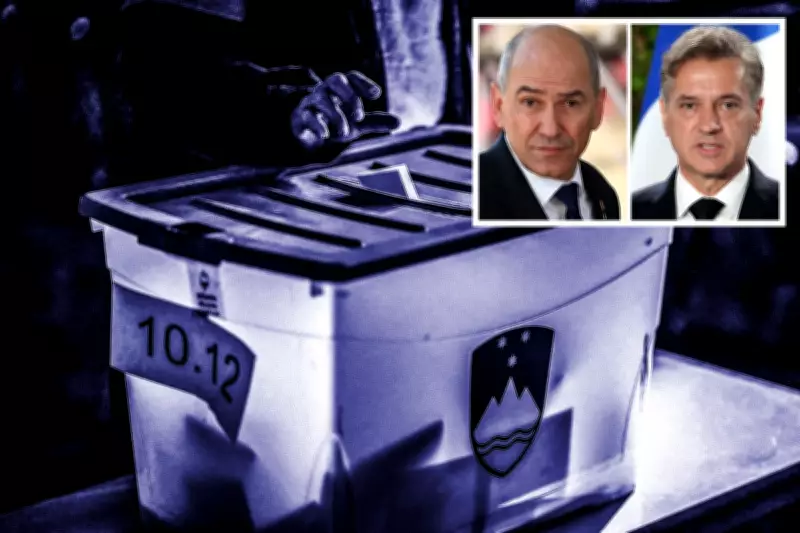
Golob faces a fierce re-election battle against Janez Janša, a pro-Putin, pro-Trump nationalist populist and former prime minister. Janša, backed by Trump's Maga movement and the Israeli right, aims to reclaim power in elections scheduled for Sunday. The outcome will determine Slovenia's foreign policy direction, with Golob advocating for strong support for Ukraine and Janša leaning towards alignment with Trump's initiatives.

Slovenia's Geopolitical Impact
Despite not being a NATO member, Slovenia under Golob has provided substantial aid to Ukraine, including €163 million in military assistance, 28 battle tanks, and financial support. In contrast, Britain sent only 14 Challenger tanks. This proactive stance has drawn ire from Russian allies in the region, such as Milorad Dodik, who is investing heavily to influence Slovenia's Serb minority against Golob.
Global Reactions and Symbolic Gestures
Golob's policies have also antagonised Donald Trump, particularly his refusal to join Trump's proposed Board of Peace, an initiative intended to rival the United Nations. Additionally, Golob symbolically dispatched Slovenian soldiers to Greenland in solidarity with Denmark after Trump's annexation announcement, a move mocked by Janša and his allies who favour closer ties with the US president.
Broader European Context
The election occurs amidst heightened scrutiny of figures like Hungary's Viktor Orbán, another Trump and Putin ally who uses EU veto powers to obstruct consensus on issues like support for Ukraine. In Slovenia, domestic concerns such as jobs, housing, education, and energy prices are intertwined with foreign policy debates, especially given Netanyahu's influence on Trump's Iran policies.
Why the World Should Care
Small nations like Slovenia can send powerful signals to larger, self-important countries. If Golob loses, Janša is expected to pivot Slovenia towards Trump's Board of Peace, potentially bolstering Trump's stalled Iran war efforts. The election result will be closely monitored in Moscow, Tel Aviv, Washington, and Brussels, highlighting its significance in shaping European and global dynamics.
Denis MacShane, the UK's former Minister of Europe, underscores that foreign policy today often hinges on symbolic actions rather than military might, making Slovenia's vote a critical barometer for international relations.