The Westminster 'bubble' has rarely been so interesting for the rest of us to view from the outside. As a drama full of intrigue, it must be surely good for the popcorn sector. Understandably, turmoil within the governing party and about its leadership has taken up many broadcast hours and column inches discussing the rules, the arithmetic, the possible outcomes, Boris Johnson's personality, and the runners and riders to replace him.
All that focuses on personalities, as politics tends to do. But there are real world consequences for this outside the bubble, and notably so for the economy. You can opt for a really negative view - for instance, the foreign exchange analyst at Bank of America Merrill Lynch who published the view last week that political drift is undermining sterling as a credible reserve currency, and is more comparable with the Mexican peso than it is to the US dollar, euro or Japanese yen. That might help explain why it has sunk to an exchange rate below $1.25. That, in turn, pushes up the British costs of dollar-traded oil, meaning petrol and diesel are heading towards £2 a litre.
The Downing Street political drift that was cited on Wall Street is not likely to be calmed by the scale of revolt from Tory MPs. So I'm suggesting two broad themes to watch as an outcome. One is for the time that Boris Johnson remains prime minister. He is in a weakened position and at the mercy of further revolts over policy. If he's very smart, he could pick them off, because they may come at him from different wings of the party without finding a common ground.

One group of MPs want to see taxes lowered and the size of the state shrunk. Another take the conventional conservative view of finance that borrowing should be cut back and books balanced. Still another like the rhetoric of 'levelling up', which means the intervention of a big state which pushes infrastructure spending, public service improvement and greater opportunity into the 'left-behind' bits of Britain. Put simply, these are not compatible positions to take on public spending. Boris Johnson is probably closest to the latter group, splashing cash as a populist crowd-pleaser. Rishi Sunak, his Chancellor, wants to be seen as part of the tax-cutting group, even though Covid, inflation and his neighbour in Number 10 have required him to be a big state spender.
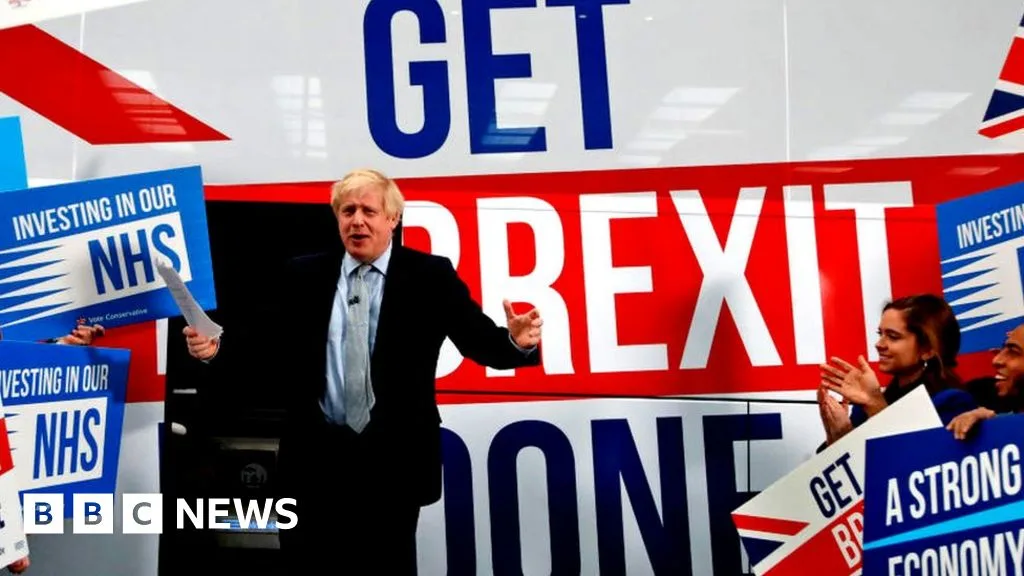
Broad theme two is - if the MPs' revolt against Boris Johnson is to bring about his downfall - it's time to think about what comes next. And while public spending and the size of the state will be a big part of that, his replacement opens the door to new thinking about some big public policy questions. A conspicuous one is Brexit. It's not true to say that it's 'done'. The process it unleashed in economic terms was always going to take years and probably decades to resolve itself. The impact of leaving the single market and customs union nearly 18 months ago was masked by the massive economic impact of Covid. Trade flows were hugely disrupted for many countries. It has been hard to identify the extent of the Brexit impact.
But it's becoming less hard. Some goods trade has settled into new patterns, at higher costs. Some has been displaced and new supply chains formed that mean fewer goods move between the UK and the European Union. For instance, one Scottish high-end cheese producer recently said Brexit had helped sales, because its products are replacing the European cheeses that are no longer despatched to Britain. So that's good for local firms, bad for consumer choice. Some of that supply chain shake-up will take a lot longer. But already, with the economy bouncing out of Covid restrictions, we're seeing the consequences of losing access to European recruits into private business and public services. The capacity of many firms has been scaled back. Just look at the number of shops, restaurants, cafes and hotels that no longer offer seven-day operations or flexibility of service because they can't get the staff they require to do so.