Reeves' Spring Statement Provides Rare Moment of Political Relief
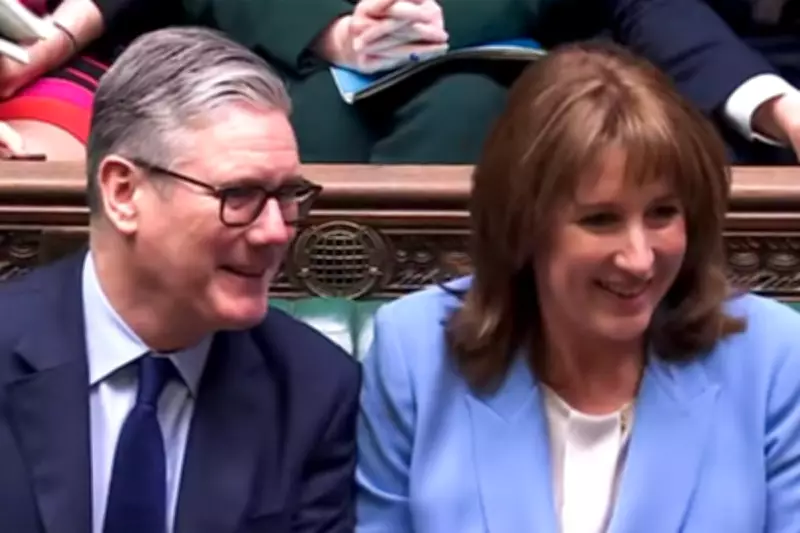
In a notable departure from recent political tensions, Chancellor Rachel Reeves delivered her Spring Statement with Prime Minister Keir Starmer appearing unusually relaxed and content by her side. The 24-minute address to Parliament saw both Labour leaders displaying visible confidence, despite the chancellor's initial nervousness and occasional verbal stumbles.
Political Theatre and Economic Realities
Reeves began her speech with a fixed smile reminiscent of Gordon Brown's trademark expression, but quickly shifted to a more forceful tone as she criticized both Conservative economic management and Reform Party policies. At one particularly animated moment, when attacking Reform's positions, Starmer pointed directly at their benches, adding theatrical emphasis to the chancellor's words.
The chancellor's delivery improved noticeably as she progressed through her statement. She highlighted the Office for Budget Responsibility's forecast showing GDP per person would rise during this parliamentary term, contrasting this with declines during the previous Conservative administration. When Tory interruptions subsided during this section, Reeves ad-libbed: "I didn't hear them that time!" prompting genuine laughter that replaced her earlier forced smile.

War Changes All Calculations
The ongoing conflict with Iran has fundamentally altered the economic landscape, rendering many of the OBR's projections immediately outdated. As oil prices remain elevated, the chancellor acknowledged that "everything can be wiped out by a change of course" – a statement originally directed at political opponents but equally applicable to geopolitical developments.
Paradoxically, this international crisis has provided political cover for the government. Should the impressive economic numbers cited in Reeves' speech fail to materialize, the war provides plausible deniability. Meanwhile, Starmer's cautious approach to military engagement – refusing to participate in initial strikes against Iran while adhering strictly to international law – has unexpectedly boosted his standing within the Labour Party and aligned with public sentiment.
Fiscal Maneuvering and Political Strategy
Reeves had deliberately downplayed expectations for this Spring Statement for months, insisting she would conduct only one major fiscal event annually during the Budget. This contrasted sharply with last year's approach, when panic over mid-year account shortfalls led to proposed £5 billion annual cuts to disability benefits – measures later abandoned due to Labour backbench opposition.
This year, the chancellor emphasized that the OBR forecast would not include formal assessment against fiscal rules, though Treasury officials nevertheless extracted relevant numbers. Reeves triumphantly declared the government remained on track to meet its fiscal targets for 2028-29, albeit by a slightly reduced margin following recent global developments.
Economic Silver Linings in Troubled Times
Before recent geopolitical escalations, the economic outlook contained mixed signals. While growth projections for the current year were lower than previously anticipated, improved stock market performance promised stronger growth in later years. Now, with certainty only about reduced growth in the immediate term, Reeves nevertheless managed to present the situation as an economic management triumph.
Starmer's visible comfort throughout the proceedings reflected strategic awareness that international crises can paradoxically strengthen domestic political positions. The prime minister recognized that, while war brings undeniable tragedy, it also creates circumstances where traditional economic expectations are suspended, providing breathing room for a government facing multiple challenges.
The chancellor's metaphorical "rabbit in the hat" – economic good news her advisors had insisted wouldn't materialize – was thus presented regardless of its diminished relevance in the new global context. Both leaders understood that, in wartime, political survival often depends on factors beyond economic spreadsheets.