Rachel Reeves Presents Upbeat Economic Assessment Amidst Political Theatre
Chancellor Rachel Reeves entered the House of Commons chamber with theatrical confidence, positioned just behind Prime Minister Keir Starmer, whose approval ratings have plummeted to historic lows. Despite her own declining popularity and an economy showing concerning indicators, Reeves maintained a poised, almost celebratory demeanor throughout the proceedings.
A Performance for the Cameras
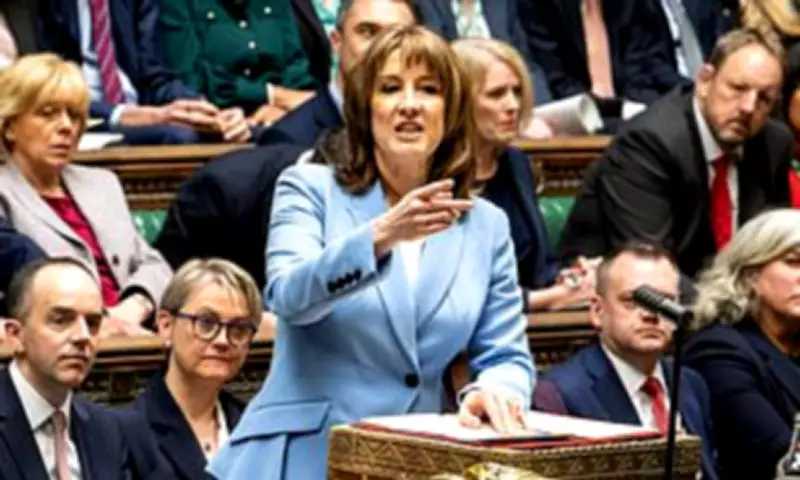
Before taking her place at the dispatch box, Reeves appeared expressionless behind the Speaker's chair. However, once she stepped into the parliamentary spotlight, her transformation was immediate and dramatic. Television cameras captured her newly styled hair—a feathered lob—as she acknowledged supporters in the gallery with cheerful greetings.
Beside her sat Prime Minister Keir Starmer, appearing pale and drawn, while other cabinet members including Education Secretary Bridget Phillipson maintained stern expressions. Treasury Minister James Murray watched with solemn attention, while Transport Secretary Heidi Alexander showed visible fatigue and Deputy Prime Minister David Lammy attended to physical discomfort.

The Spring Forecast Statement
Speaker Lindsay Hoyle's announcement of the Spring forecast brought Reeves to her feet. Her opening declaration—"this Government has the right economic plan for our country"—prompted immediate laughter from opposition benches and enthusiastic cheers from her own side.
"With the Government's substantial majority, Labour backbenchers created overwhelming vocal support that might have convinced any observer of years of successful economic management," the parliamentary correspondent noted. "The actual statistics, which suggest a different reality, received only passing mention in carefully phrased dismissals."
Reeves acknowledged the forecasts with brisk professionalism: "I'm not satisfied yet with these forecasts."A Conservative voice immediately retorted, "Nor are we!"—a comment the Chancellor pointedly ignored as she continued her presentation.
Political Rhetoric Takes Center Stage
For twenty-five minutes, Reeves delivered what observers characterized as "bombastic politics." She repeatedly emphasized breaking with "failed ideas of the past," "fixing welfare," and having "restored stability." Her voice grew increasingly forceful as she dismissed opposition parties.
"The Tories are irrelevant," she declared. "Reform consists of failed Tory politicians." She similarly dismissed Liberal Democrat and Green Party contributions, asserting, "I will take no lectures! I've been making the big choices, taking on the vested interests! I have the right plan!"
A momentary verbal stumble occurred when she accidentally said "the promise that we changed" instead of "the change that we promised," causing visible tension in Prime Minister Starmer before she corrected herself.
Opposition Response Drowned Out
Shadow Chancellor Sir Mel Stride attempted to respond but found his voice overwhelmed by Labour hecklers. His light-toned delivery stood little chance against what one observer described as "a wall of disdain."
As Stride argued that Reeves was "living on another planet" while gesturing with his right hand, Labour backbenchers responded with laughter and shouting. Several MPs including Sean Woodcock, David Burton-Sampson, Baggy Shanker, Richard Quigley, and Sadik Al-Hassan ignored Speaker Hoyle's calls for order, creating continuous disruption.
When Stride suggested public spending cuts, Conservative MP Peregrine Moon responded with what was described as "an enormous burp of contempt."
Question Time Descends into Sarcasm
Liberal Democrat Daisy Cooper's question about youth prospects received an airy reference to the Erasmus scheme rather than direct engagement. Conservative David Reed's reasonable inquiry about student fees prompted triumphalist insults and eye-rolling from the Chancellor.
DUP representative Carla Lockhart received dismissive sarcasm in response to her concerns. Throughout these exchanges, the contrast between parliamentary theater and global realities remained stark—with international conflicts escalating, financial markets declining, and energy prices rising even as MPs received a five percent pay increase.

The House adjourned before 4:00 PM, concluding a session that highlighted both the Government's confidence in its economic direction and the deepening divisions within British politics.