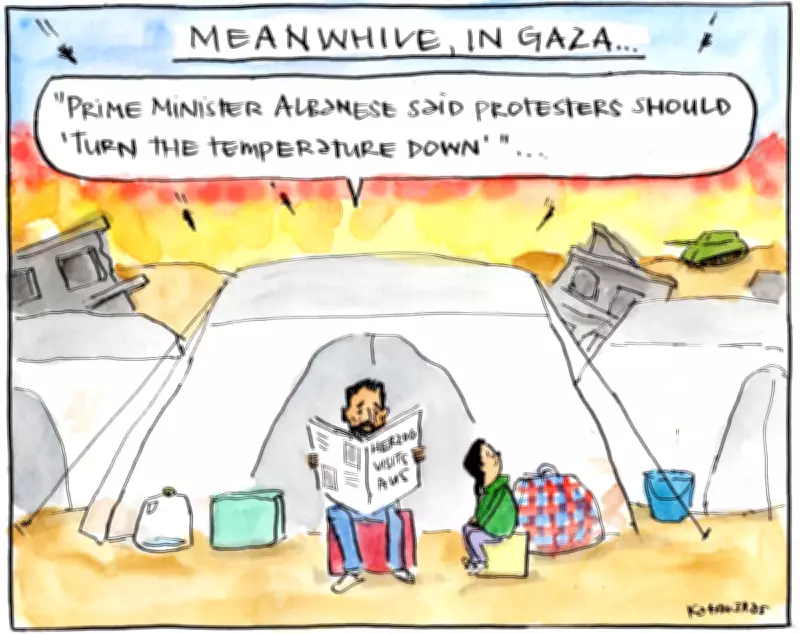
Mixed Reactions to Prime Minister's Call for De-escalation
The Prime Minister's recent appeal for cooling down tensions has sparked a diverse range of responses across the nation, with some groups heeding the advice while others remain visibly agitated. This call, aimed at reducing political and social friction, comes at a time when public discourse has been increasingly heated, raising concerns about stability and unity.
Sectors Embracing Restraint
In certain sectors, there has been a noticeable shift towards restraint and moderation. Community leaders and local organisations have reported efforts to foster dialogue and reduce confrontational rhetoric. For instance, in urban areas, initiatives promoting civil discourse have gained traction, with workshops and forums being organised to encourage peaceful exchanges of ideas. Additionally, some media outlets have adopted a more measured tone in their coverage, avoiding sensationalism that could inflame passions.
Signs of Continued Agitation
Despite these positive developments, signs of continued agitation persist in various quarters. Political opponents and activist groups have criticised the Prime Minister's advice as insufficient or disingenuous, arguing that deeper structural issues need to be addressed. Protests and public demonstrations have not abated in some regions, with participants expressing frustration over perceived injustices and policy failures. Online platforms, in particular, remain hotbeds of intense debate, with polarising comments and misinformation often overshadowing constructive conversations.

Analysis of the Broader Impact
The broader impact of the Prime Minister's call is still unfolding, with experts noting that while it may have temporarily dampened some conflicts, underlying tensions remain unresolved. Economic factors, such as inflation and employment concerns, continue to fuel public anxiety, complicating efforts to achieve lasting calm. Moreover, the political landscape remains fragmented, with partisan divides hindering collaborative solutions. Observers suggest that sustained efforts, including policy reforms and inclusive dialogue, will be necessary to truly cool things down and restore a sense of collective purpose.
Future Outlook
Looking ahead, the effectiveness of the Prime Minister's advice will likely depend on continued engagement and tangible actions from both government and civil society. If key stakeholders can build on initial gestures of restraint, there is potential for a more harmonious political climate. However, if agitation persists or escalates, the call for calm may be viewed as merely symbolic, risking further disillusionment among the public. Monitoring these dynamics will be crucial in the coming months to assess whether the nation is genuinely heeding the Prime Minister's guidance.