Is It 'Ih-ran' or 'Ih-ron'? How Pronunciation of Iran Signals Political Beliefs
A subtle variation in vowel pronunciation can convey far more about political ideology than most people realize. With the war in Iran dominating global discourse, many have noticed inconsistencies in how the nation's name is spoken, oscillating between a more native-like "Ih-ron" and an Americanized "Ih-ran."
While casual observers might attribute this to regional dialects or personal upbringing—similar to differences in saying "data" or "roof"—linguistic experts argue that such pronunciations offer profound insights into social identities and beliefs.
The Sound of Political Affiliation
It is hardly surprising that listeners often interpret certain words or accents as indicators of political leanings. Humans are naturally inclined to detect patterns that signify group membership, whether through fashion choices or speech nuances like pronouncing "fire" as "far." Once identified, these patterns lead people to associate the traits of a group with the sounds of their speech.

For instance, a 2018 study examined perceptions of political candidates with Southern versus non-Southern American accents. Researchers found that listeners viewed Southern-sounding politicians as more conservative, with presumed right-leaning stances on issues such as gun rights and abortion—all inferred from pronunciations like "pin" for "pen" or "bah bah" for "bye."
This demonstrates that even minor vowel variations can suggest political ideology, though such associations are not always accurate.
Nationalism and the Politics of Pronunciation
To understand what drives variation in pronouncing Iran, insights can be drawn from linguistic studies on the Iraq War. An analysis of 2007 House of Representatives debates on deploying additional U.S. troops to Iraq revealed that political party affiliation was the strongest predictor of how the "a" vowel in Iraq was articulated.
Republicans favored the anglicized short "a" pronunciation, akin to "ear-RACK," while Democrats preferred a more "ah"-like sound, as in "ear-ROCK." Researchers suggest the Democratic preference, which approximates native pronunciation, may stem from greater multicultural sensitivity.
The pronunciation of the "i" vowel, such as in "EYE-rack/rock," was also examined but did not significantly correlate with partisanship alone. Later studies in 2011 and 2018 of everyday speakers in non-political contexts found no major differences by political affiliation for Iraq. Instead, multilingualism was the biggest predictor of an "ear-ROCK" pronunciation, as the "ah" sound is common in languages like Spanish, French, and Italian.
However, when participants in the 2018 study were explicitly asked about political connotations, the "ah" pronunciation was linked to liberalism, especially among liberal individuals who used it themselves. This indicates that people may have internalized this pattern from political discourse, recognizing the vowel variation as symbolic of liberal versus conservative positions.
Respect and Linguistic Choices
Examining borrowed words with the letter "a," such as "pasta" or "tobacco," linguist Charles Boberg notes that Americans typically choose between a short "a" as in "bat" or an "ah" as in "father." Attitudinal factors influence this choice, with many associating the "ah" pronunciation with education and sophistication, partly due to its upper-class British usage in words like "bath" or "aunt."
Since World War II, there has been a growing tendency for Americans to adopt "ah" in newer borrowings, like "origami" or "nacho." Yet, in the case of Iraq, other linguists hypothesize that the "ah" vowel is perceived as sophisticated only when the source language is highly esteemed, such as British English, or when its speakers are respected.
Conversely, when there is less regard for a people or place, an Americanized vowel may be preferred over a more accurate native one. This attitude likely explains much of the variation in politicians' pronunciation of Iraq—and potentially Iran.

Trump, Vance, and 'I-ran'
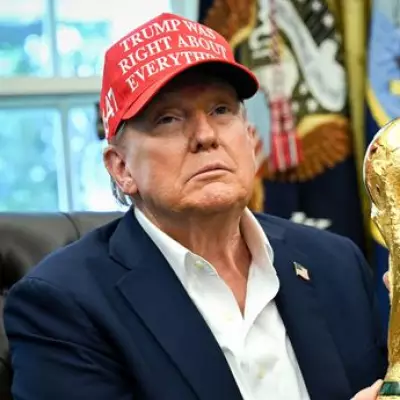
While no similar study has yet compared politicians' pronunciation of Iran, it is noteworthy that both President Donald Trump and Vice President JD Vance use the more anglicized version, saying "Ih-RAN" rather than "Ih-RON," employing the same vowel as in "ear-RACK."
Given the highly contested nature of the Iran war, this presidential preference for the anglicized name may reflect a politicized positioning akin to that observed with Iraq. Trump and Vance might be emphasizing a "pro-America" focus by creating linguistic and ideological distance from the nation and its speakers.
A parallel linguistic contrast emerged during the Vietnam War, when "VietNAM" was commonly pronounced with a short "a" as in "bat," including by President Lyndon B. Johnson. Today, the "VietNOM" pronunciation dominates, and the "NAM" version has largely disappeared among younger generations.
Similarly, Americans may eventually find a middle ground in the current debate over Iran's pronunciation. However, it could take considerable time before peace in the Middle East allows the next generation a linguistic fresh start.
Valerie M. Fridland is a Professor of Linguistics at the University of Nevada, Reno. This article is adapted from The Conversation under a Creative Commons license.