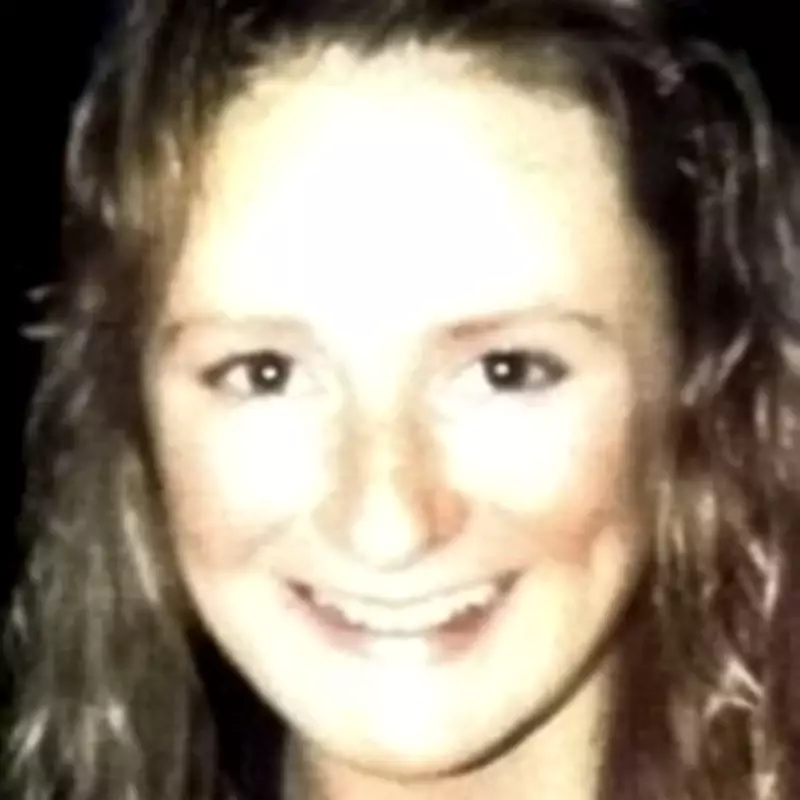
DNA Advances Offer New Hope in 1994 'Carrot Field' Murder Cold Case
Detectives investigating the unsolved murder of a young woman 32 years ago are pinning their hopes on advances in DNA technology to finally crack the case. Julie Finley, 23, was strangled and dumped naked in a carrot field near Rainford, Lancashire, on August 6, 1994, after being picked up in Liverpool.
The Final Hours and a Plea for Help
In her final moments, Julie screamed "help me, help me, for god's sake, help me" to a witness who fled after being threatened by her killer. This witness has never come forward. Howard Rubbery, Head of Merseyside Police's Serious Crime Review Unit, stated: "Following advances in forensic science, we are currently in the process of taking DNA from individuals identified from the initial investigation for elimination purposes."
Julie came from a close-knit Catholic family in Liverpool and had aspired to become a hairdresser. However, she fell victim to the heroin epidemic that swept through the city in the 1980s and 90s, becoming addicted to the drug. By the time of her murder, the 5ft 2in woman weighed just 6st.

The Disappearance and Discovery
On the night she died, Julie had been with her boyfriend before going out alone. She was last seen around 10.30pm on August 5, 1994, near the Royal Liverpool Hospital, talking to a white man of average build, aged in his 20s or 30s. Another witness later reported seeing a young woman arguing with a man at about 12.30am outside the Wheatsheaf public house in Rainford, just yards from where Julie's body would be found. The man was attempting to force the woman into a white Transit van.
Julie's body was discovered at 1.30pm the next day by a cyclist who had stopped to relieve himself. "At first he didn't realise it was a human body - she looked so frail," said former Det Chief Inspector Francis Youell, who led the murder hunt for many years. A pathologist estimated she had died between midnight and 1am and likely been killed by compression to the neck with a weapon about an inch wide.
The Investigation and DNA Clues
In the early stages, a core team of 15 detectives worked on the case, questioning over 40 men in the first six months. Twenty people were arrested over the years, but no one has ever been charged. A mixed DNA profile has been obtained from crime scene exhibits, but it is not known if it belongs to the killer and does not match anyone on the national DNA database.
Mr Rubbery emphasised: "This is just one line of inquiry that we may carry out for unsolved murders. Let me be clear – the investigation into Julie’s murder, as with every unsolved murder, is not closed." He added that the Serious Crime Review Unit regularly reviews cases to identify new forensic opportunities or fresh lines of inquiry.
Potential Suspects and Unresolved Mysteries
The Daily Mirror has previously reported that double killer Christopher Halliwell was living four miles from the spot where Julie was found at the time of the murder. He was working fitting windows and driving a D-reg white Transit van similar to one spotted at the scene. Halliwell, who murdered Becky Godden-Edwards in 2003 and Sian O'Callaghan in 2011, shares similarities with Julie's case: she was small, in her early 20s, alone when lured into a vehicle, and dumped in a rural spot.
Julie's mum Pat, 81, said in 2024: "I just want the police to go and interview him in prison about our Julie. He's doing life so he's not going to get any extra time if he admits it."
In the months after the murder, a motorist reported that a hitchhiker claimed to have seen a naked woman screaming for help in a van at the same layby. The hitchhiker, described as in his mid-20s with short blond hair and believed to be from St Helens, has never come forward. Det Chief Insp Francis Youell told BBC's Crimewatch in 1995 that he believed this hitchhiker was the last person to see Julie alive other than the killer.

A Family's Plea for Justice
Pat, remembering her husband Albie who passed away in 2019, said: "He died without getting justice. I'm 79 now and I want justice before I go." Mr Rubbery made a fresh appeal for witnesses, urging anyone with information to come forward, noting that allegiances change over time and people may now feel more comfortable providing details.
The case remains open, with detectives determined to use every technological advance to solve this three-decade mystery and bring closure to Julie's family.