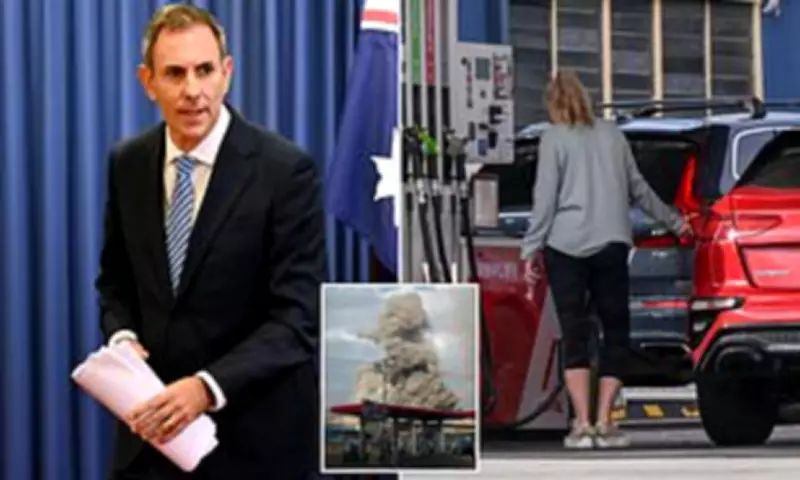
Senator Price Accuses Labor of Using Middle East Conflict to Mask Economic Failures
Liberal Senator Jacinta Nampijinpa Price has launched a scathing attack on the Albanese government, accusing it of exploiting turmoil in Iran and the broader Middle East as a convenient excuse for Australia's deepening economic problems. The outspoken senator argued that the nation's cost-of-living crisis 'didn't start in Tehran - it started in Canberra', directly challenging the government's narrative.
Deflecting Blame Overseas Rather Than Owning Domestic Record
Price unleashed her criticism as global supply chains shudder from escalating conflict, with recent US-Israel strikes on Iran prompting retaliatory actions and disrupting critical shipping through the strategic Strait of Hormuz. While Australian officials, including Treasurer Jim Chalmers and Reserve Bank Governor Michele Bullock, have warned that this instability threatens global oil and gas flows—increasing pressure on domestic prices and inflation—Price remains unconvinced.
The senator claimed Chalmers would use the Middle East conflict to justify higher fuel prices and rising costs in the upcoming May federal budget. 'It won't take a crystal ball to predict what the Treasurer will say,' she stated. 'They'll blame the war in the Middle East for higher fuel prices and rising costs.' Price argued that Labor is systematically deflecting blame overseas rather than owning its economic record.

A Pattern of Excuses and Domestic Policy Failures
Price elaborated on what she sees as a consistent pattern of excuse-making by the government. 'First it was Covid. Then the Coalition. Then Russia's invasion of Ukraine. Then US tariffs. Now it will be Iran,' she recounted. The senator insisted that Australians recognise the truth: under Labor, they have experienced higher inflation, elevated energy prices, increased taxes, and more bureaucratic red tape.
Accusing the government of 'economic indiscipline', Price warned: 'When government spending explodes and economic discipline disappears, families pay the price.' She contended that the core problem is fundamentally domestic, not international. 'The real problem isn't overseas, it's Labor's spending, taxes, regulation, and energy policy here at home,' she asserted.
Economic Data and Underlying Fragility
While oil prices have surged significantly—with Brent crude climbing more than 13 per cent since the conflict intensified—Price maintains that long-term household pressure is being driven by Canberra's policies. 'The more Labor spends, the more prices inflate. And the more Australians pay - at the checkout, at the bowser, and on their mortgage,' she emphasised.
Her comments followed the release of Australian Bureau of Statistics data showing GDP grew 2.6 per cent in 2025, the strongest pace in almost three years. However, economists cautioned that this headline figure masks troubling underlying signs. BDO chief economist Anders Magnusson noted that the growth stemmed from more hours worked rather than improved productivity.
'The release includes a concerning signal about productivity,' Magnusson explained. 'GDP per hour worked was flat in the December quarter, meaning economic growth came from Australians working more hours, not from producing more with each hour worked. Without productivity gains, faster growth translates into inflation, rather than sustainably higher living standards.'
Government Response and Market Warnings
Treasurer Jim Chalmers acknowledged the 'pressing' challenges around inflation, productivity, and global uncertainty, signalling that the budget would focus heavily on these issues. 'The budget will be very firmly focused on the inflation challenge in the near term, the longstanding productivity challenge and all of this global economic uncertainty, which is dialled up by events in the Middle East,' he stated.
Despite the stronger-than-expected GDP result, the underlying economic picture remains fragile. Westpac senior economist Pat Bustamante pointed out that volatile components, particularly inventories, inflated the headline number. Household consumption rose just 0.3 per cent, a figure distorted by expiring electricity rebates and weak tobacco sales.

Market analysts warn that global instability could further squeeze Australia's inflation outlook, interest rates, and the property market. Price, however, argued that the Treasurer is exacerbating the situation. 'The Treasurer is adding fuel to the economic bin fire he set alight,' she declared, accusing Labor of 'unrestrained spending, excessive regulation, onerous taxation, and net-zero energy ideology.'
With household spending driving much of the economy, the Reserve Bank of Australia will closely examine fresh consumption data due Thursday to gauge the true momentum inside Australian households, as the political debate over economic responsibility intensifies.