Tucker Carlson has positioned himself as one of the most vocal conservative critics of Donald Trump's approach to the Iran war, drawing significant attention alongside other right-wing figures like Megyn Kelly and Candace Owens. However, his apparent online popularity masks a deeper skepticism within the Republican base, as revealed by a recent JL Partners/Daily Mail poll.
Poll Numbers Paint a Complex Picture
According to the survey, just 21 percent of respondents believe Carlson represents the future of the Republican Party. A substantial 39 percent see him as emblematic of a dangerous future, while 40 percent remain uncertain about his role. Overall, only 24 percent of those polled hold a favorable view of Carlson, contrasted with 40 percent who view him unfavorably. Twenty-one percent have no opinion, and 14 percent have never heard of him.
Republican-Specific Sentiment
Among Republican respondents, the numbers shift slightly but still reflect division. Forty-one percent have a favorable view of Carlson, while 28 percent view him unfavorably. Twenty-one percent have no opinion, and 9 percent are unfamiliar with him. This indicates that while he retains some support within the party, a significant portion remains wary or indifferent.

Media Presence and Controversial Stances
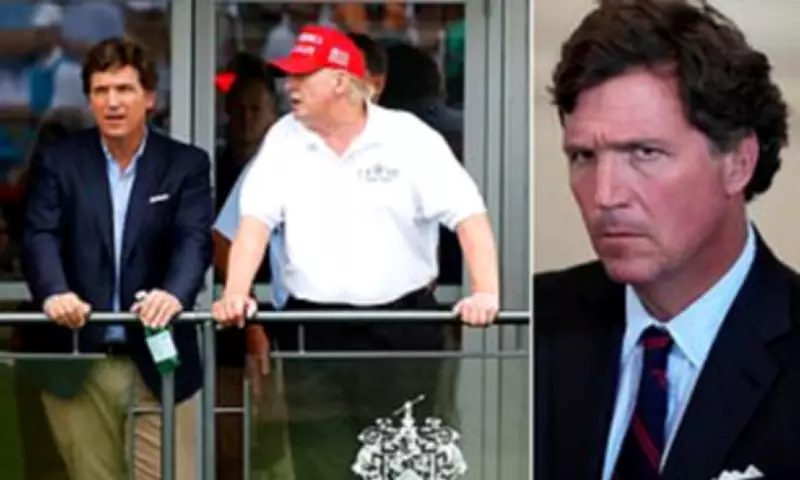
Carlson's media influence remains strong, with The Tucker Carlson Show ranking third on Spotify's podcast charts and sixth in Apple Podcasts' News category. His visibility was highlighted by a meeting with President Donald Trump and oil executives at the White House in January 2026, as well as appearances at events like the LIV Golf Invitational with Trump and Marjorie Taylor Greene.
Anti-Semitism Accusations and Apology
Carlson has faced accusations of anti-Semitism following a combative interview with Mike Huckabee, the US Ambassador to Israel. During the discussion, Carlson made fiery comments about Israel, including unsubstantiated claims about Jeffrey Epstein's ties to the country. He specifically implied that Israeli President Isaac Herzog had visited Epstein's island, Little Saint James, citing an email from the Epstein files.
After the interview aired, Carlson apologized in a video posted to X, stating he received a "long letter" from Herzog's office denying any contact with Epstein. He acknowledged the unequivocal denial, saying, "I'm sorry to imply that I knew something I didn't know." Despite this, merchandise on his website, such as t-shirts and mugs with "AIPAC: an offer you can't refuse" and imagery implying control by the American Israel Public Affairs Committee, has fueled further criticism. Carlson has consistently denied anti-Semitism.
Iran War Criticism and Political Fallout
The interview with Huckabee occurred amid escalating tensions between the US and Iran, with suspicions of an impending strike. The day before the US action, Carlson met with Trump in the Oval Office. After the strikes began, Carlson condemned the operation as "absolutely disgusting and evil," asserting it was "Israel's war, not the United States' war." Trump retaliated, claiming Carlson had "lost his way" and diverged from MAGA principles.
Interviews Sparking Backlash
Carlson further stirred controversy by interviewing Joe Kent, a former counter-terrorism staffer who resigned over the Iran war. Kent claimed the war started due to pressure from Israel and its American lobby. Additionally, Carlson hosted Nick Fuentes, a far-right commentator who advocates for "total Aryan victory" and has made offensive remarks, including likening Holocaust victims to cookies. This interview prompted discussions within the GOP about aligning with such figures, leading the California GOP to advise against supporting candidates who promote Fuentes's ideas.
Overall, while Tucker Carlson maintains a prominent media platform, his influence within the Republican Party is contested, with poll data and controversial actions highlighting a divided reception among voters and leaders alike.