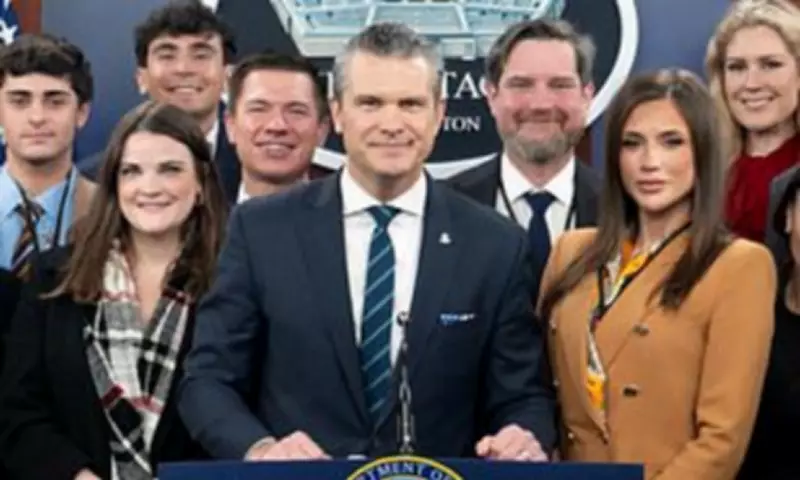
What began as a triumphant revolution for conservative media voices at the Pentagon has rapidly soured into a story of frustration and constrained journalism. The Daily Mail can exclusively reveal that the so-called 'New Media' vanguard, which eagerly filled the vacuum left when Secretary Pete Hegseth's administration sidelined veteran military correspondents, now finds itself trapped in a system they describe as offering 'amazing access' but yielding 'zero reportable facts.'
From Celebration to Stifled Silence
Initial unrestrained joy, marked by influencers and bloggers gleefully posting selfies from seats once occupied by legacy media, has given way to a bitter realization. Several members of this new press corps, who asked to remain anonymous, describe a deeply frustrating environment where access does not translate into actionable news.
'They say this all the time to us now... access, access, access. But on the trip that I went on, they didn't do one on-the-record briefing,' one anonymous Pentagon new media member revealed. 'We can't talk about what we asked the secretary. To be honest, it feels more just like going on a free trip than working.'

Allegations of Controlled Messaging and Censorship
When pressed on whether the Department of Defense is practicing censorship, the source agreed after a long pause. Another conservative reporter was more blunt, telling the Daily Mail: 'Honestly, yeah. They're controlling the messaging hard. The information we new media members have but can't use... some of it would be breaking news. If a left-wing administration did this, conservatives would be throwing a fit.'
This sentiment is echoed by others within the new media ranks, who note a stark contrast between the promised transparency and the reality of heavily managed communications.
The Mechanics of Managed Access
Reporters like Laura Loomer of the Gateway Pundit have been on several invite-only trips with Secretary Hegseth and his team to locations including California, Texas, and Alabama. While these excursions offer proximity, they reportedly lack substantive, on-the-record engagement.
Newly promoted acting press secretary Kingsley Wilson has led only one official briefing with the new media corps, fielding questions from right-wing figures including Loomer, Project Veritas founder James O'Keefe, and former Congressman Matt Gaetz. This pales in comparison to the briefings conducted under the previous regime.
'He wasn't comfortable at either—very scripted. Barely took questions, and had preplanned ones called from the future new media row,' a new media reporter said of briefings by former Chief Spokesman Sean Parnell.
A Culture of Suggestion Over Instruction
Jordan Conradson, a reporter for the Gateway Pundit, confirmed the disappointing lack of formal briefings. While he hasn't seen explicit rules requiring pre-publication review of stories, he described an atmosphere where guidance is subtle but influential.
'They're not instructing us on stories. They're definitely dropping breadcrumbs,' Conradson explained, highlighting the informal pressure that shapes coverage without direct orders.
Secretary Hegseth's Image Management
Amid these reporting frustrations, Secretary Pete Hegseth is personally navigating his own public rehabilitation. Two sources indicate the former Fox News host now remains in his hotel room during trips, an effort to mend his 'bad-boy' reputation and 'grow closer to his faith.'
His press team reportedly compiles a daily list flagging stories written about him, which Hegseth reads in full, according to a source close to the press operation. On trips, insiders note he often changes from his suit into a vest and baseball cap on the plane, seeking a more relatable, everyman image.
Real America's Voice reporter Beni Rae Harmony, who has travelled with Hegseth, believes people would support his mission if they saw the Secretary on a human level. She noted he enjoys small perks, such as having an In-N-Out burger delivered to his hotel upon landing in California.

Glimmers of Impact Amid the Gridlock
Despite the systemic frustrations, some new media members point to instances where their reporting has driven change. Laura Loomer highlighted her investigation into the Department of Defense's multi-billion dollar contracts with Microsoft's Azure cloud service and their alleged ties to the Chinese Communist Party.
This reporting prompted Secretary Hegseth to release an official statement and spurred the Chief Technology Officer to launch an internal investigation into government contracts with Microsoft—a rare example of tangible impact.
An Eerily Empty Building and a Defensive Stance
The physical environment of the Pentagon itself adds to the strange dynamic. Conradson observed, 'I don't think there are many people in the building anymore. Everyone works from somewhere else,' painting a picture of an institution operating in a dispersed, perhaps disjointed, manner.
When contacted for comment, the Pentagon defended its approach. Press Secretary Kingsley Wilson stated the new press corps has been granted 'extraordinary, unmatched access, far surpassing anything provided by any previous administration.' He cited December figures showing nearly 20 Defense Department officials engaged in over 150 one-on-one interviews with the new press corps, while still 'welcoming feedback.'
Yet, for the reporters on the ground, this statistical access rings hollow. 'I genuinely think he's trying his best. But on the media side I'm like, 'No, this is not right,'' concluded one anonymous new media reporter, capturing the disillusionment at the heart of this bold media experiment gone awry.