Michelle O'Neill Condemns UK Heating Oil Support as 'Slap in the Face' for Northern Ireland
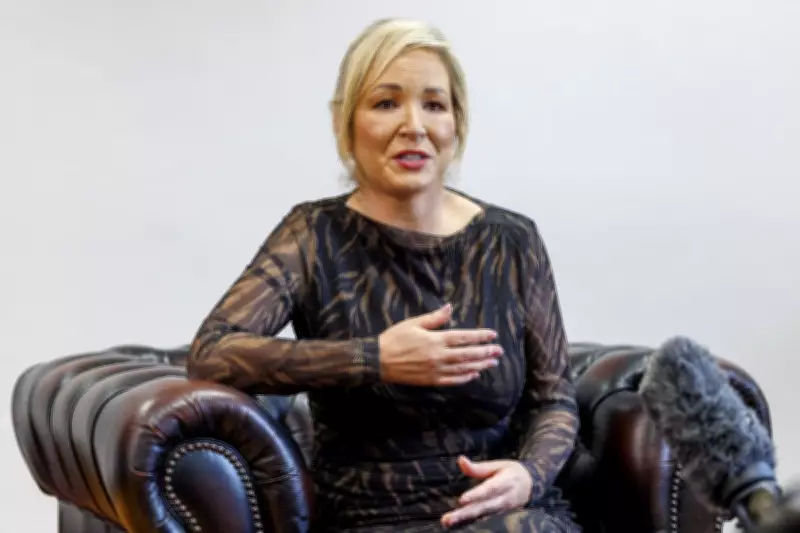
First Minister Michelle O'Neill has launched a scathing attack on the UK Government's heating oil support package, branding it a 'slap in the face' for Northern Ireland. Speaking during Question Time in the Stormont Assembly, O'Neill told MLAs that the £17 million funding allocation 'doesn't scratch the surface' of what is needed to help households grappling with soaring energy costs.
'Real-Life Implications of War' for Constituents
O'Neill emphasised the severe impact of global conflicts on local communities, stating: 'These are the real-life implications of war. Our constituents here are having to bear the brunt of these decisions that have been taken elsewhere.' She urged cross-party unity, calling on MLAs to 'fight together for the people that we represent' and to challenge the British Government for a more substantial investment package to alleviate the cost-of-living crisis.
The First Minister expressed deep frustration with the funding level, adding: 'I find the £17 million that has been put on the table today to be a real slap in the face, a real slap in the face to families that are struggling, who are already struggling to pay their oil bills.' She highlighted the uncertainty over future price rises, stressing the urgent need for robust Treasury support.
Funding Breakdown and Political Reactions
The £17 million share for Northern Ireland is part of a wider £53 million UK package announced by Prime Minister Sir Keir Starmer, aimed at mitigating heating oil cost increases linked to the Middle East conflict. Chancellor Rachel Reeves confirmed that Treasury officials had 'found the money' to assist the 1.5 million households reliant on heating oil across the UK.
However, Finance Minister John O'Dowd described the allocation as 'extremely disappointing', noting it equates to roughly £35 per household for the approximately 500,000 homes in Northern Ireland using oil-fired central heating. O'Dowd argued that the funding should be targeted at those on the lowest incomes and contrasted it with the more comprehensive package offered during the 2022 Ukraine war, suggesting current economic conditions warrant greater support.
Political responses were broadly critical:
- DUP leader Gavin Robinson questioned the adequacy of £20-£30 per household when costs have doubled, urging the Economy Minister to 'sharpen her pencil' and develop effective targeting mechanisms.
- Alliance MP Sorcha Eastwood called for quick action but queried the funding level, stressing it must reflect Northern Ireland's unique reliance on heating oil—used by around two-thirds of homes compared to just over 5% UK-wide.
- UUP MLA Robbie Butler labelled the £35 figure 'quite pitiful', advocating for a three-figure sum to better address household pressures.
Executive Tensions and Consumer Protections
Tensions within the Stormont Executive surfaced during a committee hearing, where Sinn Féin Economy Minister Caoimhe Archibald accused the DUP of 'peddling mistruth and misinformation' regarding energy bill support. This followed criticism from DUP MLA Phillip Brett, who highlighted delays in submitting a business case for £81 million of funding announced in the Chancellor's spring statement.
Archibald defended her department, stating officials were aware of the funding and clarifying it comes from annually managed expenditure (AME), which is tightly controlled by the UK Government. She warned against raising false hopes about reallocating the funds, while Brett emphasised the need for a swift delivery mechanism.
In response to the criticism, the UK Government indicated plans to introduce new consumer protections for heating oil customers and is exploring additional measures to shield households from price volatility. Despite this, O'Neill and other Northern Ireland leaders maintain that the current support package falls woefully short, leaving families vulnerable as the cost-of-living crisis intensifies.